The 601-member Assembly, that was hailed as one of the most representative elected body ever in Nepali history saw its unceremonious demise at midnight on May 27 without producing the new constitution.[break]
Dissolution of the Assembly without completing its job was a betrayal to the people as producing a new statute remained an unfullfilled political agenda due for six decades and the Assembly was adopted as a compromise for bringing the former rebel Maoist party into the political mainstream.
In the absence of the elected body, the country has been pushed into a political void and constitutional crisis, and the prime minister´s unilateral move to announce new polls has resulted in further polarization between the ruling and opposition alliances.
Though the leaders claimed that the CA had completed over 80 percent of its task, they failed to agree on the major provisions of the new constitution such as system of governance and the bases to delineate provinces under the federal system.
Leaders and CA members closely involved in the statute drafting process differ over the reasons behind the failure of the entire process but most of them agree that federalism is the major cause of CA´s dissolution. Also, they are unanimous in that the indifference of top leaders of the major political parties toward the CA´s work and their apathy toward implementing past agreements were equally responsible.
The erstwhile Congress lawmaker Ramesh Lekhak believes that had the parties abided by the May 15 deal [parties had agreed to NC leadership of government after promulgation of new constitution], the political course would have moved to right direction and the country wouldn´t have faced the present crisis.
Key leaders of major parties spent most of their time during CA´s four years bickering over power. Other inner groups [caucuses] within CA representing ethnic and indigenous communities, Madhesi people, women and others intensified their activities and strenghtened their ties within the CA to champaion the agendas concerning to the communities they represented. With the emergence of caucuses comprise of cross-party lawmakers, these groups at times even challenged the whips of their respective parties on crucial issues such as determining a federal model.
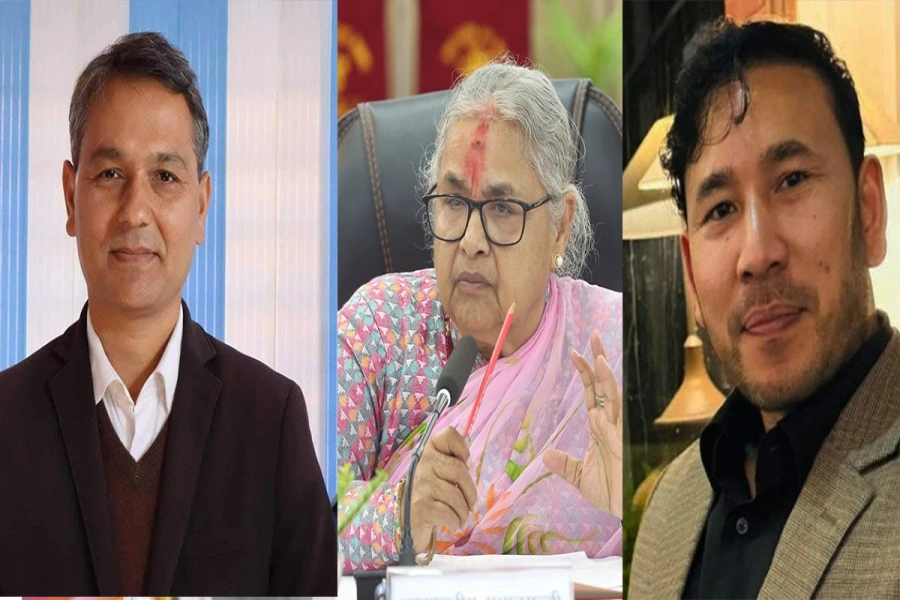
There is a strong argument that the CA was used both by political parties as well as caucuses more as a platform to champion their popular agendas and instead of focussing on the main task of writing a constitution. Nilambar Acharya, chairman of the dissolved CA´s Constitutional Committee believes that most of the actors used the CA as a khulamanch [open air theater].
CPN-UML lawmaker Agni Kharel saw sheer lack of accountability and responsibility among the political parties, leaders and their lawmakers even as they were entrusted with a historic task.
He said while a section of leadership was always bickering for power irrespective of what was going on in the CA, another section was not ready to go beyond the interest of the respective political party. "Yet other groups were guided by the agenda of the communities they represented," said Kharel. "This is not how a CA should be working."
Khimlal Devkota of UCPN (Maoist), however, claimed that leaders from ´traditional´ political parties mainly Nepali Congress and CPN-UML played negative role in the CA.
He maintained that Congress President Sushil Koirala was the one who had for the first time lobbied against CA term extension by holding press conference immediately after then Law Minister Krishna Sitaula, from his own party, registered a bill to extend the CA at parliament.
Everyone would buy an argument that major political forces had their own interests and they were opposing each other. "Maoists wanted to use the CA mainly to legitimize the agendas that they had championed during the decade-long insurgency. Producing a new constitution was not important for them," said Acharya.
Cornered by autocratic rule of then King Gyanendra Shah, the mainstream political parties such as Congress and UML wanted to end his direct rule. "By abolishing monarchy, NC and UML got what they wanted," he explained. For Madhes-based leaders, they wanted a platform to raise agendas such as the citizenship issue. They did so. "Constitution writing was not top priority for any of the major political forces," said Acharya.
All the sides remained so rigid that they became ready to lead the CA to dissolution but didn´t compromise. "CA was dissolved as the extremist elements remained rigid and those who were ready to compromise couldn´t prevail," said Devkota.
The impact of CA dissolution was so serious that the country not only lost a body to write a new constitution but also remained without legislature. In the absence of a parliament, the government has been unable to appoint heads and members in crucial constitutional bodies so much so that even the Supreme Court is facing serious crunch of justices because justices and commisssioners in the constitutional bodies can´t be appointed without parliamentary hearings.
The picture for 2013 doesn´t look rosy either because major political forces still differ over the same issues that led to the CA´s demise. Moreover, they appear deeply divided over whether a new CA should be elected or the old one should be revived.
While some insist all the decisions made by the previous CA should be owned, others want to restart the whole process from a newly elected CA. While some want to settle the issues related to federaism based on the decisions taken by the dissolved CA committees, others want to put such crucial agenda to referedum.
In the absence of parliament, the country has been trapped in a quagmire. The political parties have neither a proper place to form new government nor a House to amend constitution to pave the way for new elections.
Related story
The Internet versus democracy