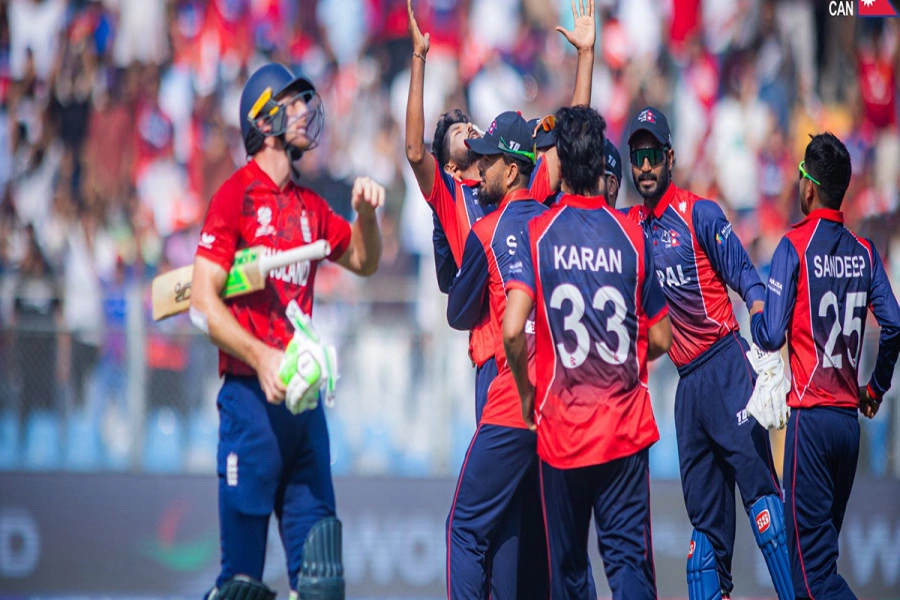
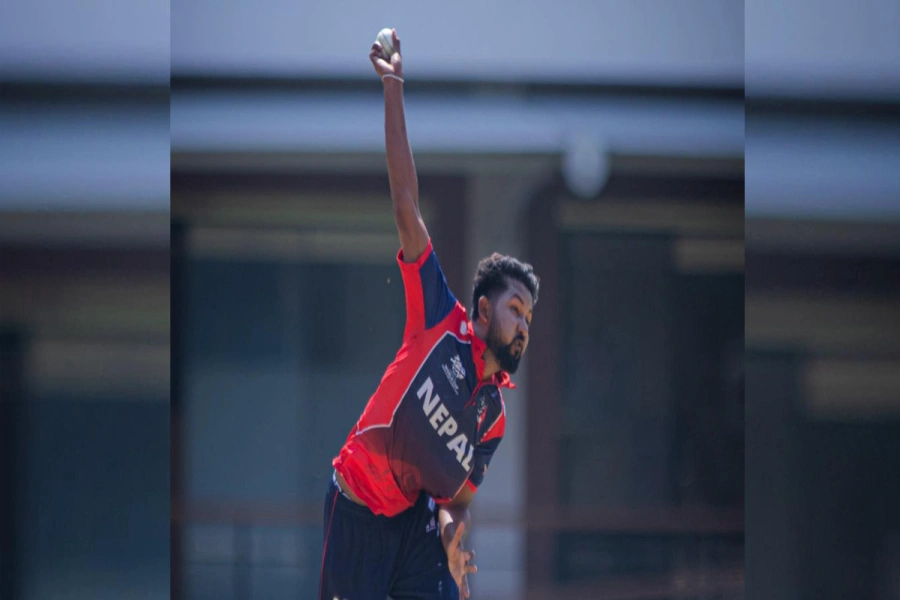
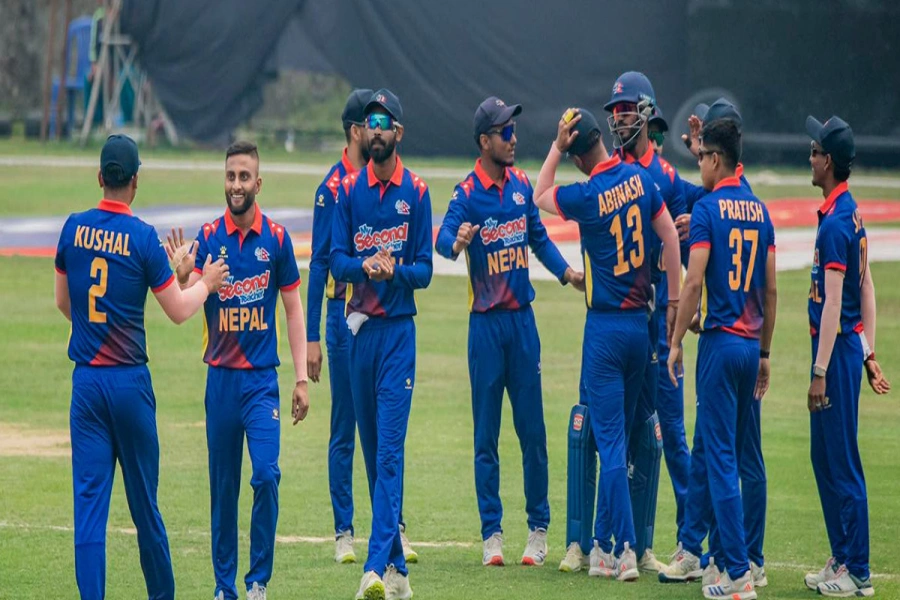
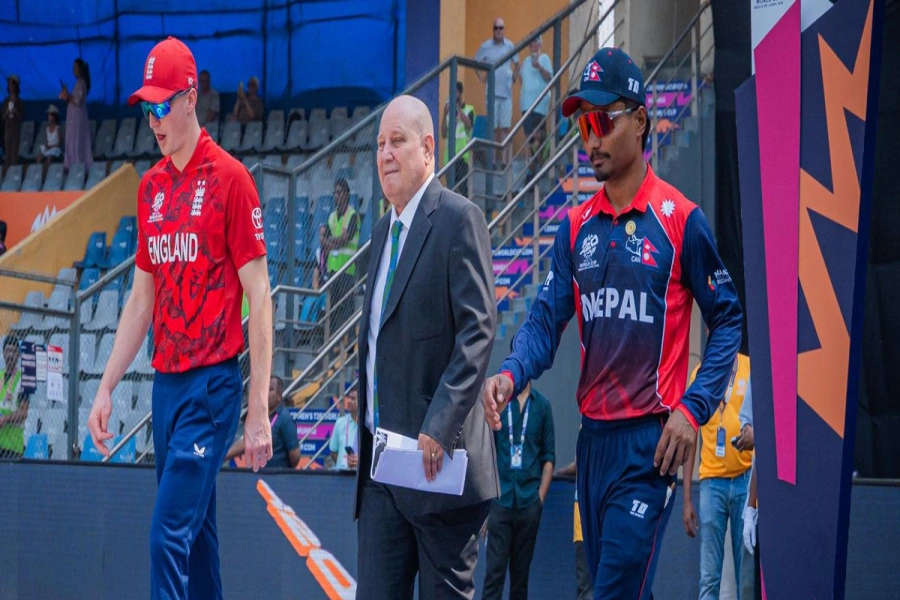
My pilgrimage to the iconic Wankhede began on the eve of 11 February, 2026. It was the first time in my eternity that I was taking a flight outside the country to watch cricket. A couple of weeks prior to the journey, the idea of traveling to Mumbai to watch two cricket matches was met with skepticism by the majority of friends and family. Fortunately, the Nepali cricket team’s inspiring performance in the match against England on the eve of 8 February got everyone saying, “how lucky you are to be able to travel and support the Nepali team”. More importantly, beyond this cycle of skepticism and encouragement, I am a simple cricket enthusiast who always dreamed of watching his team play at the highest level, and this was my moment to watch cricket in Mumbai.
Bittersweet memories of past World Cups
As I awaited my flight at Tribhuvan International Airport, in a Nepal cricket jersey, I found myself caught between the euphoric joy of the present and the bittersweet memories of past World Cups, where Nepali fans had to choose sides. For a 90s kid, I vividly recall cheering for India in the India versus Pakistan match during the 1999 World Cup held in England. In 2003, I wholeheartedly supported India throughout the tournament, particularly because of my admiration for the legendary Sachin Tendulkar. I am certain that all the cricket-loving kids of the 1990s who religiously followed Sachin might have inevitably turned away from the TV screen after Glenn McGrath caught Sachin off his own bowling in the finals between India and Australia.
Fast forward to the 2011 World Cup, I celebrated an Indian win in the World Cup finals, particularly after that unforgettable six from MS Dhoni’s bat in Wankhede Stadium. For a change, I became a West Indies fan in the 2016 edition of the T20 World Cup, and surprisingly, they emerged victorious. Who can forget the jubilant dance of the West Indies team to the song “Champion” throughout that World Cup? Then, in the 2022 edition of the T20 World Cup, I supported England because of my admiration for Ben Stokes. It was heartwarming to witness him lead England’s chase against Pakistan in the finals held in Melbourne, where he scored the winning run to secure the title for England.
In 2024, however, Nepal made history by qualifying for its second T20 Cup in a span of 10 years. Fortunately, back then, for most Nepali cricket fans like me, we had the privilege and honor of supporting our own team. In the first match against the Netherlands, I couldn’t help but envy the Nepali supporters singing the national anthem at the Grand Prairie Stadium in Texas.
Understanding the true meaning of “national anthem”
We will make Nepal proud: Captain Paudel
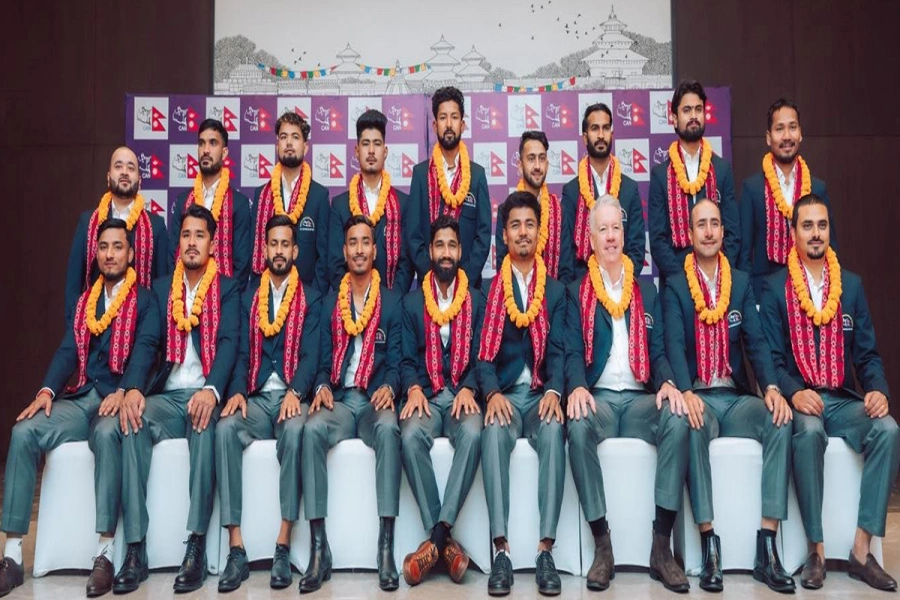
On February 12, 2026, at precisely 2:55 p.m. Nepali time, the iconic Wankhede Stadium in Mumbai reverberated with the Nepali national anthem. It was the match against Italy, the second fixture of Nepal’s league match in Group C of the T20 World Cup. Over 13,000 Nepali cricket fans, including myself, were chanting the anthem with electrifying passion. For the first time in my life, a 38-year-old, I understood the true meaning of a national anthem. Standing in the Sunil Gavaskar stand, I was transported to the spirit captured in the movie Invictus, where South Africa, divided by apartheid, entered the Rugby World Cup 1995 under the slogan “One Team, One Country.”
What struck me most was how the anthem seemed to dissolve individual identities into a collective heartbeat. Strangers became compatriots. For a minute and a half, the Wankhede transformed into a Nepali amphitheater, where each note wove together the scattered hopes of Nepalis worldwide. The anthem did not merely precede the game; it set the stage for belief, reminding us that sport, at its best, serves as a mirror of national aspiration. To my honor, I had the privilege of signing the national anthem twice at the Wankhede Stadium. The second time was during the match against the formidable West Indies on February 15.
The Marine Drive gathering and Wankhede delights
In Nepal’s four league matches, it had become customary for a section of the fans to gather in Mumbai’s renowned Marine Drive, particularly at a spot in this prominent walkway. From there, one could clearly see the Wankhede floodlights. This location had become a media hotspot, attracting all media outlets to take pictures. My friend and I arrived at the spot two and a half hours before the match for both matches against Italy and the West Indies. We sang “Ratora Chandra surya” and chanted “Nepal…Nepal” and headed for the stadium.
I wanted to share this because every match we attended was a World Cup match, not a bilateral one. Our team had put up an impressive yet spectacular performance in the regional qualifiers, and simply getting to the match was a celebration in itself. There, I met fellow Nepalis who, besides Kathmandu, had traveled from across the globe. At least those I met had come from New York, Amsterdam, Dubai, Portugal, and Oman.
Standing there, I realized that Marine Drive had become more than just a gathering spot. It became evident that Nepal’s presence at the World Cup was not just about cricket; it was about identity. Each chant of “Nepal…Nepal” carried the voices of those who had traveled oceans yet found themselves united in their support for their team in this truly global tournament. The walk to the stadium felt less like a commute and more like a procession, a reminder that every step was part of a larger dream.
While I was walking towards Wankhede, particularly during the match against Italy, I was momentarily transported back to 2015. I remembered walking along the banks of the Yarra River in an Australian jersey, heading to the Melbourne Cricket Ground (MCG) for the 2015 World Cup (the 50-over edition). For a 90s kid who had grown up glued to cricket broadcasts on television, the chance to witness a World Cup match at the MCG was nothing short of unforgettable. Yet, there is a profound difference between cheering for Australia in their jersey at the MCG and now, eleven years later, proudly donning the Nepali jersey, placing a Dhaka topi on my head, and carrying Nepal’s flag into the iconic Wankhede stadium. These two moments are separated by more than a decade, but the pride that surged through me in Wankhede was immeasurable.
The adulation from Mumbaikars
Away from the stadium, I spent five days exploring Mumbai. As I traveled, I wore a cricket team jersey, which helped me be recognized as a Nepali fan visiting Mumbai. I distinctly recall five or six instances where a Mumbai local stopped me to discuss the India-England match. One such conversation took place just behind the renowned Taj Mahal Palace hotel in Mumbai. My friend and I were stopped and told, “My friend, Nepal should have won that match against England.” (Nepal ko JitanaChahiyethayaar.) Similarly, from taxis to Mumbai metros to the bustling evening markets of Colaba, Mumbai locals stopped us along the way to discuss Nepal’s performance against Italy and the West Indies, offering their opinions and advice. One even remarked, “I couldn’t sleep well the night you guys lost against England. It would have been the biggest upset.” While there were both encouraging and skeptical reactions to Nepal’s performance, undoubtedly, this World Cup has served as a remarkable advertisement for Nepal cricket in India’s financial hub and beyond. Hopefully, this buzz will generate some revenue and provide much-needed match exposure.
Meeting fellow Nepalis working in Mumbai
Beyond the bustling energy of the game and stadium, we encountered several Nepalis making a living in this city of dreams. One such meeting took place at a restaurant on our way to Mahalaxmi Mandir, where we had stopped for lunch. A young man, working as both waiter and kitchen help, noticed my Nepali jersey. While taking our order, he mentioned that a few Nepalis were employed there and proudly added that the entire restaurant had cheered for Nepal’s victory against England. Soon, two Nepali waiters approached us, eager to converse in our mother tongue.
One of them, speaking in a blend of Hindi and Nepali, expressed his conviction with a mix of disappointment and pride, saying, “I watched the match against Italy…we should have won that one.” Our conversation then shifted to his hometown in Nepal, where he lamented how rarely he could return. After our meal, my friend extended a tip to the youngest Nepali waiter. As he accepted it, his eyes welled with emotion, a small gesture that held immense significance. Reflecting on that moment, I realized how profoundly Nepal’s cricketing journey had resonated with a humble restaurant worker in Mumbai. It felt as though cricket had once again bridged the gap between him and his homeland. For me, this incident served as a poignant reminder that the pride of our team’s performance transcends borders, uniting Nepalis worldwide in shared hope and a sense of belonging.
Returning home
Unfortunately, during my pilgrimage to Mumbai, I missed being part of Nepal’s historic World Cup win against Scotland. The irony of my absence struck me when the immigration officer, upon learning that I had returned from Mumbai, asked if I had gone to watch the World Cup. With a sarcastic smile, he remarked, “So, you wasted one lakh rupees?” Without hesitation, I replied, “Sir, I had the honor of witnessing Nepal at a World Cup and the privilege of singing our national anthem twice. That experience was far more fulfilling.” On the plane back home, I had about 25 other Nepali fans returning on the same flight. One of them said that if we had won the match against the West Indies, we could have danced and sung on our way back. Well, I will miss the World Cup buzz, but from this day forward, Wankhede will no longer be remembered by me as the stadium where MS Dhoni sealed India’s 2011 triumph with a six, nor merely as the place where Sachin Tendulkar bid farewell to cricket. For me, it will forever be the ground where Nepal stood tall on the world stage.
To our cricket players and the Cricket Association of Nepal, thank you for giving us the chance to carry our flag, wear our colors, and sing our anthem at the Wankhede. That pride will stay with me until my last breath.
The author can be reached at nirajshrestha@gmail.com