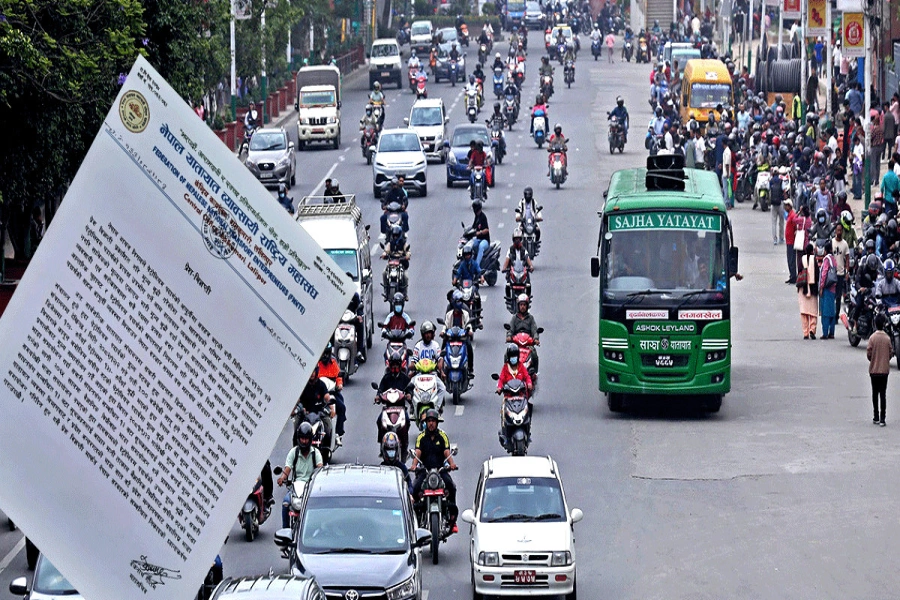
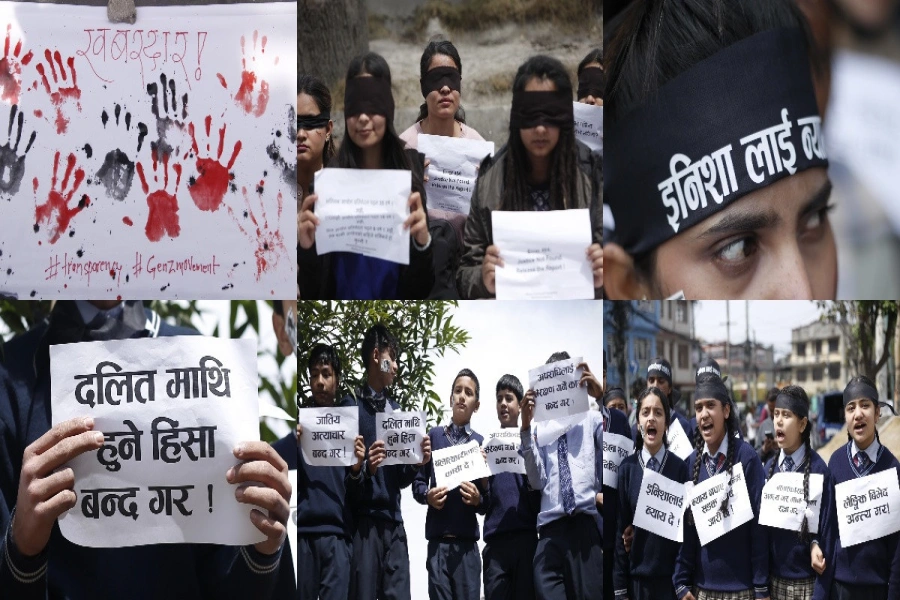
Colleges with foreign names have openly refused to comply with the government decision. Mobiles, miniskirts, and motorbikes are still the favorite accoutrements of college-going youths. Children continue to carry heavy bags of books. Advertisements continue to circulate in the media. Private schools are extracting as much in fees as they can. It’s as if there had never been any policy intervention. What went wrong? [break]
A single factor cannot account for all the ills bedeviling the country’s education sector. But what is obvious is that there have been too many reform initiatives, often announced without proper groundwork, which result in little progress. Besides, some of the drives to contain private schools seem politically motivated. Call it a coincidence if you may, but we have an education minister from the party which had long fought for abolition of what they then called “education of the rich, for the rich.” So when some student bodies raised a hue and cry against foreign names, Education Minister Dinanath Sharma made it a point to rein in such schools.
Names and books are actually not among the big problems of private schools. What trouble this sector are exorbitant fees, indiscriminate hiring and firing of teachers, and lack of transparency. What is needed is a categorizing of private schools under grades (say A, B, and C), bringing the too expensive schools under the tax net, and exempting from tax burden the schools serving low income populations.
Unionism needs to be discouraged, but at the same time schools should be forced to hire professional teachers and retain them. These issues never gain in priority because most often, the education ministry honchos either view private schools as money minting industries and raise a hue and cry about their fees, or become part of this industry and remain silent. So, reforms rarely take off.
EDUCATION REFORMS
There have been many reform initiatives, often without groundwork, resulting in little progress.
While the government’s focus lies on controlling private institutions, the problems of about 29,000 public schools, most of which are in a mess, remain unaddressed. The standard of education is in decline, enrolment rate is at an all time low, and in many places the very existence of schools is under threat. Many public schools are either shutting down or merging with other schools. As many as 33 schools in Kathmandu valley and six in Rasuwa have shut down owing to shortage of students, and this epidemic is going viral. There are schools where teachers outnumber students, and there are those where as few as two teachers have to run a school with as many as 200 students. What should be done?
We need to start with some implementable actions. To begin with, the 29,000 state schools ought to be given a new life. For this, the Teacher’s Service Commission, the state’s teacher-recruiting body, should take steps at the earliest to fill about 25,000 currently vacant positions. Recruiting new teachers on merit will partly displace political appointees who have abetted politicization of schools. Once they have competent teachers, these schools will start becoming more reliable centers of learning, which in turn will force private schools to self regulate. On another front, if the recently proposed scheme of three months compulsory social service for post-graduate students of science, information technology, humanities, education and management can be implemented, it will be a great help to public education sector.
Nepal’s public schools have not been able to attract educated urban youths as manpower. If this group can be recruited, with their greater exposure to media, information technology and social awareness, they could be the change-makers in schools in far-flung districts. If experience is any guide, such a program has paid off in the past. A similar initiative was adopted in 1971. New Education System Plan (NESP) 1971 included a program called National Development Service (NDS). Under this scheme, each university student was required to spend a year working in underdeveloped areas of the country before receiving a college degree. Most students taught in small rural schools, or assisted in larger schools in urban areas. They worked as teachers and also carried out other development activities. This had two-fold benefits. The trainee students were able to add to their theoretical knowledge, while at the same time they served as the agents of modernization which the Nepali hills were slowly coming to terms with in the 1970s. The beneficiaries of this plan recount the 70s with nostalgia. The recently proposed internship scheme has the potential of reviving hope in public school education, if carried out in earnest.
Planning without foresight and dreaming big without proper groundwork has often backfired. Consider the case of School Sector Reform Plan (SSRP) 2009-2015. The plan had, among many other things, aimed to uplift the standard of education by improving school infrastructure, integrating the higher secondary education system with high school education by 2012, making education free up to grade ten, and introducing technical education from grade nine.
Three years down the line, the plan is on the verge of failure. None of the programs set for 2012 have materialized. Instead, in a bid not to let the donor agencies down, the Department of Education (DoE) has minimized reform criteria. The new vision for SSRP is thus limited to cent-percent student access to textbooks by the second week of start of new academic session, toilet and drinking water facilities in all schools, and review of course of studies.
There is yet another area that needs a change. Education is not yet an established discourse in the national media. There is one monthly magazine, Sikshyak, which brings out education-related news and views in Nepali, but it has not been able to impact the broader donor community which supports the state’s education reform initiatives.
There are so many things to do. The good news is most of what’s required is well known to all stakeholders. But unless some proactive reform measures are actually implemented, Nepal’s education, just like politics, will continue to be a much-talked about, but with little to show for all the noise.
mbpoudyal@yahoo.com
Related story
Chepang students go to school barefoot in freezing cold