KATHMANDU, Dec 7: Banks and Financial Institutions (BFIs) have been relieved from selling loan defaulters’ collateral of fixed assets, with the Supreme Court (SC) issuing a verdict easing the process of disposing of non-banking assets.
As of now, the BFIs have been compelled to sell the fixed properties kept as securities by borrowers within three years in cases of bad loans. If the BFIs are unable to dispose of the collateral assets within the stipulated timeline, they have to take permission from the government to realise their lent amounts. By publishing the provision in the Nepal Gazette on July 8, 2024, the government implemented the provision through an amendment of existing legislation related to investment facilitation.
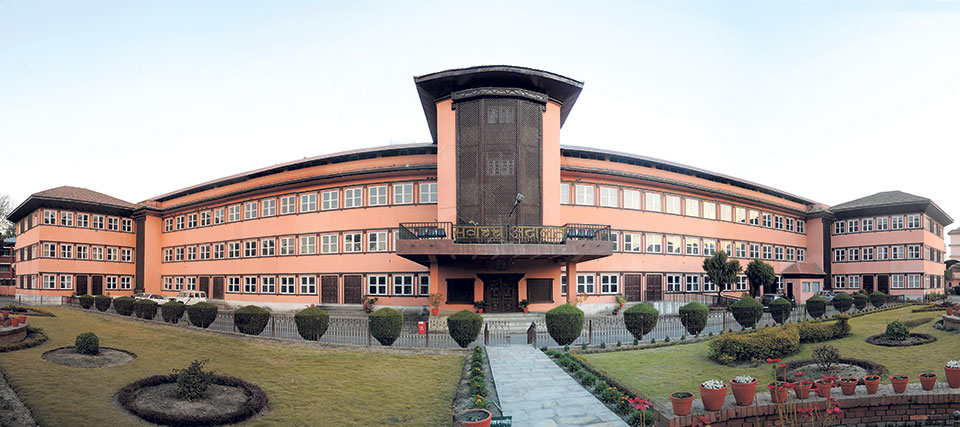
In the case, the apex court has issued an interim order against the government for not implementing the rule. A five-member bench of SC justices led by Chief Justice Prakash Man Singh Raut recently issued the verdict while hearing the writ filed by the Confederation of Banks and Financial Institutions Nepal (CBFIN). In the new development, the law will not come into effect until the SC delivers its final verdict in the case.
Desperate search for missing girls as nearly 80 dead in Texas f...

Non-banking assets are the fixed properties kept as collateral by borrowers, which are taken to auction by banks in case the loans convert into bad debt. Banks can write off the provisioning amount of bad debts by the amount received from the auctioned collateral. Increased non-banking assets indicate that banks are facing risks in asset management, with a rising amount of provisioning against bad debts.
According to the CBFIN, the SC’s interim order will provide some respite to the BFIs, which have been witnessing a piling up of non-banking assets in recent times due to increasing cases of non-payment of issued loans. A report of Nepal Rastra Bank shows that the non-banking assets of the BFIs soared to Rs 50.55 billion as of the last fiscal year (FY), while those of commercial banks alone have crossed Rs 42.11 billion.
In the past year, the non-banking assets of commercial banks increased by 37 percent (Rs 11.52 billion). The non-performing loans (NPL) of a number of commercial banks have crossed seven percent after the banks failed to recover loans from their clients. Of the 53,571 individuals and institutions blacklisted during the review period, 18,801 were related to loan defaults, according to the Credit Information Bureau (CIB).
Bankers said the economic slowdown seen in a number of sectors, including real estate, small and medium enterprises and construction, among others, has largely affected the banks’ ability to recover their outstanding debts. In addition, the Gen Z movement and violence have made debtors unable to pay back their outstanding dues on time.