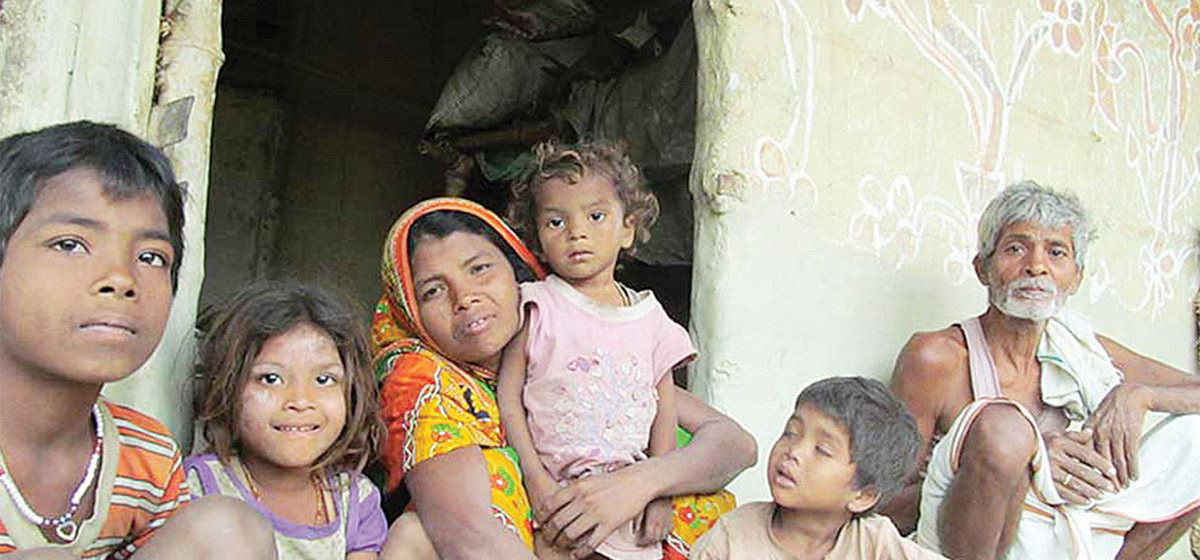
The poor and the marginalized people in Nepal have been facing multiple levels of deprivation since time immemorial. Political power is concentrated with a few at the center, who, as it turned out, could not be the least bothered about the plight of their less fortunate brethrens in the country’s far-flung regions. Among the most egregious examples of this neglect is the recent spate of deaths resulting from the spread of water-borne diseases in remote regions of Doti and Gorkha districts. As of now, at least 18 people have succumbed to what are easily-treatable diseases in the normal course of things.
Now, it has emerged that babies under two in Karnali zone, home to a higher percentage of children with malnourishment than any other region in the country, are still deprived of nutritious flour they were promised by the government three years ago. In Karnali’s Kalikot district, the District Public Health Office (DPHO) has been able to distribute nutritious flour only in 16 of the district’s 30 VDCs. In Jumla, babies under two are yet to get fortified flour in nine of its 31 VDCs.
One of the pernicious impacts of the center’s neglect has been inadequate budget allocation. As health offices have had to do with restricted budgets, their ability to supply fortified flour has been severely curtailed. They are handicapped by their inability to pay expensive transport fares. Limited road access only adds to the costs as instead of vehicles, foodstuffs have to be ferried on mule backs. Thus, although it has been three years since the government announced its ambitious plan to provide fortified flour to all children below two in Karnali, under-two babies in Karnali by and large remain deprived of nutritious food even at the end of the third year.
The other big problem has been lack of coordination between relevant government agencies and a dearth of awareness among locals. This is the reason why last year much of the fortified flour meant for under-two babies was consumed by their parents. This has played havoc with the health of children, for as long as children are not fed fortified flour on a regular basis, they will continue to be undernourished.
Tackling malnourishment is a key to achieving the MDG-4 of reducing the country’s infant mortality and under-five mortality to 36 and 54 percent respectively by 2015-end. Given the scale of the problem in Karnali, the government realizes that it will be hard to meet the target unless children in Karnali are better nourished. But unless there are serious efforts to bridge the wide socio-economic gap between the center and the periphery, the marginalization (and poor health) of the poorest of the poor will continue.
That means constructing more roads for easy and cheap transportation of food products, adequate budgetary allocation and greater devolution of power to regional authorities. Thankfully, it is possible to achieve these goals with judicious and honest application of the federalism project in the country. For now, the government would do well to tide over the budgetary shortfall and intensify the awareness campaign on the importance of child nutrition.
Related story
Madhesh’s poor struggling to survive winter