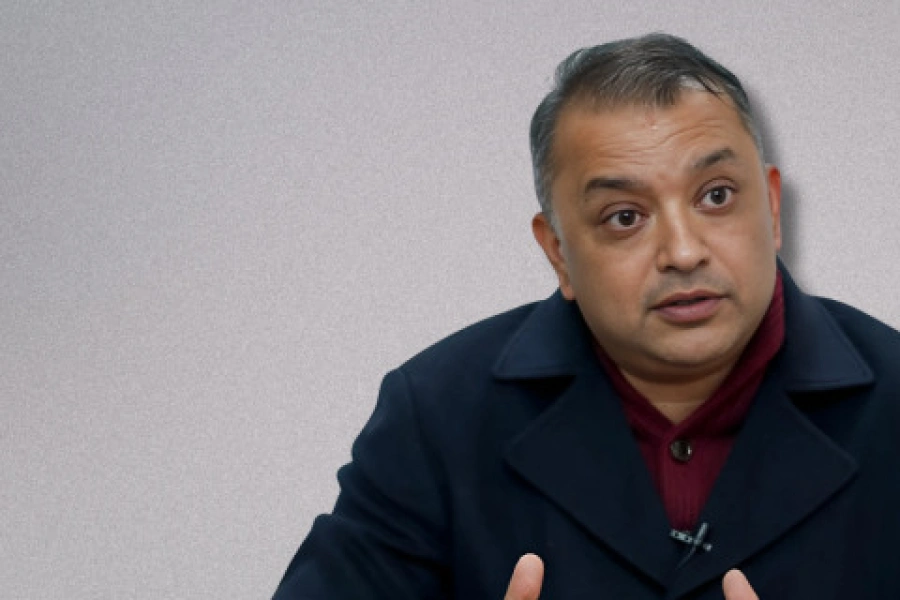
Finance Minister Dr. Swarnim Wagle recently presented Nepal's federal budget for Fiscal Year (FY) 2026/27 in Parliament, adopting a transformative approach that reflects the aspirations of Generation Z while departing from the conventional style of budget presentation. The budget prioritizes good governance, economic restructuring, infrastructure development, social upliftment, and the expansion of the middle class. It also aims to achieve an average economic growth rate of seven percent and build a US$100 billion economy in the coming years.
Out of the total budget of Rs 2.124 trillion, Rs 1.271 trillion has been allocated for recurrent expenditure, Rs 438 billion for capital expenditure, and Rs 422 billion for financial management. The budget also allocates Rs 600 billion to provincial and local governments to strengthen federalism. Financing sources include Rs 1.404 trillion from revenue, Rs 61.71 billion in grants, Rs 244 billion in external loans, and Rs 410 billion in domestic borrowing.
The budget contains several positive features, although concerns remain regarding its large size. The government has increased the budget by 25.2 percent compared to the revised estimates for fiscal year 2082/83. However, despite the increase in overall spending, the share allocated to capital expenditure has not increased significantly. There is also a substantial gap between government revenue and expenditure. Revenue barely covers recurrent expenditure, while capital spending remains heavily dependent on foreign assistance and both domestic and external borrowing.
Economists argue that at least 90 percent of the programmes included in the budget must be implemented to achieve the targeted growth rate. Nepal's average economic growth rate since 2050 BS has been 4.26 percent, while the government's growth target for the current fiscal year is only 3.85 percent. Despite these concerns, the budget appears to mark the beginning of a new phase of economic reform and national transformation. It focuses on economic growth, job creation, improving the investment climate, and entrepreneurship development rather than fragmented projects. It also emphasizes the effective use of policy incentives while reducing excessive regulation and administrative controls.
What is missing in budget for agriculture?

Hydropower, manufacturing, information technology, and agriculture have been identified as priority sectors. Education, health, financial inclusion, and social security have also received significant attention. The government has initiated a long-awaited multi-rate VAT system on selected items. Through the Finance Bill, it has amended the VAT Act to impose a five percent VAT on electricity and ride-sharing services. The multi-rate VAT system is expected to be expanded following further study and recommendations from a dedicated task force.
To address rising living costs and stimulate domestic demand, the government has doubled the income tax exemption threshold and increased salaries for public-sector employees by up to 21 percent. It has also announced major institutional reforms, including the abolition of 31 government agencies, the merger of six agencies, and the restructuring of 18 others. These austerity measures are expected to save approximately Rs 20 billion.
The government has further pledged to repeal or amend around 15 outdated laws that hinder investment and to introduce a new company law. Customs duties on industrial raw materials have been reduced, excise duties on 360 items abolished, and customs tariff slabs reduced from 11 to seven. Investment will be encouraged in agriculture, industry, and other productive sectors. The budget also proposes the establishment of a green urea fertilizer plant under a company model in partnership with the Nepal Electricity Authority and the private sector.
In addition, the government plans to increase domestic electricity consumption by operating electric buses and trolley buses in major cities and promoting electric household appliances. A policy has also been introduced to replace coal-fired industrial boilers with electric boilers and furnaces. These measures will help reduce environmental pollution while maximizing the use of domestic energy resources. The plan to revive sick and closed industries, if successfully implemented, could transform Nepal's manufacturing sector and generate substantial employment opportunities. The budget also proposes restructuring Nepal Airlines under a company model and allowing private-sector participation in electricity transmission and international electricity trade.
However, several challenges remain. Public debt continues to rise, and concerns over debt sustainability are growing. Large borrowings—both domestic and foreign—without clearly evaluated and prioritized projects raise questions about long-term fiscal prudence. Major contributors to GDP, including agriculture, real estate, industry, construction, forestry, communications, and services, continue to experience stagnation or slow growth, limiting their capacity to contribute to government revenue.
Similarly, many national pride projects and large infrastructure initiatives have become major drains on public resources due to cost overruns, repeated deadline extensions, and low returns. Irrigation, road, drinking water, railway, and international airport projects illustrate how delays and escalating costs have created significant fiscal pressures.
The tax base has not expanded satisfactorily, and a large informal economy remains outside the tax net. Expenditure on social security programmes continues to rise each year, raising concerns about long-term sustainability. Difficulties in right-sizing the bureaucracy continue to exert pressure on public spending. Wasteful administrative expenses remain largely unchecked, and stronger fiscal discipline is still needed.
Tax exemptions on imports of project materials have also reduced potential government revenue. Except where required under the Vienna Convention on Diplomatic Relations (1961), many tax exemptions granted through project agreements should be reviewed and rationalized. Nepal's placement on the Grey List of the Financial Action Task Force (FATF) highlights concerns related to the expansion of the informal economy and weaknesses in financial oversight. Encouragingly, the budget outlines measures aimed at strengthening the fiscal and financial system and supporting Nepal's efforts to exit the Grey List.
The budget has also introduced the concept of an "Investment Express" to reduce bureaucratic hurdles for domestic and foreign investors. Through an automated routing system, company registration, financial services, and visa applications will be processed through a single-window mechanism. The government has articulated a clear vision for mobilizing domestic, foreign, and non-resident Nepali capital for investment in Nepal. Furthermore, the budget strongly supports private-sector growth through targeted tax incentives and policy reforms designed to improve the business environment and attract foreign direct investment.
As the current government enjoys a strong parliamentary majority, public expectations regarding implementation are high. Since assuming office, the Balendra-led government has emphasized time-bound goals and measurable outcomes. Nevertheless, the budget faces a classic balancing challenge: meeting public demand for better services, jobs, and social security while operating within limited fiscal space, existing liabilities, and long-term commitments. If implemented effectively, this budget could place Nepal on a stronger path toward sustainable economic growth, prosperity, and development.