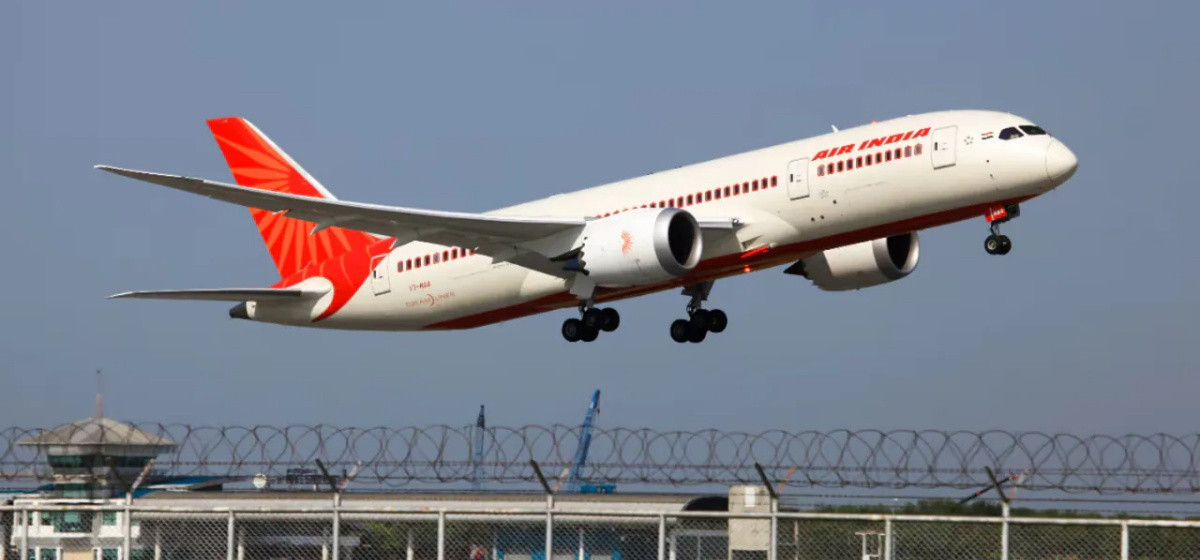
The new one-way air route -- dubbed L626 -- was developed around three years ago. It links Kathmandu with New Delhi and other destinations in west like, Middle East and Europe, via Mahendranagar, located in far-western Nepal. However, it hasn´t come into operation till date due to the delay by Nepali government in installing necessary communication equipment.
"We now have everything in place, including remote control air-ground communication and satellite equipment," said Mahesh Basnet, deputy director, Air Traffic Management, Civil Aviation Authority of Nepal. "We are now waiting to sign the agreement with Airports Authority of India to commence the operation of the route."
Nepal needs to sign an agreement with India to start traffic flow on this route, as all the flights will have to use the Indian airspace soon after crossing Mahendranagar.
A source at the Ministry of Tourism and Civil Aviation told Republica that the cabinet of ministers had already given approval to initiate talks with India. Although the date for the meeting is yet to be fixed, government officials are expecting a positive outcome as India has been insisting Nepal to sign an agreement in this regard since long.
One of the reasons why India wants to commence operation of this route as soon as possible is to reduce the congestion in its airspace.
Currently, all the flights bound for New Delhi and other western destinations enter into the Indian sky after flying for around 20 minutes in Nepali territory. But once the new route is opened, all airplanes bound for India and other international destinations will have to fly in Nepali sky for at least 45 minutes. "This, on one hand, reduces the traffic in Indian airspace, while, on the other, allows Nepali government to earn more revenue from airline companies for using Nepali air space for a longer period," Basnet said.
Opening of the new route is also expected to reduce flight time between Kathmandu and other international sectors. For instance, flight time between Kathmandu and New Delhi will come down by around four minutes.
"This may seem too little, but considering the number of flights conducted between Kathmandu and New Delhi per day, a lot of fuel can be saved," Basnet said. "Reduction in usage of fossil fuel not only means reduction in operating cost of airlines and ultimately airfares, but also reduction in emission of greenhouse gases.”
Basnet also said the new route would also help erase the carbon footprint generated by the aviation sector to some extent.
Related story
New route to reach Annapurna Base Camp







-1784277548.webp)