The year had opened with high-degree of enthusiasm with the government announcing 2012/13 as the Investment Year and promising slew of incentives to the private sector. [break]Particularly, its commitment to reform labor law, address power woes, aggressively support industrial infrastructure and promote exports had raised hope that the country would finally have long-derailed reforms back on track.
The optimism had buoyed also because with full-fledged budget on hand for 2011/12 the government had well over Rs 72 billion to give pace to development and it was consistently marshalling its machinery as well. As that was expected to push up public sector consumption, private sector found reasons to get excited and boost output. Together, people expected those to generate more job opportunities at home.
But the drive soon fizzled out. With power cuts rising to as much as 16 hours a day, industries had lost hope by March. Contractors struggled to give the much-expected pace to the development works and weak state-run development machinery lagged behind in increasing capital spending. Labor problems continued to hurt private sector operations, while the implementation of much-touted cash and other incentives to support industries and promote exports failed to yield desired result.
By the time first half of 2012 passed (that is FY 2011/12 ended), the government had spent only about Rs 52 billion of capital budget, which was 28 percent less than earmarked allocations. Manufacturing sector cast gloomy look, as its contribution in the GDP remained low at just above 6 percent.
Rising remittances receipts, on the other hand, continued to fuel imports, causing trade deficit to widen to Rs 387.40 billion. And construction sector - the leading employment generator - was already slacking.
But that was just the beginning of gloom for the people.
With political trust souring, following the unexpected dissolution of CA and unilateral decision of the government to hold fresh CA elections in May, the government and opposition alliance were clearly divided on the full budget for the new fiscal year. Eventually the government in mid-July settled down to one-third budget, which allowed it to spend just Rs 161.24 billion, including Rs 51.29 billion for debt servicing and meeting expenses of the constitutional bodies. It could spend just Rs 75.92 billion till mid-November to carry out regular administrative works and about Rs 20 billion for development activities.
The slew of incentives that the government promised to the industries did not come as it could not unveil new fiscal programs and revenue policies. So much so, it was not allowed to mobilize foreign aid and domestic borrowings. Long due revision of income tax cap imposed on middle income group too eluded, affecting spending capacity of people.
Together, such scenario further dented enthusiasm of the private sector. Partial budget and lack of assurance on continuation of past programs hit process to contract out development projects as contractors cold-shouldered bid notices in many of the cases for the next four months.
Recurrent spending, on the other hand, continued to grow so much that the government faced a hefty mismatch between fund it had on hand and liability it owed. As situation loomed to slip out of hand, Ministry of Finance (MoF) on November 2 announced that basic health care facilities and delivery of other public services would go haywire if the country did not get a fresh budget within the next 15 days.
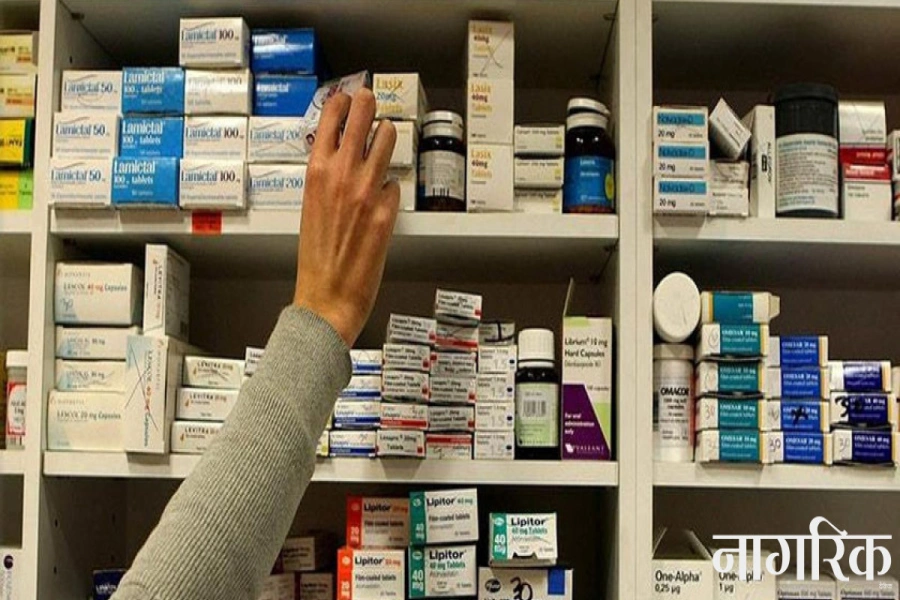
The situation had turned so bad that the government by mid-November was already facing a net fund deficit of Rs 7.42 billion. Unless the new budget came, MoF said the government would not be able arrange funds to pay salary of Nepal Army, Armed Police Force and Nepal Police personnel, healthcare staff and teachers, among others. The government had no funds for medicines that are distributed among the poor for free or provide scholarships to the students, among others.
Such a situation had surfaced even though the government then had treasury surplus of over Rs 32 billion. Owing to the legal provision associated with one-third budget, the government simply could not use it.
Pressed by the situation and continued resistance from the opposition, the government on November 20 unveiled the two-third budget of Rs 351.93 billion - exactly the size that it spent in the previous year.
The way the new budget was announced, meanwhile, for the first time in Nepal made mockery of all established norms. The sources and targets of fund mobilization were not clearly defined, clear spending plans (red book) were not developed, and all the ministries were allotted the budget in bulk and asked to identify programs and make allocations themselves.
As ministries had never done this kind of exercise so far, many of them are still struggling to formulate their annual development programs and allocate budgets. To add to their woes, they have not received even the amount they spent in 2011/12, as the government set aside Rs 10 billion for CA elections, Rs 3 billion for setting up new Nepal Army Secretariat and around Rs 3 billion for expansion of roads in the Kathmandu Valley.
As a result, ministries are finding themselves with lesser budget than what they spent last year - meaning they are not in a position to implement even those programs they started last year.
Amid such complications, the ministries have neither identified nor got their top priority (P1) projects endorsed by the National Planning Commission (NPC) even as 2012 ended. As getting NPC´s approval is crucial to kick-start the development projects, the laxness is certain to hit development over this fiscal year as well.
Fiscal jeopardy in the later half of 2012 gravely hurt mobilization of foreign aid. Absence of fresh incentives and reforms, lack of implementation of cash incentive and other supports caused exports to drop during the period. As a result, country´s balance of payment surplus dropped to Rs 140 million and current account deficit jumped to Rs 1.77 billion prior to the yearend.
Given the mess, International Monetary Fund has already projected that the country´s economic growth in the current fiscal year will decline to 3.8 percent from 4.6 percent of last fiscal year.
Related story
Terrorist attacks put Pakistan's bid to import energy from Iran...