But apparently not in the Nepali political and media landscapes. Of late, the polarization of opinion makers is especially stark on Maoist and the Madhesi issues. By and large, there are two lines of thoughts among the political intelligentsia, and the media outlets that channel their views.[break]
Take the all-important issues of peace and constitution. There is a large section of the media and intelligentsia that continues to see the Maoists as no more than a cabal of petty goons and misguided ideologues.
For them, any manifest progress in the peace process (say the re-categorization of ex-Maoist combatants) is just another Maoist ploy to hoodwink the masses. In their view, the changes we see in the Maoists after their entry into mainstream politics are cosmetic.
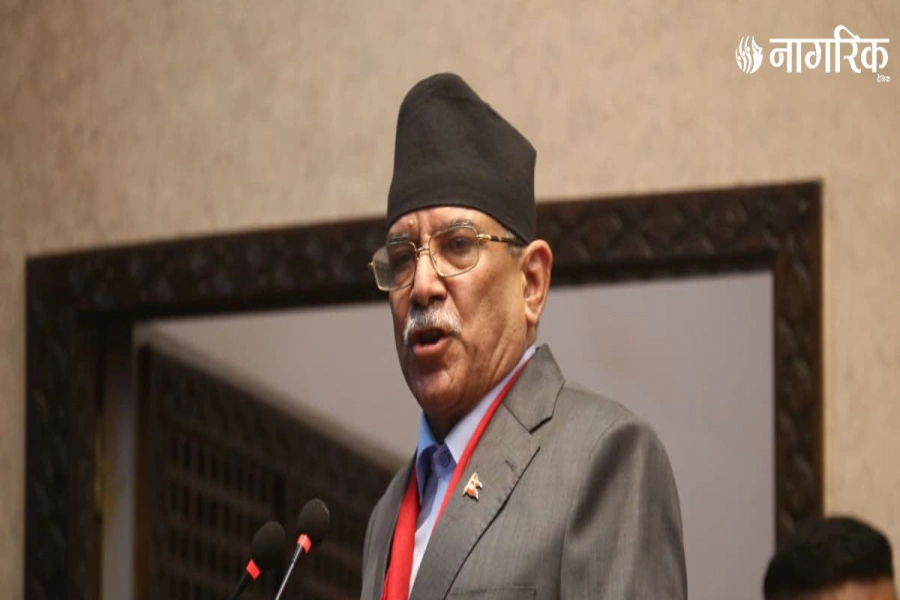
The proof? Why, just hear Prachanda go ballistic on his hardliner critics who don’t seem to get the simple fact that the current path of peace and constitution is only a stopover in the ultimate goal of “people’s revolt” and “state capture.”
For those who subscribe to this view, nothing short of absolute Maoist surrender will do. This means the Maoists will have to give up on, first, the party’s name. How can a political party which is named after a murderous dictator claim to be democratic? Ultimately, this group believes that the 1990 constitution was among the “best in the world” and the reason for its failure was not the inherent deficits of a parliamentary-majoritarian system and the problems in its applicability to the diverse ethno-cultural Nepali setting but the “corrupt” politicians and bureaucrats.
When these bad eggs are purged, the system, in their view, will regulate itself, much like Adam Smith’s invisible hands.
And we are not just talking about the RPP/Janamorcha folks here. A considerable section of the Nepali Congress (and a sizable chunk of UML) continues to believe in the sanctity of the 1990 constitution and the liberal market economy it ushered in.
Largely composed of the traditionally dominant Hindu “high caste” cohorts, but not exclusively limited to them, for this group any talk of minority representation and inclusive state are mere façades to strip them of their traditional privileges. By agreeing to federate Nepal, they reckon, they have already conceded enough ground.
At the opposite end of the spectrum are media outlets and the attendant left-leaning intelligentsia who seem to have taken the “progressive agenda” to heart, so much so that any talk of socio-economic fruits of the post-1990 (pre-2006) dispensation is instant anathema.
The liberal Lohani-Mahat economic regime, in their eyes, only widened the gulf between the haves and the have-nots. Nepal’s increased connectivity with the outside world, the development of vital sectors like IT, education and media, the coming of age of democratic parties, all pale in comparison to the horrors visited by the liberal economic regime.
Politicians beholden to special interest groups, disproportional representation, corruption, absence of law and order, the state’s failure to protect farmers’ rights, all too big a crime to be overlooked in evaluation of the NC-UML dominated post-1990 politics.
Thus the ravages of the brutal Maoist campaign are justified, even though some of the cases might need to be examined under the microscope of human rights, by the Truth and Reconciliation Commission that is nowhere in sight. In the meantime, no criminal cases might be brought against the Maoist/Madhesi activists and Army personnel who have crossed the thin line between protesting for rights and outright criminality, because, all cases related to a “political warfare” need to be settled through “political means.”
The important issues brought to the fore by the insurgency—inclusion, gender discrimination, the plunder of the state by a small elite, among countless others—are, apparently, far too important achievements that completely justify the death of some 14,000 people killed (and caught) in the crossfire.
The biggest problem of Nepali polity and the polarized media landscape at present is that the two sides to this debate are barely talking to each other. This is true not just in the case of opinion makers, but also the general population.
Those highly suspicious of Maoist intent tend to pick up papers that neatly align with their conservative beliefs. Those sympathetic to the Maoist cause follow more “progressive” news channels. More and more Madhesi people get their news from the radio stations warning Madhes-based parties not to give in to any demands of the “hill-dominated ruling elite.”
Of course, the need to confirm to a particular set of beliefs is a universal tendency. The American public and intelligentsia, for instance, seems split right down the middle. While the Republican half tends to get their news from Fox/The Wall Street Journal, the Democratic half overwhelmingly prefers MSNBC/The New York Times.
In Britain, Guardian/BBC News are popular with “progressives/liberals” while the Daily Mail/Sky News tend to cater to the “conservatives.”
This polarization is understandable, given the human tendency to make some sense of the raucous world. But the loss incurred in giving in easily to one’s predilections could be huge for a transitional society.
Perhaps if the political commentators, noisy TV anchors and feuding politicians were more aware of the shaky ground on which many of their certainties rest, the important political issues confronting Nepal could move forward.
Compromises will be the key to navigating the choppy waters of transitional politics. At this critical moment in time, the efforts of all the important actors in Nepali polity, especially its opinion makers, should be geared toward finding common grounds where the differing sides can talk to (rather than talk past) one another.
Baral is the op-ed editor at Republica.
Related story
‘Media is not just a business, but also a public service’