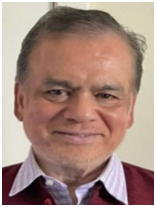
"We haven´t been able to finalize the agreement on the issues of peace process but nevertheless political parties are informally near-consensus on those issues," the prime minister, who tendered his resignation to the president on Sunday evening, said in his address to parliament on Monday. [break]
"The agreements on the peace process couldn´t be materialized as the UCPN (Maoist) and the NC were reluctant to reach any agreement without first inking a deal on power-sharing," he said.
While self-evaluating the ´short-period´ of the government and ´unnatural protests´ against the government, he argued that the tenure of his government shouldn´t be taken as a normal period.
"In terms of promoting democratic values and development activities that took place during his time as the PM, mine was a successful and non-controversial government," he said. "The way ministers in this government maintained their esteem, they have set an example in the country´s politics."
Khanal said he decided to step down as his continued efforts until the final hours when the deadline set by himself expired yielded no result. He said he wanted to announce the resignation in parliament but couldn´t do so as the self-imposed deadline expired on Saturday.
Admitting that he failed to make tangible progress in advancing the peace process, he gave details of some of the works accomplished during his tenure. He said leaders of the major political parties didn´t sincerely work for expediting the peace process, contrary to their public posturing.
"The priorities of leaders of major political parties kept on changing," Khanal lamented. "While I had a responsibility to implement the five-point agreement, it was not acceptable to me to prolong the government´s tenure until August 31 amid non-cooperation of other parties."

He argued that he chose to form the government with the Maoists because they are the largest party in parliament and also an important party to the peace process.
"Despite various hindrances, suspicion, criticism and protests from within and outside my own party, I had risked to forge an alliance with the Maoists with a view to giving a political space to them," Khanal said.
He said the seven-point deal, the decision to allow Maoists to head the home ministry, and the induction of Maoist nominees into the cabinet were his attempts to help settle the Maoists´ intra-party disputes and eventually to create an environment favorable for advancing the peace process.
"But, the UCPN (Maoist) failed to take any initiative to advance the peace process in line with my efforts and expectation," he said about the coalition partner in the government.
Related story
CPN-UML was finished after its unification with Maoists: Khanal