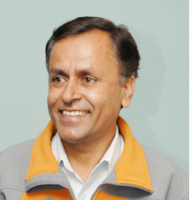
Addressing the 43rd Annual Meetings of Board of Governors of Asian Development Bank, Finance Minister Surendra Pandey acknowledged the fact that Nepal´s major macro indicators were not in good shape.[break]
"Though the global economic crisis is now receding, the overall macroeconomic indictors of Nepal have not improved as expected," Minister Pandey said.
He categorically said the double digit inflation, widening trade deficit, slow growth of remittance, decline in exports and deteriorating balance of payment, depleting gross foreign currency reserve and liquidity crunch are some of the emerging challenges of Nepal´s economy.
He further added that because of protracted power cuts and continuing labor problem along with infrastructure bottlenecks, Nepal´s economy is expected to grow by around 4 percent against the initial target of 5.5 percent.
"However, the government is committed to maintaining macroeconomic stability through necessary fiscal and monetary measures. Our priority is to increase employment opportunities for youths within the country," he said.
Pandey also said the government has placed a high priority on the development of road as it is one of the few sectors with high labor-oriented structure.
Apart from that, Pandey said the government has emphasized the need for the development of clean and renewable energy that can create better environment for increased private sector investment in agricultural processing and other manufacturing activities thus helping to generate additional jobs.
Related story
Low capital expenditure, financial sector vulnerabilities and p...