Make no mistake; the ongoing peace process in Nepal is a unique and successful exercise. It is something to be proud of, as an original exercise designed and implemented by the Nepali polity, which stopped the killings and brought the rebel force from the jungle to government through an election within a span of two years. All that we need to do now is to take the peace process to what is called its “logical conclusion”. Given that the decade of conflict in Nepal was brutal and took the lives of more than 16,000 citizens, the society has been allowed to heal ever since the guns went silent on the part of the rebels and the state. Of course, there is a great deal of political noise that comes out of Nepal today, but you would be mistaken to believe that things are worse now than before. Most importantly, people are not dying by the dozens every month due to political violence, as used to be the case.
There is no doubt that the Maoists agreed to enter the peaceful and democratic polity by abandoning their ‘people’s war’ and deciding to come to open politics. However, while every political party shares some of the blame for the continuing political instability in my country, it is the Maoist leadership that speaks and acts in a manner that arouses the deepest fears in the people. While the other political parties including my own have stayed by the letter and spirit of all the agreements of the past, the Maoists have been shifting goalposts, speaking threateningly about a protracted people’s war, utilizing violence in the districts, making a habit of extortion countrywide, threatening the press, and creating conditions for impunity which other groups have been quick to incorporate. The Maoists in spite of their repeated commitments have not returned the public and private properties captured during the conflict. Internally displaced people are not being able to return to their house. They are having a really hard and tough time. It is primarily the activities of the Maoists, in the form of closure of parliament for half a year and strikes that last days on end, that have kept the economy from rebounding as it should have. It is primarily because of the Maoists that the urgent task of reconstruction and rehabilitation has not happened. It is primarily because of the Maoists that the cantonments have not been disbanded, as they should have been six months after the signature of the CPA.
There is a great deal of political noise that comes out of Nepal today, but you would be mistaken to believe that things are worse now than before. Most importantly, people are not dying by the dozens every month due to political violence.
And yet, for all the tension and fear-mongering, we are still in talks with the Maoists. Having suffered the direct and indirect consequences of the armed conflict, the people of my country have no doubt that what we need is absolute peace, which will provide political stability and economic growth. Our civilization and our democracy requires the Maoists to convert to a full-fledged democratic political party without its own private armed force, without its militaristic youth wing, a party that does not extort with abandon, and which stops exciting its cadre with talk of ‘people’s republic’ and ‘protracted people’s war’. We are convinced in Nepal that the challenge of change must be addressed through peaceful and democratic means, not through violence. We seek to live in a society where the right of the individual is sacrosanct and not subordinated to authoritarianism of one form of the other.
We have been continuously engaged with the Maoists since the signing the 12-Point Understanding and the numerous agreements since in the belief that they had genuinely agreed to give up violence as an instrument of political change. We continued to overlook some of their behavior during and after the Constituent Assembly (CA) elections, hoping that their desire for transition to peaceful and democratic politics was real. But even as we continue to work with the Unified Communist Party of Nepal (Maoist) as the political party with the largest number of seats in the CA, the international community must be alerted to the continuous bad faith that has been exhibited. There is an attempt by the Maoist leadership to underestimate the patience and forbearance of the Nepali public both in the public speeches they give and the private exhortations they make to their followers. There is loose talk of violence and death, state capture through revolt, and the unending fight for a people’s republic.
Let me now speak briefly about the road ahead. Our commitment to a more inclusive democracy and a restructured state makes us steadfastly behind the politics of consensus. This belief drives us to continue to seek a meeting of minds with the other political parties, including the UCPN (Maoist). It is for this reason that after a lot of homework we have recently established the High Level Political Mechanism (HLPM) under the leadership of our party president, Girija Prasad Koirala, with the Maoist chairman and president of the CPN (UML) as members. Gradually, other leaders of the main political parties in the CA will also be invited to join this mechanism, which will focus on taking the current peace process to a meaningful conclusion and drafting and promulgation of the new constitution on time.
The Nepali Congress remains active in the Special Committee responsible for the supervision, integration and rehabilitation of the Maoist ex-combatants now in seven main cantonments and 21 satellite camps monitored by the United Nations. We are also of the view that the work in the Special Committee and its subsidiary Technical Committee should be expedited so that the weapons stored in the containers can be destroyed, and the camps can be closed after resolving the issue of the combatants. Once this is done, the job of the United Nations Mission in Nepal (UNMIN) will be over. It is vital that all these tasks be completed before the new constitution is promulgated.
For taking the current peace process to its meaningful conclusion and for safeguarding the future of democracy in Nepal, I would propose the following agenda for all political parties and leaders in Nepal to follow and for Nepal’s friends and well wishers everywhere to support: Absolute commitment to end of violence as a tool of politics, through public declaration; resolution of the problem of the Maoist ex-combatants as soon as possible, destruction of the weapons, closing of the cantonments, and terminating the mandate of UNMIN; relief to the victims, rehabilitation to the internally-displaced people and return of the captured properties; agreement on key principles of the new constitution, preparing and promulgating it on time; the government to focus itself on supporting the CA, good governance, maintenance of law and order, ending impunity, providing relief to the most needy, conducting free and fair elections under the new constitution, and handing over power to the elected government, thus shortening the uncertainty of transition; the political players in Nepal to conduct their affairs within the bounds of the Nepali polity, and not to misuse external relations and security policy as tools for individual or group-based opportunism; and higher economic growth and alleviation of poverty at the center of all activities in Nepal.
Amidst the challenges of the moment, we should not forget the advance we have made in just the last two years. The CA has declared Nepal a republic even as the inheritor of Nepal’s long-running monarchy evacuated the royal palace peacefully after holding a press conference. A citizen’s son has become the president, and the rebel leader became prime minister just a couple of years out of the jungle. The politics of consensus has indeed produced some miracles.
Alas, as we speak there is growing polarization in the body politic and the Nepali public is justifiably worried about the immediate future. The Maoist leadership, in particular, has been irresponsible in stoking the fire of identity-related politics amidst our multi-cultural society. For the sake of their own advancement, the Maoists seem to see nothing amiss in promoting the divisive politics of identity. This strategy of building one’s base on the foundation of inter-community conflict flies in the face of what we need today in Nepal – peace, cooperation and cohesion. “Power at any price, for any purpose” is turning consensus to confrontation. The soul of the peace process is getting battered.
These are challenging time for Nepal, and for the reasons given above, friends and well wishers everywhere are right to worry. And yet, as I have said earlier, even amidst the harsh rhetoric and ground-level violence, we continue to engage in dialogue. I can assure you that the Nepali Congress will never let the core values of open society, parliamentary politics, human rights and accountability be compromised. We believe that the peace process will succeed, and that the present turbulence is the result of a political party with a violent past attempting to seek a footing in open politics. And yet, the change of heart will not come from appeasement and agreeing to a less-than-democratic polity in the bargain for peace. My party is convinced that full peace and complete democracy is possible in the country, because this is the demand of a democratic movement and people. And I believe we can take all the political parties of Nepal, including the former rebels, in this journey towards prosperity in peace and democracy.
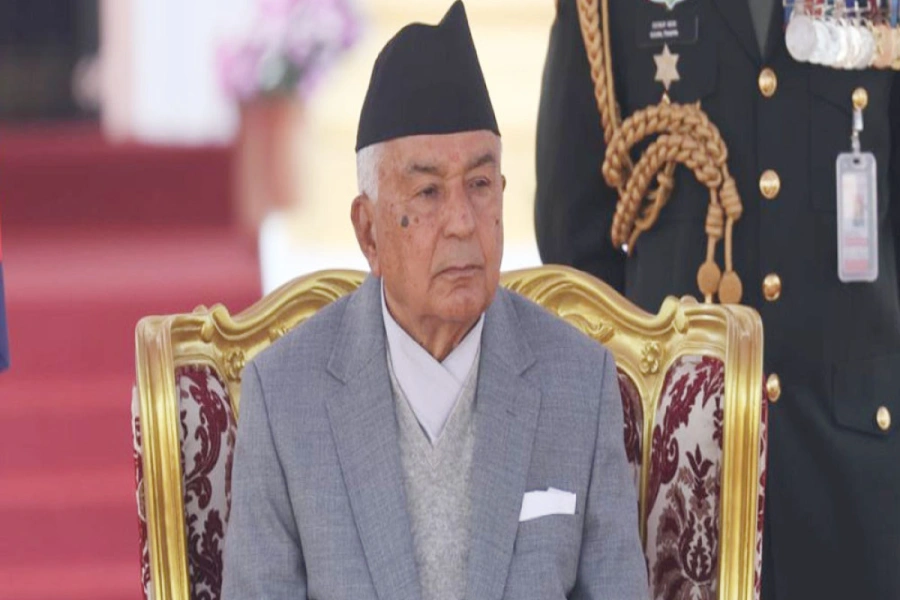
(Excerpts of the speech delivered by Nepali Congress Vice President Ram Chandra Poudel at Chatham House, London, on Jan 11)
Related story
Let’s live in peace and embrace diversity