But according to health officials, declaring eradication of the disease is still far off, as the World Health Organization (WHO) makes such a declaration only after the countries of a whole region are free of the virus. [break]
Ten years after the last indigenous case was detected, an infection was reported in 2010 and the last case was seen in August the same year. Officials at CHD expressed satisfaction over intervention against local transmissions of the virus but said they are very cautious about the possibility of re-infections.
“We have been able to stop the disease since the past 20 months and we´re doing our best to keep it up,” Director of CHD, Dr Shyam Raj Upretti, said.
Six cases of polio infection were detected in Rautahat and Mahottari districts 20 months back and the division conducted two additional rounds of special campaigning in 23 districts at risk after the cases were reported. The government is conducting an aggressive campaign to eradicate the disease, Dr Upreti further said. “Surveillance officers are continuously monitoring the areas in question and taking samples of suspicious infections,” he added.
Polio is a disease caused by acute viral infection and mainly affects children under five. It invades the nervous system and can cause total paralysis.
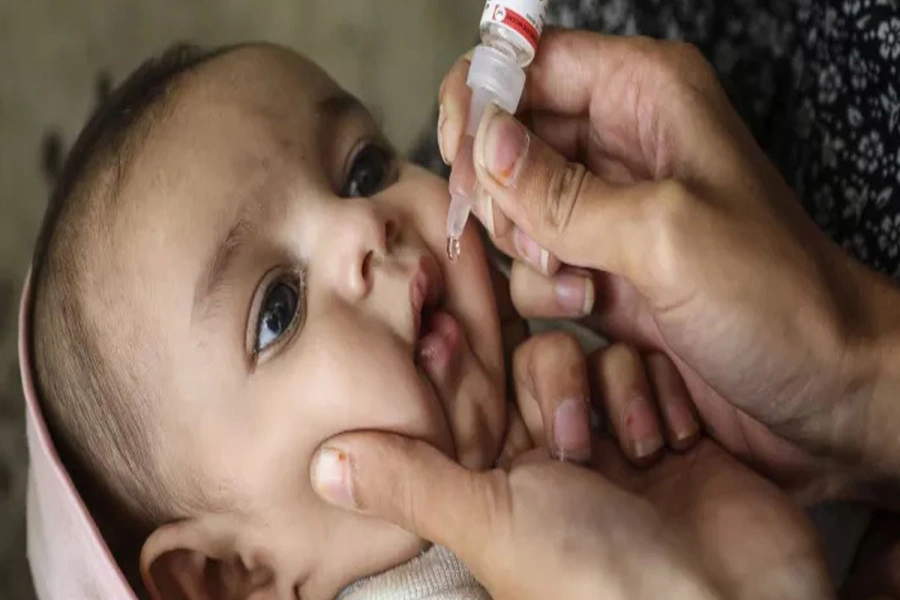
CHD said that 4.5 million children under five will be administered polio vaccines on 28 and 29, April. Unicef Nepal and WHO will assist the government to run the campaign. CHD claimed that it has adopted various measures to curb the virus. “We have turned the program focus to city slums,” Giriraj Subedi, chief of the immunization section, said.
Related story
'Special Polio Vaccination Drive' to take place in 15 districts