

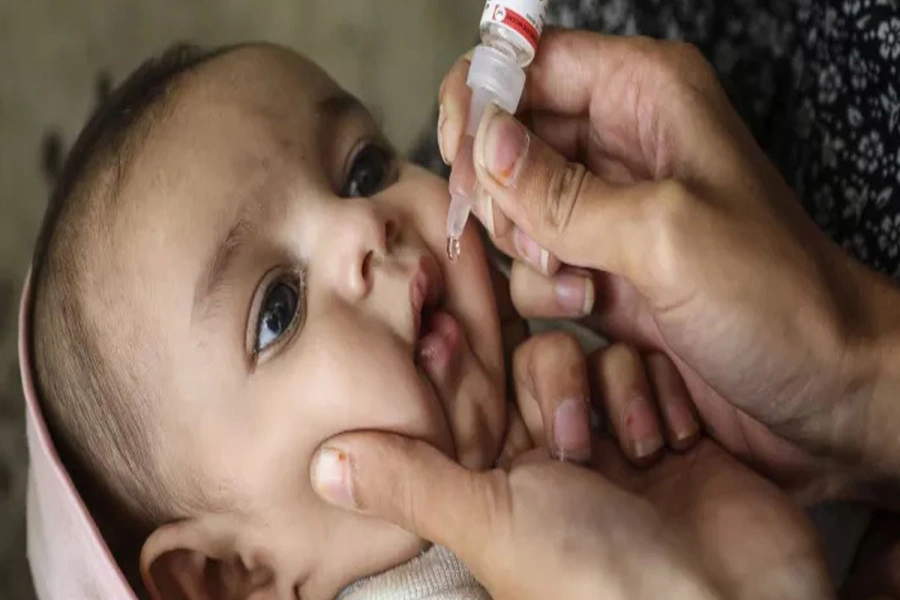
KATHMANDU, Dec 27: Nepal has been ranked among the top-performing countries in identifying suspected polio cases, demonstrating strong surveillance capacity against the polio virus.
In 2025, Nepal achieved the highest level of surveillance for suspected polio cases among 10 countries in the World Health Organization’s (WHO) South-East Asia Region (SEARO). The assessment was conducted with technical support from the WHO and the National Public Health Laboratory.
Under the surveillance system, suspected polio cases among children below 15 years of age were identified across the country. Samples collected from these cases were tested in Thailand, and no polio infection was detected during laboratory analysis.
Four-nation women's football championship kicks off today, Nepa...

According to Dr Abhiyan Gautam, Chief of the Child Health and Immunization Service Section at the Family Welfare Division under the Department of Health Services, Nepal, identified 7.1 suspected polio cases per 100,000 population, earning the country top recognition. A total of 579 suspected cases have been recorded nationwide, while testing of 40 additional suspected cases is still pending.
As per WHO standards, countries are required to detect at least two suspected polio cases per 100,000 population. Nepal significantly exceeded this benchmark, demonstrating what health officials described as excellent surveillance performance.
“The more suspected cases we identify, the faster we can eliminate the risk of polio virus transmission,” Dr Gautam said. “Nepal has achieved the highest detection rate among the 10 SEARO countries.”
Nepal was officially declared polio-free in 2014. The last confirmed polio case in the country was reported in 2010 in Rautahat district. Dr Gautam noted that districts such as Humla and Rolpa recorded between 1 and 1.9 suspected cases per 100,000 population, while all other districts reported more than two suspected cases, meeting or exceeding WHO surveillance standards.
Compared to countries including India, Bangladesh, Bhutan, South Korea, the Maldives, Myanmar, Sri Lanka, Thailand, and Timor-Leste, Nepal demonstrated superior capacity in identifying suspected polio cases. After Nepal, Bhutan reported 5.32 suspected cases per 100,000 population, followed by India with 5.12 cases. Bangladesh recorded 2.80 cases, South Korea 2.38, and Myanmar 2.51 cases per 100,000 population.
In 2024, Nepal detected 4.5 suspected polio cases per 100,000 population. As part of preventive measures, children aged five to nine years were administered polio vaccines last year. In Nepal, infants receive oral polio drops at six, 10, and 14 weeks after birth, while injectable polio vaccines are administered at 14 weeks and nine months of age.







-1200x560-1774606010.webp)


