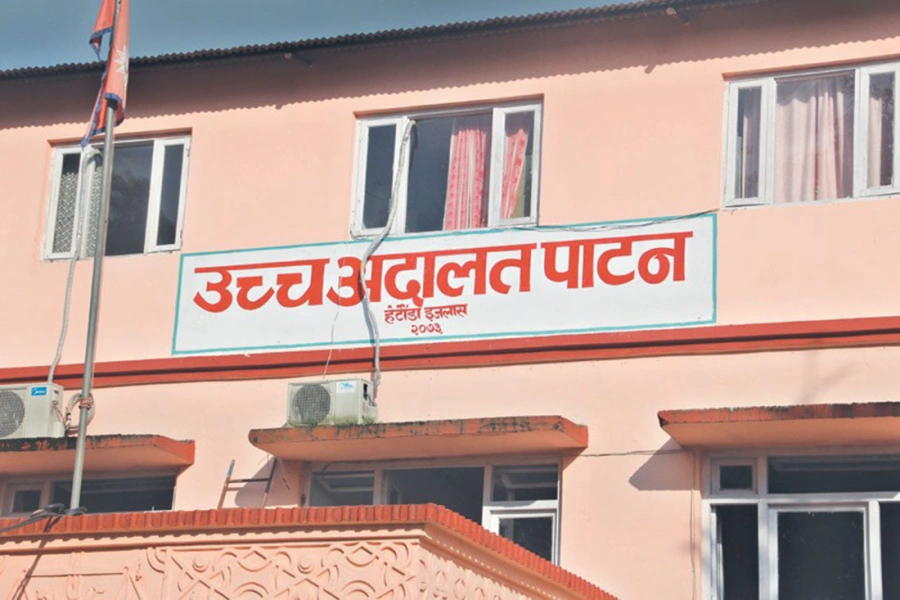
What a shame! The so-called custodians of democracy in the country have once again openly defied public opinion, this time by agreeing to appoint Lokman Singh Karki as the new head of CIAA, the country’s chief anti-graft body. The Constitutional Council okayed Karki as new CIAA chief on Sunday, in clear defiance of the spirit of 2006 Jana Andolan. A government-appointed commission had clearly implicated Karki in trying to suppress the popular uprising as the then chief secretary. But the CC’s go-ahead on Karki’s name was not unexpected after the Supreme Court refused to extend its stay order on a writ challenging Karki’s proposed appointment on moral and legal grounds. Yes, theoretically, the CC headed by Khil Raj Regmi could have blocked Karki’s CIAA appointment forwarded by the High Level Political Mechanism (HLPM). But it would have been suicidal for the government, formed on the recommendation of the same HLPM, to do so. Thus, ultimately, the four parties represented in the HLPM will have to take the responsibility for Karki’s proposal as the new CIAA top man.
There clearly is more going on than meets the eye. For the government to proceed with Karki’s appointment despite huge public and media backlash suggests there were strong forces at play. But that does not take away from the fact that it was ultimately up to the HLPM to consider the appropriateness of a controversial figure like Karki as new CIAA head, after his name was thrown into the ring by Maoist Chairman Pushpa Kamal Dahal. It is interesting that at the start both Nepali Congress and CPN-UML, two of the four HLPM constituent parties, seem to have happily endorsed Karki as CIAA head. It was only after widespread public and media criticism that the two parties tried to distance themselves from the ‘Maoist sponsored’ proposal. Yet it would be more appropriate to say that it was top NC and UML leadership who gave the proposal their stamp of approval. There has always been strong opposition to Karki’s proposed appointment among the rank and file of both the parties.
It is still not too late for the HLPM to propose someone with better credentials as head of CIAA.
Whatever the motivating factors behind Karki’s proposal, it unquestionably sets a very dangerous precedent. It suggests that the leaderships of big parties can bend the law as and when it suits their needs. It makes their democratic credentials a suspect, making them willing accomplices in abetting impunity. If the proposal gets the President’s final approval, Karki’s appointment as CIAA chief could one day come to be seen as a clear stance of subversion of democracy by those who should have been its torchbearers. Given these grave consequences, we believe it is still not too late for the HLPM to reconsider its decision and propose someone with better credentials for the coveted post.
We are not in favor of bringing the constitutional President into controversy. The big political parties should take the burden of deciding on Karki’s case upon themselves. Everybody makes mistakes. The HLPM constituent parties should not be afraid to admit theirs. They must realize that such a brazenly anti-democratic move will one day come back to haunt the country’s democratic forces.
Related story
Living with fear