As of April 26, deposits at commercial banks stood at Rs 919 billion, down from Rs 924 billion recorded on March 29, the latest statistics shows. “The major reason for this fall is lower capital expenditure of the government (the biggest spender in the country),” Anal Bhattarai, CEO of Commerz and Trust Bank, told Republica.[break]
The government has allocated Rs 66.1 billion for capital expenditure this fiscal year, which is 16.3 percent of the total budget of Rs 404.8 billion. Of this amount, less than Rs 15 billion was spent in the first nine months of the current fiscal year to mid-April. However, in the same nine-month period the government collected revenue of Rs 210.46 billion, up 22.3 percent compared to same period in the last fiscal year.
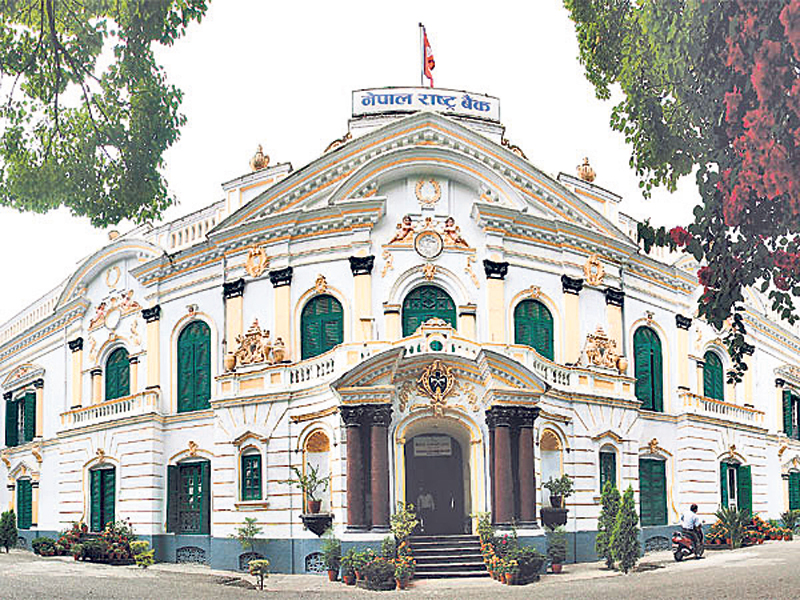
Although a large chunk of funds collected by the government has been used to finance recurrent expenditure, like salaries of civil servants, around Rs 57 billion is said to be locked up in the coffers of Nepal Rastra Bank, the central bank, due to government´s failure to ramp up capital spending.
The cash piled up at the central bank´s vault also includes around Rs 7 billion mopped up by Nepal Telecom for dividend distribution. Since more than 90 percent stake in the telecom company is held by the government, most of the money collected by the telecom company from various banks for dividend distribution also landed in the central bank.
“Deposits at commercial banks will go up immediately if the government is able to release these funds locked up at the Rastra Bank,” Bhattarai said, implying the problem will not transform into crisis for the banking sector.
Yet liquidity strains are currently seen in the banking sector as interbank lending rates -- interest at which loans are extended by one bank to another -- stands at around six-percent level, from less than one percent in the same period a year ago.
At the same time, commercial banks have also started dipping into standing liquidity facility -- money invested in tools like bonds and treasury bills -- under which the central bank extends loans to financial institutions for a period of up to five days at eight-percent interest rate.
In between mid-Feb and mid-March alone, banks and financial institutions used Rs 13.17 billion parked in the facility, the latest central bank report shows.
Related story
Lending slows as banks focus on recovery of loans at fiscal yea...