KATHMANDU, March 24: The Earth’s climate has entered its most unstable phase on record, with scientists warning that the planet’s natural balance is slipping further out of control.
A report released Monday by the World Meteorological Organization (WMO) says rising greenhouse gas concentrations are relentlessly heating the atmosphere and oceans, while accelerating ice melt. The changes, it warns, have intensified rapidly in recent decades and could shape the planet for hundreds to thousands of years.
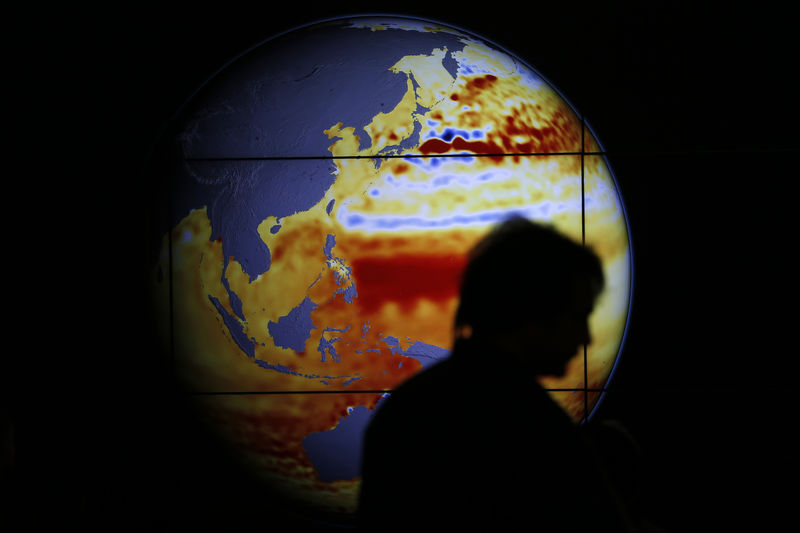
The findings confirm that the period from 2015 to 2025 stands as the warmest 11-year stretch ever recorded. In 2025 alone, global temperatures were about 1.4 degrees Celsius higher than the 1850–1900 average, ranking it among the hottest years in history. Heatwaves, intense rainfall, and powerful tropical cyclones have left a trail of destruction worldwide, exposing deep vulnerabilities in interconnected economies and societies.
SHIFT for Our Planet: Youths urge authorities to make climate j...

The report, State of the Global Climate 2025, highlights a critical paradox: oceans are absorbing vast amounts of carbon dioxide and heat, slowing atmospheric warming—but at a cost. Scientists warn that this process is driving ocean acidification, threatening marine ecosystems and disrupting the global food chain, including fisheries that millions depend on.
Over the past two decades, oceans have absorbed nearly 18 times more energy each year than total global human energy consumption. While this has temporarily cushioned the pace of warming on land, experts say it is storing up long-term consequences—rising ocean temperatures, melting polar ice, sea-level rise, and shifts in ocean currents and ecosystems.
Calling the situation dire, António Guterres, Secretary-General of the United Nations, said the planet is now in a state of “climate emergency.” The streak of record-breaking heat over 11 consecutive years, he stressed, is no coincidence. “This is a call for immediate action,” he said.
Released on World Meteorological Day, the report for the first time identifies Earth’s energy imbalance as a central climate indicator. Normally, incoming solar energy and outgoing heat remain in equilibrium. But record-high levels of heat-trapping gases—carbon dioxide, methane, and nitrous oxide—have disrupted this balance to levels unseen in the past 800,000 years. Measurements show the imbalance has been steadily worsening since the 1960s, with a sharp surge over the past two decades and a new peak in 2025.
WMO Secretary-General Celeste Saulo said human activity is the primary driver of this disruption. “Our weather is becoming more extreme and unpredictable by the day,” she said, pointing to the devastating toll of heatwaves, wildfires, droughts, storms, and floods in 2025 that killed thousands, affected millions, and caused billions in losses.
Scientists estimate that about 91 percent of the excess heat trapped by greenhouse gases is stored in the oceans. In 2025, ocean heat reached record levels, with the rate of warming more than doubling over the past two decades. Since 1993, global sea levels have risen by around 11 centimeters—a trend expected to continue for centuries, according to the Intergovernmental Panel on Climate Change, with some impacts already irreversible.
The consequences are cascading across sectors. Extreme weather is damaging crops, worsening food insecurity, driving migration, and fueling social instability. Health risks are also rising. Dengue has emerged as one of the fastest-spreading diseases globally, with the World Health Organization warning that nearly half the world’s population is at risk. Meanwhile, extreme heat is increasingly endangering workers, particularly in agriculture and construction.
The report delivers a stark message: climate change is no longer a distant threat but a present-day crisis. It calls for urgent action to cut reliance on fossil fuels, strengthen early warning systems, and ground decisions firmly in science.


-1200x560-1774606010.webp)