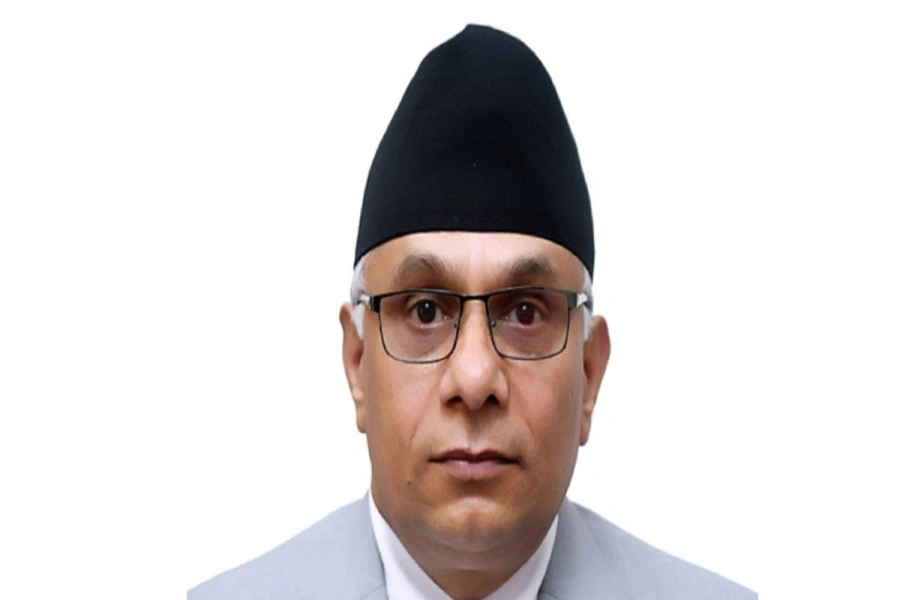
Had Dahal instead chosen to take advantage of his popularity to address the immediate concerns of the people—corruption, law and order, poverty, environment, and many other stresses of public life—he would have been hailed as no less than a God-incarnate and savior of the people. He would have won the hearts and minds of ordinary citizens as another Nelson Mandela, erasing his largely undeserved public image of being responsible for the loss of 16,000 innocent lives, during the period of Maoists’ struggle to dislodge monarchy.
Dahal is now in battle with Nepali Congress nominee Ram Chandra Poudel for the prime ministerial position, to be decided in a parliamentary showdown on Aug 18. There is considerable optimism about Dahal’s victory—that he will win back the job he lost just over a year ago. However, the question is not so much of him winning this contest but, more substantively, of him opting out of the contest and letting someone else of his party become the prime ministerial candidate. For furthering the interests of his party and improving the chances of survival of our new republic, it would be sensible and reasonable for Dahal to choose someone else as the party’s main flag bearer.
There seems to be no good justifications for giving Dahal a second chance to govern, given that he failed at his job so miserably the first time he tried. Also, there are legitimate concerns about his durability and performance as prime minister. Forces that had coalesced together to force him out a year ago remain in place, which would require him to make use of his wit and his energy for ensuring his own survival that would leave him little time and much less energy to tackle difficult issues of public concern The risk will be that a failure of his leadership for a second time will impact his party in a serious manner, putting at risk its very survival. And there are many reasons to believe that Dahal will fail more miserably the second time than he did the first time, the main reasons being people’s diminished enthusiasm for supporting Maoists, India’s reluctance of keeping a relationship with a Maoist government in Nepal in the wake renewed Maoist insurgency inside its own territory, and the economy now being in much worse shape than when Dahal had been elected prime minister the first time.
REASONABLE ALTERNATIVE TO DAHAL
In the background of many serious problems surrounding Dahal’ second term, if he opts out of the race in favor of his deputy Dr Baburam Bhattarai, it offers a number of advantages. The presumption is that under Bhattarai’s leadership, Maoist party will be well-placed to offer a credible alternative to the old mainstream parties. Also, Bhattarai can be trusted more to be pushing for democratic transition than would Dahal. Personally, Bhattarai projects the image of an ideologue to substantially a lesser extent than Dahal does and, therefore, he can be trusted to follow a more pragmatic agenda. It would then be reasonable to assume that Bhattarai would operate in less domineering manner than would Dahal, which implies that Dahal’s personality-cult-driven leadership can easily spillover into a dictatorship. Lastly, Bhattarai’s softer image will make him more acceptable to the international community and, in particular, he can be relied to maintain a more balanced relationship with India than would Dahal, who has the reputation of calling India to be Nepal’s foreign master.
Assuming that Bhattarai gets a go-ahead from his party and is backed up by an unconditional support from the party supremo Dahal, he will be in a stronger position to confront the old nemesis of democracy and die-hard status-quoits—Nepali Congress (NC) and CPN-UML. Despite their electoral rout, ruined public image, and irreversible loss of public trust, these parties seem to have learned nothing from the disasters they caused the country during their two decades of misrule.
However, looking at the electoral arithmetic, Maoists would have to cultivate other alliances to gain majority support which, however, will be much easier for Bhattarai than would be for Dahal because of the problems he faced during his first term in office. Additionally, Bhattarai-led campaign will have more appeal to attract Madhesis into its fold, who may feel more comfortable working with Bhattarai than they would with Dahal. For the Maoist party too, there will be no risk aligning with the Madhesi front—a risk they will surely face in taming the hereditary claimants to government power, NC and UML. With Madhesi parties in the fold, there would be less of a hesitation for other smaller parties in the Constituent Assembly to free themselves from NC-UML hegemony and align with the forces of the future—Maoists and Madhesis.
Related story
ICC T20 World Cup: England set Nepal a challenging 185-run targ...


-1200x560-1774606010.webp)