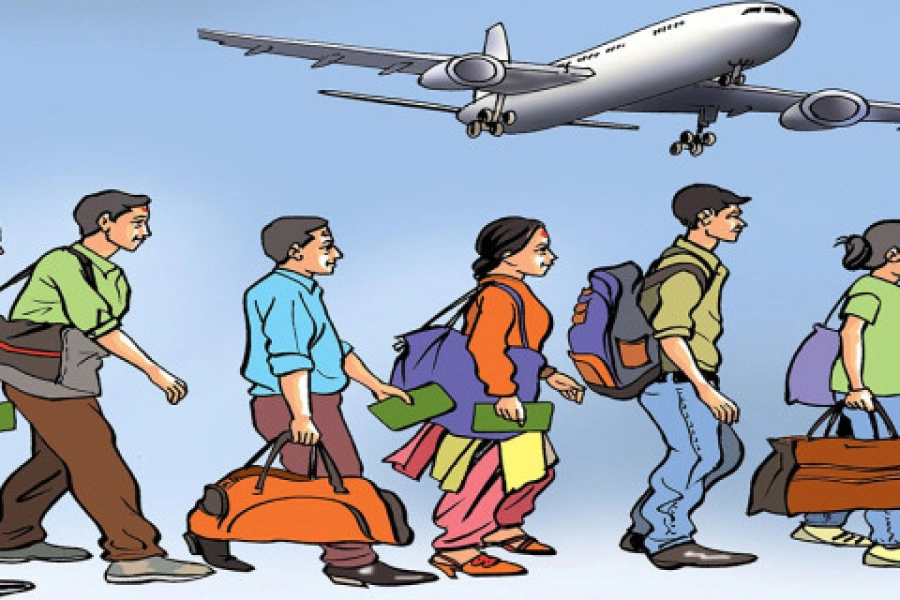
Badaa dukha au pidako saath bhannuprariraheko chha ki gaun ra thaun uhi bhaye pani aba hamro patta-thegana chahi badaliyekochha. Tapailai maloom jankari chhaina hola. Katai samachar-omachar, khabar-obar pani ta kasaile diyena. Na radiole kehi bolyo, na akhabarle kehi lekhyo. Netasetale pani kahin katai bolideyenan. Taba kasari thaha hunchha tapai lai? Tyesaile kitab pathaune thegana tala lekhidiyeko chhu saheb! Note garnuhola!
Shree Ganga Prasad urf Tute Pandit
Gram: Patharpurawa
Uttar Pradesh, Bharat [break]
–Loo by Nayan Raj Pandey
This is part from the epilogue from the novel “Loo” by Nayan Raj Pandey which focuses on the social setting of a Nepali village called Patharpurawa on the Nepal-India border.
The region has been neglected by the Nepali governments and disregarded by the Indian communities as well. Hence the locals suffer, caught in between the borders.
The epilogue is a letter sent by a fictional character “Tute Pandit” from the novel to the author. In the beginning of the novel, the village Patharpurawa is an ideal place of ethnic and religious harmony.
However, a clash arises due to a single incident. Amid government neglect and political disruptions, the scenario worsens and the village people who used to be pride themselves for being Nepali and used to fight against Indians who tried to demean them, end up being a part of the Indian territory – hence the address mentioned in the letter: Uttar Pradesh, Bharat.
By having this letter in the book, the novelist makes his point in such a witty way. How he uses this is also a great piece of political satire. A Nepali village has now shifted to India and yet no radio, newspapers or politicians cared to speak about it.

The region remains neglected and even so called intellectual minds like authors and writers remain ignorant about it. That’s my personal perspective on this.
The book pictures the deeply rooted reasons behind the Madhesh uprising, what the locals felt, why they chose to rebel and what government negligence has led to.
The book, as a whole, is a great read, hard to put down and I finished it in one go. How he incorporates its preface, epilogue and acknowledgement into the story itself is also very fascinating.
About Lamichhane
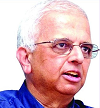
Lamichhane is a writer, theatre actor and a leading young playwright. He’s also the senior script writer and director of the famous radio drama series “Katha Mitho Saarangiko” on BBC 103 FM.
Paaniphoto, a collection of plays is his most recent work. The title play “Paani Foto,” which was also staged at Gurukul, with its simple storyline has been a favorite of many theatre goers.
Veteran theatre artists and gurus from Sunil Pokharel to Anoop Baral all refer to Lamichhane as one of the most promising young writers – not just in plays but in Nepali literature.
Originally from Pokhara, Lamichhane is a lover and follower of simplicity – in his writing style and real life as well. He mentions Anton Chekhov, BP Koirala, Nirmal Verma as his favorites among many writers whom he admires. Currently, he is working on the collection of dramas aired on Katha Mitho Saarangiko along with his short story collection.
(As told to Ujjwala Maharjan)

Saahitya ka aatma-satya
by Nirmal Verma
This is a book about literary philosophies in the context of Indian literature. It’s quite a scholarly book and the author offers great perspectives. But I like the book particularly for one line – “Sachha lekhak bichardhara ka das nahi hota” (A true writer is never a slave to ideology).
I find this statement very true. What I believe is that if writers follow one single ideology, there’s not much new perspective that they can offer. Also, writers have to be open to all kinds of ideologies, make observations while being neutral and write without bias.
 Nyayapremi
 (Translation) of Albert Camus’ Les Justes
(The Just)
I’ve read and seen this play being staged by Gurukul many times. It always captivates me.
The play is about 1905 revolution in Russia where the extreme revolutionaries had even been labeled as terrorists for the bombings.
I like the part where an insurgent, who is sent out to plant a bomb kill the royal family members, returns without doing so upon seeing the faces of the young princes and princesses.
These people, who’ve given themselves to the cause of war, ready to kill and be killed themselves, are also emotional creatures.
I think the whole play also embodies what our country went through and that makes the play more relatable to me.
Samjhanaka Galchhedaharu
by Dha. Cha. Gotame
(Dhanush Chandra Gautam)
The book is a memoir of the author’s life and the lives of people from his periphery – his friends, family members and co-workers. From political perspectives to perspectives on simple daily life events, the author has woven this memoir very beautifully.
I especially love one chapter “Bis briskshamuni” where he talks about how jealousy among his doctor friends embitters their relationship. Because all the people and incidents that the author writes about are so real, it’s more touching.
When I read this book, I’m reminded once again that real life is actually more fascinating that any fiction.
Aatmavritanta
by B. P. Koirala

B.P is one of my most favorite writers. All his books are amazing. Aatmavritanta is just one pick but you learn so much about B.P from this book.
I respect that B.P. has come out so truthfully and hasn’t hidden anything, including even his faults, in this autobiography. Many a times, political history is told by the winners, but BP, though he couldn’t succeed in his political endeavors, writes with such clear and unbiased viewpoint.
There’s plenty you can learn from this person and from this book. A must-read, I say.
Karnali Blues
by Buddhisagar
 This is my pick from one of the young writers. The novel is about father-son relationship.
 The last part of the book where the writer, as a youngster, asks his father where people went after they died, his father lovingly lifts him up in his lap and tells him of the moons and stars and the space beyond them.
That’s something very universal, what every father tells his children, and the way the writer expresses this is so touching.
There are plenty of such nuggets whereby the writer is able to get to you and your innermost feelings so easily.
Related story
EC conducts orientation for national observer organisations








-1781762832.webp)