There is a mixed feeling of hope and fear as the day D-day approaches. The constitution making process finally seems to have gained some momentum. Understandably, the focus has been on forms of governance, judicial system, delineation of federal states, etc. But there are other issues that need equal attention, including the right to health care. It is sad it has become the least of priorities for the lawmakers and constitutional experts.
Health care is as important as food, clothing, shelter and education for human life. It is in fact a fundamental human right and not a mere commodity to be left to the vagaries of the market. The right to health, which is recognized in the Universal Declaration of Human Rights, is the economic, social, and cultural right to the highest attainable standard of health.

Nepal is unique in the sense that the health care delivery, financing, administration and regulation are all haphazard and chaotic. Especially, the financing is entirely based on out-of-pocket payments. There are various drawbacks; the major ones are inaccessibility for the resource-less and likelihood of exploitation by the providers due to difficulty of regulation.
The entire nation is taking a historical step towards a new beginning. The timing could not be more appropriate to address health care related concerns in a package.
The most important step is to introduce the concept of health insurance. It is defined as insurance against the risk of incurring medical expenses among individuals. By estimating the overall risk of health care expenses among a targeted group, an insurer can develop a routine finance structure, such as a monthly premium or payroll tax, to ensure that money is available to pay for the health care benefits specified in the insurance agreement. The benefit is administered by a central organization such as a government agency, private business, or not-for-profit entity.
This would definitely add a tremendous economic burden. There arises a question about the modes of funding the health care system. The general methods of such financing are:
• General taxation to the State,
• Social health insurance,
• Voluntary or private health insurance,
• Out-of-pocket payment and,
• Donation to health charities
In most countries, it features a mix of all five models, but the exact distribution varies across countries and over time within countries. In all countries and jurisdictions, there are many political measures that can influence the decision of a government, private sector businesses or other groups to adopt a specific health policy regarding financing structure.
For example, social health insurance is where a nation´s entire population is eligible for health care coverage; the coverage and services provided are regulated. In almost every jurisdiction with a government-funded health care system, a parallel private, and usually for-profit, system is allowed to operate. This is sometimes referred to as two-tier health care or universal health care.
The new constitution should address the respective roles of central or federal government and state governments in formulating health care policies and laws to incorporate health insurance and modes of financing it.
There are definitely many challenges ahead. However, it should not stop us from moving forward, for retention of the status quo on health care system will be a disgrace for new Nepal.
The minimum expectation from the concerned authorities at this critical juncture is that there be a healthy discussion and debate about these contentious issues before taking any decisions. We hope this will include the participation of experts in related fields. There should be no hesitation to use information, experience and evidence from the entire world to ensure the best possible health care system for future Nepal.
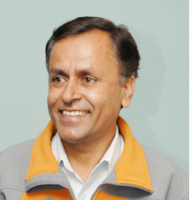
The author is Chief Resident at Internal Medicine department of Saint Joseph Hospital, Chicago, US
Related story
Nepal Cannot Heal Without National Dialogue