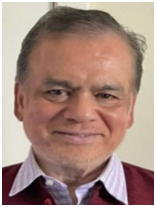
Tuesday night, as I learn of his truly unfortunate and untimely demise, I am not just deeply saddened to lose a friend but also feel somewhat cheated to have had one of my personal heroes taken away. All those who had the privilege of knowing him admired him for his soft-spoken but wise ways. Despite his achievements and vast knowledge, he was not haughty; instead he respected and valued the thoughts and contributions of the smallest people he met.
He was passionate, yes. But, cynical, no. Citizens, activists, journalists, academics, politicians, all of us are often either such optimists we forget to be practical. Or we are such realists we forget to be hopeful. As one who violently fluctuates between the two, Suvash dai was an inspiring figure for me to look up to.
Suvash dai was a man with a vision, but one that had not been able to be corrupted by the system in which he had birthed his vision as is so easily the trap for many. Born into the socio-economic deprivations that many across the nation are, he experienced the added burden of being a so-called low caste.
When society is so cruel, we can only but understand the cynicism of those who have had to endure such discrimination, but he was not bitter. Indeed, he was logical, progressive even. He had said, “In today’s context, inequality should not have to be addressed through reservation. Instead, opportunities should be provided on the basis of merit… even Brahmins can be poor” (see Dalit Hopes and Fears, Republica/January 2, 2010).
From his academic excellence at the primary level in Mujhung, Palpa, his hometown, all the way to prestigious fellowships at the National Endowment Center in Washington DC and, more recently, at Stanford University’s Center for Democracy, Development and the Rule of Law, he had big dreams, but he had a calm and counted way in achieving them.
In realizing the need for a Dalit-focused medium of communication, he founded the now well-established Jagaran Media Foundation. In understanding the importance of civil society during political upheavals leading to Janaandolan II, he founded Collective Campaign for Peace.
I had the pleasure of meeting him while he was completing his fellowship with NED in Washington DC in 2009. He shared his plans to organize an international conference in Nepal the following year, ‘Envisioning the New Nepal: Dynamics of Caste, Identity and Inclusion of Dalits’ he’d called it. And I shared what I had learned at the International Symposium on Caste Freedom Index earlier that year. I was a little bit hesitant to claim my qualms and a bit reluctant to be open due to my elementary understanding. Additionally, I feared he would be sensitive as the topic was surely personal as much as professional to him.
He dreamed with this heart, but he reasoned with his head. Yes, he was a fervent defender and promoter of the dignity and right of Dalits, but he did not lash out. Perhaps I had set my expectations too low, but I’m sure we can all heave a sigh of relief in meeting an activist who listened more than he shouted.
And yet, that was the beauty of Suvash dai. He dreamed with this heart, but he reasoned with his head. Yes, he was a fervent defender and promoter of the dignity and right of Dalits, but he did not lash out. Perhaps I had set my expectations too low, but I’m sure we can all heave a sigh of relief in meeting an activist who listened more than he shouted.
More recently, we met at The Samata Foundation, another brainchild of his. One that was focused on research so as to promote informed prodding that went beyond an emotional tug at the policy-level. As he handed me ‘A Land of Our Own: Conversations with Dalit members of Constituent Assembly’, a collection of interviews he had edited, I thought it was so like him. To raise his points, mind you, well-researched points, without scoffing at those who are otherwise considered the perpetrators.
The thing is, Suvash dai was not bitter, not about his personal experience or about the plight of many Nepalis. He knew the ground realities well, but he had a special way of doing what he had to do to change the hearts and minds of society. He was able to reach across simply because he was never arrogant or irrational.
So, I ask you readers, please excuse me for using this platform to lament the passing away of a friend. But, perhaps even if you did not know him personally, you can forgive me. For, I feel he was an example to the otherwise downtrodden of us, someone who showed us how to fight for change without degrading whom we want to change.
We wish bhauju and nani peace that passes understanding, and the very best to the capable hands his organizations have how been left in.
Rest in peace, dear friend, you will be sorely missed.
sradda.thapa@gmail.com
Related story
A Tribute to PL Dai: A beacon of selfless service