The forthcoming snap elections have made voters like me anxious and undecided, as this is one of the most polarised and divisive general elections in the history of Nepal. I have been voting regularly since the country held the first Constituent Assembly elections in 2008, after the government signed a comprehensive peace agreement with the CPN Maoists. The historic Constituent Assembly (CA) elections transitioned the country from a 240-year-old monarchy to a federal republic. Even though the first CA elections were overshadowed by perceived vote rigging by the then Maoist party with their highhandedness, the election was ultimately held in a peaceful way, making the CPN Maoist the single largest party in the 601-member Constituent Assembly. After the failure of the first Constituent Assembly to deliver the much-awaited constitution, the country held another CA election in 2013 to elect Constituent Assembly members to write the constitution. This election was conducted by an election government formed under the chairmanship of former Chief Justice Khil Raj Regmi. Nepal has already held two general elections under the 2015 constitution, in 2017 and 2022, in a peaceful manner. Voting in the last four elections never made me anxious, but this time, as the election is happening in the aftermath of last year's Gen Z-led protest, I can feel the pulse of polarisation and divisiveness that has gripped the election environment.
The Gen Z-led protest of last September has brought a generational shift in Nepali politics. For a long time, government formation merely became a formality, as it was being rotated between three main parties like a game of musical chairs. Rampant corruption, poor governance, nepotism, and the exodus of hundreds of youths every day to foreign lands in search of a livelihood were simmering aggression in the general public against the established political parties. The reckless decision of the KP Sharma Oli-led government to ban social media apps broke the floodgates of accumulated aggression against the government for years. The arson and vandalism that took place from the seat of government, like Singh Durbar to the Supreme Court, are the results of the same aggression. Even though regressive forces too took advantage of the lawlessness and statelessness in the aftermath of the Gen Z protest.
As these much-awaited general elections are being held to bring the derailed constitution back on its right track and institutionalise the aspirations of the younger generation, the message being heard in the election campaigns makes one despair and full of anguish.
Voters' list rises in Mugu

As the elections are around the corner, I am still undecided about whom to vote for in these much-awaited general elections, as I am still not convinced by old and emerging forces. Voting rationally and responsibly is the need of the hour, as these elections will alter the course of Nepal in significant proportion.
I want to evaluate the options available for us to vote for this time. In these elections, I see the Rastriya Swatantra Party and Nepali Congress as two major contenders, as other parties may win some seats but not in significant proportions, as they couldn't transform and reinvent themselves after last year's protest, which strongly demanded a generational shift in politics.
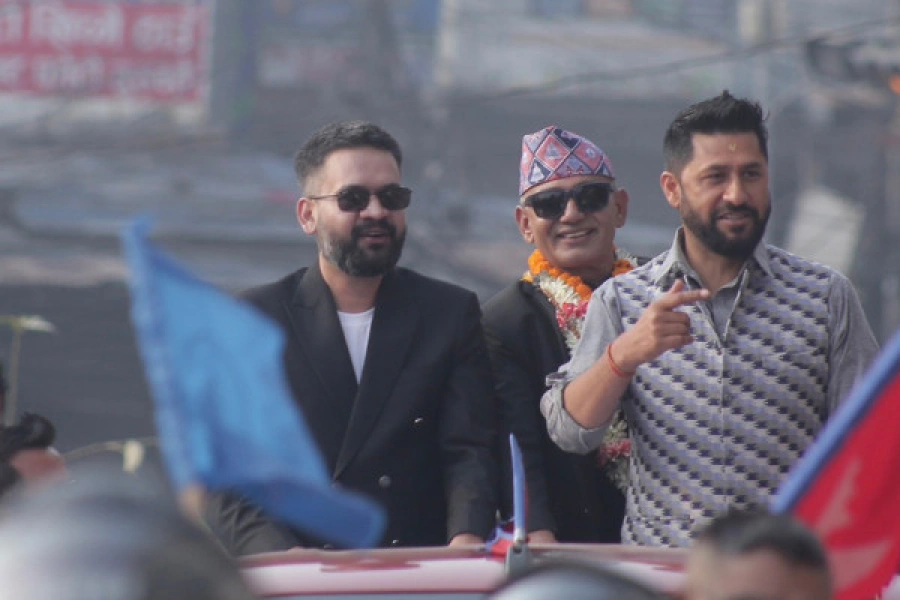
The Rastriya Swatantra Party, led by former TV journalist Rabi Lamichhane, contested the last general elections and won a significant number of urban votes in a very short time after its formation. After the elections, the party which accused others of being powermongers indulged itself in the shameful acts of government formation, seeking its share of the pie. This shows that old and new are just two sides of the same coin. Multiple cases against Rabi Lamichhane of misusing the lifelong savings of cooperative depositors and his indictment by the courts in many cases across the country are ample examples that the leadership of the newly branded party is like old wine in a new bottle. Choosing Balendra Shah as RSP's prime ministerial candidate may have drawn a crowd of people due to his algorithm-driven strong social media presence, but he hasn't been able to convince people with his vision and agenda for the country. I have been following Balen Shah's rallies and speeches in the ongoing elections, but he looks and sounds more like a film actor than a statesman, which this country desperately needs in its most polarised times. We have already witnessed reckless decisions and chaotic municipal meetings that Balen Shah presided over while being the mayor of Kathmandu Metropolitan City. The way street vendors were thrashed by his municipal police and his constant threat to bulldoze squatters without giving them alternatives shows his highhandedness in ruling. A country like Nepal, with its much diversity, needs unifying statesman-like leaders, not someone who is outrageous and full of aggression. Therefore, until and unless these concerns are rightly addressed and the leadership of RSP reassures voters with convincing proofs of refined leadership, people like me won't be swayed away by their algorithm-driven election campaigns.
After the Gen Z protest, among the major political parties, Nepali Congress has internalised the change, even if reluctantly, as its old leaders look like they have gone into political hibernation after the revolt of its young Turks. In this election, Nepali Congress has projected itself as a transformed Congress 2.0, electing firebrand Gagan Thapa as its general secretary through a special convention. Even though current Nepali Congress leaders who are steering the election campaigns look promising and sound convincing, they seem to be lagging far behind in algorithm-driven election campaigns. Many still doubt whether its new leadership elected through the special convention will face political mutiny after the elections. After assuming the party leadership, the young Turks should have reached out to old leaders and mobilised them in election campaigns, but many seasoned leaders are nowhere to be seen. Therefore, for Nepali Congress to be a viable option in these elections and convince undecided voters, they should take the message of its recent leadership upheaval to the grassroots level, assuring the people they will leave no stone unturned in purging the corrupt and crooked leadership of the past who robbed the country of its prosperity. If Nepali Congress, which boasts itself as a mass-based party, can touch the heartstrings of the people with its message of transformation, it could be a viable option in these elections.
As we are close to voting day, political parties vying in these elections should change the tone and tenor of their speeches, making them more conciliatory to assure voters who are anxious because of increasing polarisation and divisiveness seen in their campaign trails. Whoever wins or loses the elections doesn't matter as long as the country wins.