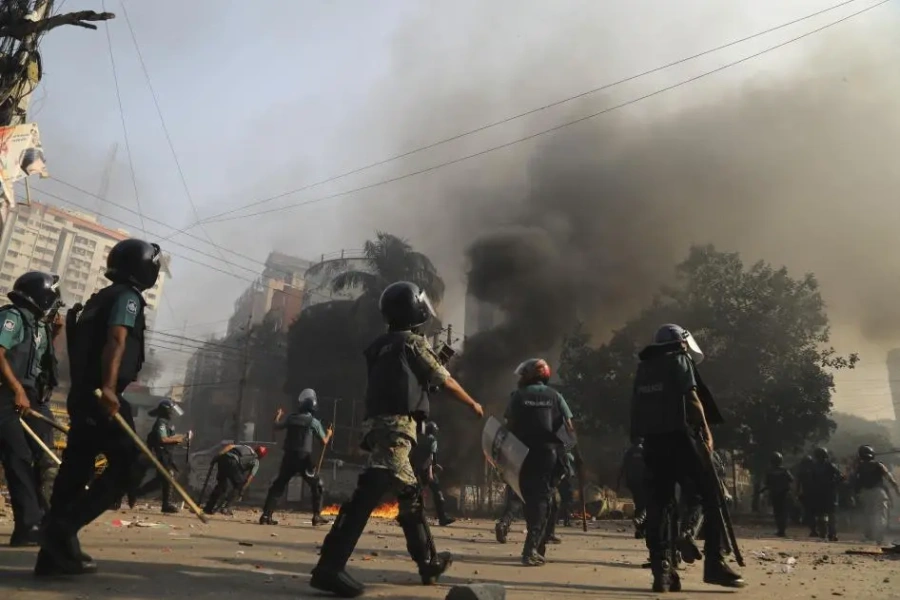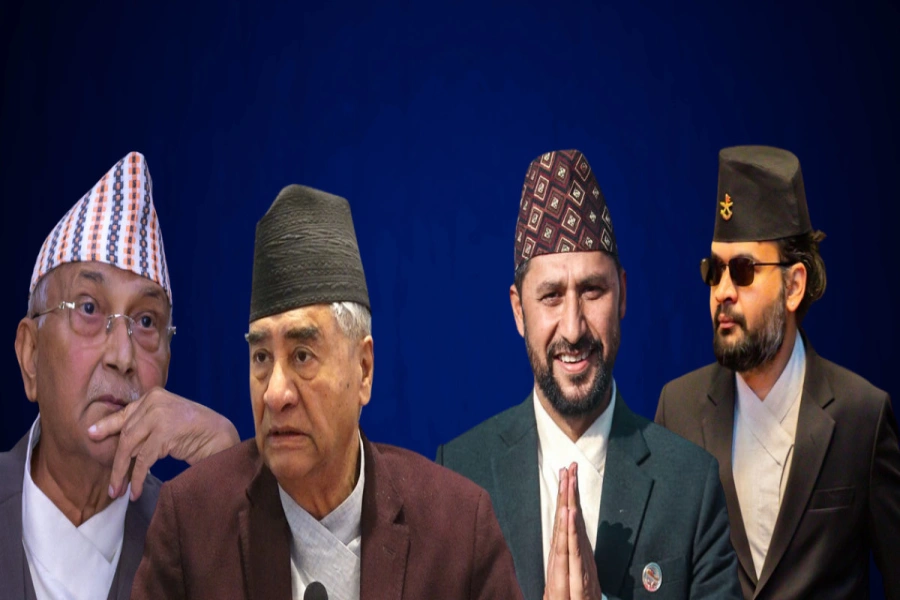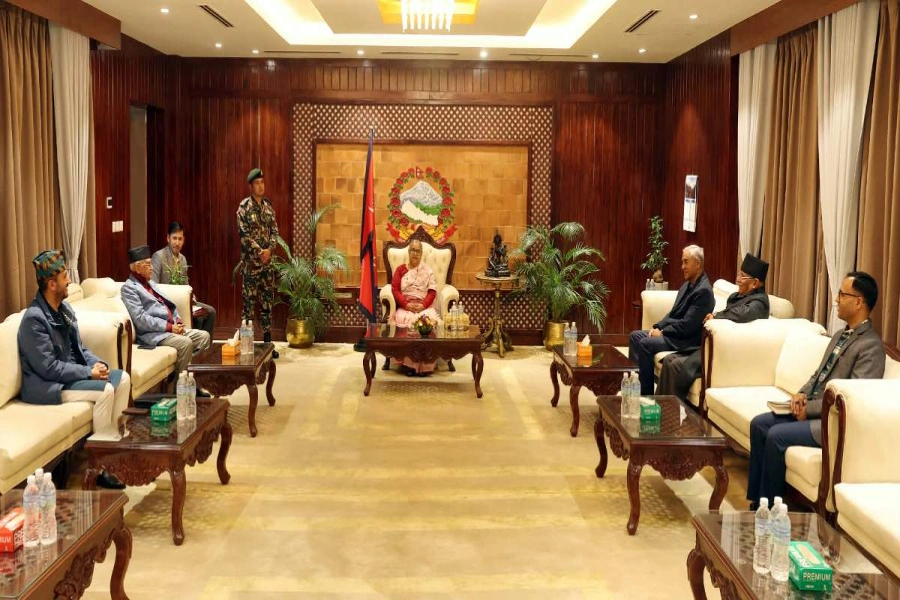
Prime Minister Sushila Karki’s meeting with top leaders of the Nepali Congress (NC), CPN-UML and the Nepali Communist Party—the country’s three major political forces—marks a cautious but significant step towards restoring political trust ahead of the House of Representatives (HoR) elections scheduled for March 5, 2026. The talks, aimed at rebuilding confidence among political parties, followed an earlier meeting convened by President Ram Chandra Paudel at his official residence this week, which helped break the prolonged political impasse. Since the Gen-Z movement in early September, relations between the movement-backed government and the political parties ousted from power had virtually collapsed. The unrest of September 8 and 9—followed by violence, looting, arson and vandalism—left little room for dialogue. In that context, Prime Minister Karki herself had publicly acknowledged that meeting senior party leaders was unlikely. President Paudel’s intervention has therefore played a crucial role in easing tensions and creating space for renewed engagement, making Saturday’s meeting possible and softening the acrimony that had defined recent months. The president’s effort to bring Prime Minister Karki together with former prime ministers KP Sharma Oli, Sher Bahadur Deuba and Pushpa Kamal Dahal can be seen as an important “icebreaker” for broader political dialogue. It has opened the door for the prime minister to directly engage party leaders on future plans and electoral coordination. This comes at a time when doubts persist—among political parties and analysts alike—over whether elections can be held as scheduled.
JSP Nepal, LSP agree to unite as Rabi-Balen alliance signals wi...
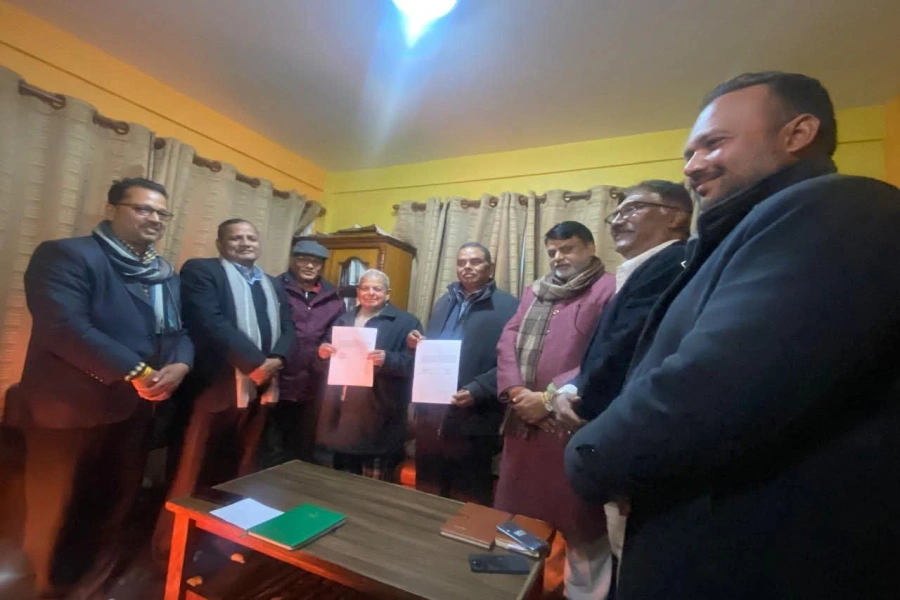
Prime Minister Karki now faces the formidable task of creating an election-friendly environment and persuading all major political actors to participate. Having risen to office on the back of a popular movement, she is under pressure from Gen-Z leaders on one side and established political parties on the other. Her repeated remarks about feeling “caught in a squeeze” reflect the complexity of governing in an abnormal political situation, where holding elections itself is a major challenge. Yet political activity on the ground suggests that parties are gradually shifting into election mode. Recently released Rastriya Swatantra Party (RPP) Chair Rabi Lamichhane and Kathmandu Metropolitan City (KMC) Mayor Balen Shah have been in continuous dialogue, with advocates of alternative politics urging greater unity among emerging forces. At the same time, NC President Deuba and UML Chair Oli have maintained regular communication, seemingly recognising that some form of cooperation will be necessary to navigate the uncertain days ahead. Proponents of alternative political currents, meanwhile, are pushing to strengthen their base with the aim of displacing traditional parties.
The Karki government, formed primarily to conduct elections, appears well-suited to this transitional phase. A government without ambitions beyond holding free and fair polls and stepping aside leaves little room for questions about bias. Efforts by some Gen-Z activists to unseat the prime minister appear rooted in her impartial approach; otherwise, such resistance would be difficult to justify. So far, the government has chosen restraint over aggression, allowing political parties adequate space and refraining from arrests—including of senior leaders—until the report of a high-level investigation commission is released. This inclusive approach is intended to prevent further conflict. However, those responsible for the looting, arson and vandalism on September 24 must be arrested and prosecuted to ensure election security and prevent attempts to derail the polls. Ultimately, sustained political engagement is unavoidable. Reassuring parties, deepening dialogue and building confidence are essential to ensuring credible elections. The dialogue initiated by Prime Minister Karki with the political parties should now be intensified, with a clear focus on safeguarding stability and delivering timely elections as the most viable way out to the current political deadlock.