

Recently, the Nepal Oil Corporation (NOC), a government owned enterprise, has requested the Government of Nepal to provide Rs 240 million in the form of loan to increase petroleum supply in line with higher winter demand. Consumption of diesel and liquefied petroleum gas (LPG) jumps dramatically during winter, especially during current load-shedding. As NOC will not be able to meet the increased demand, it has asked the government for the cash needed to cater to the demand.
NOC was established under the Company Act in January 1970 by the Government of Nepal as a state-owned trading company to deal with the import, transportation, storage, and distribution of various petroleum products in the country. NOC is one of the highest loss-making public companies in Nepal. There are many reasons for this, one being that the political parties do not allow NOC to adjust petroleum price according to international price. The real problem here is not only the management and the staff of NOC; but the government’s regulations on the trade of petroleum products. Since NOC has a monopoly in trading petroleum products in Nepal; in the absence of competition, it does not have any incentive to think of creative ideas to decrease the costs.

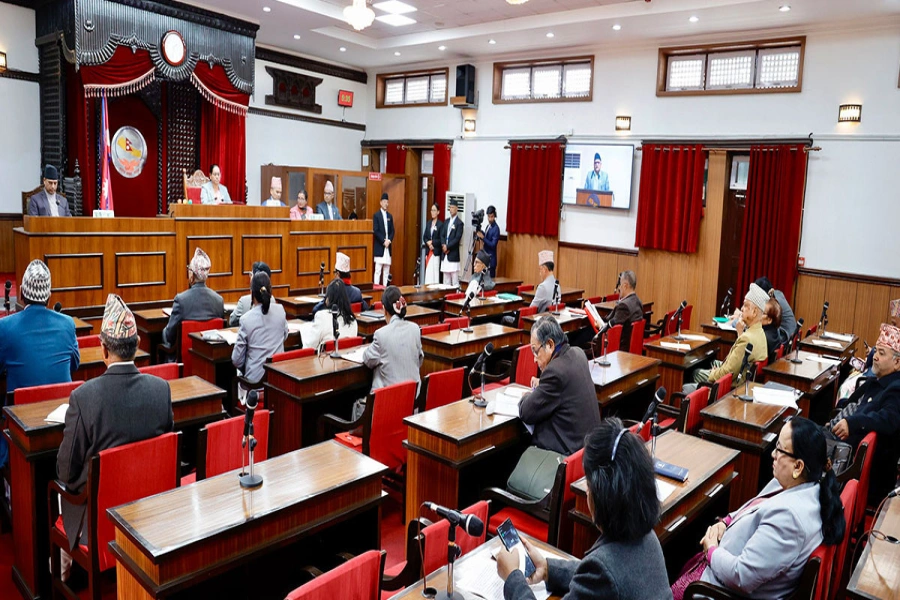
FILE PHOTO/REPUBLICA
The government is seeking to liberalize the sector to end its monopoly and ensure a fair and competitive environment in the petroleum market. The Government plans to open petroleum sector up to the private sector, adopt an automatic pricing system, and set up an independent authority to supervise and monitor the sector. However, the government’s plan flies in the face of the political sensitivity associated with petroleum pricing, inefficiency, the much talked about leakages in NOC, and anti-competitive practices of petroleum dealers, transporters and gas companies.
Currently, the major areas of concern for NOC are fuel conservation, safety, and quality and pollution control. Regarding fuel conservation, consumers are more or less conversant with the idea. Regarding safety measures, all possible steps are being taken to educate the people related to petroleum business, and it is mandatory for depots of NOC and storage facilities of retail dealers to follow safety guidelines. With the relatively recent realization of global warming, pollution, and its adverse effects on the health of the population, NOC’s major new area of concern is quality and pollution control.
A separate Quality & Pollution Control Department has been set up in NOC to ensure this. Its head-office based laboratory is equipped with the necessary facilities for testing the quality of petroleum products. Laboratory testing is regularly carried out, and quality norms are strictly adhered to. NOC has arranged for some mobile vans to check for adulteration and maintain the standard of petroleum products in the market.
Nepal regularly faces an inadequate supply of petroleum products, sometimes due to NOC’s underpayment to the Indian Oil Corporation, and at other times, due to the shutdown of some units of Indian Oil refineries. Also, the public regularly face a price hike of petroleum products. From a market perspective, the rise in price of petroleum products is logical and timely considering the rising global price of petroleum products. But through the eyes of the ordinary Nepali, the price hike decision seems to be deceptive, as it hinders poverty reduction.
Does Nepal have a Petroleum policy? Apparently not: Subsidy is its one and only policy. NOC shields consumers from the sharp rise in international oil prices, but cracks are opening up. Deficits are widening, and many analysts are wondering how long the government will be able to shield its consumers. Subsidy is not new, and as the concept of welfare state is getting global, more and more nations are practicing this form of protection. Today, no matter how hard they preach free trade, in reality, countries such as the United States and Japan provide huge subsidies to their farmers. But in the context of Nepal, the efficiency of subsidies is open to question, because some researchers have concluded that heavily subsided kerosene and LPG do not reach targeted households. They are reaped by the richer half of Nepal ’s urban population
Learning from history
Regarding subsidy, there is an interesting historical incident which might be of interest to Nepal. In 1970s, there were energy crises throughout the world due to the rapid economic development, and fuel prices were rising. The effects of fuel shortage were far more interesting than mere price hike. The UK government subsidized fuel cost, and as a result, more and more fund was needed for subsidization. This benefited the companies dealing with petroleum products, but funds for the social sector were cut, drastically impacting the daily lives of people. Similarly, Germany also partly subsidized fuel (far less than UK) and invested heavily in alternative energy like wind mills and small hydro plants.
The effects were almost the same as in UK. Likewise, US declared an aggressive Research and Development (R&D) plan to increase fuel efficiency and decrease fuel dependency, and invested more on nuclear energy. Japan implemented import tax on petroleum products, further increasing fuel costs. Economists predicted that Japan would crumble in ten years, people were against the move, but the government did not move back. Private companies started their own research to decrease the fuel dependency.
Efficiency of subsidies is questionable. Subsidized kerosene and LPG do not reach targeted households.
The result was the Japanese and American economic imperialism of eighties and nineties. Today, India’s energy efficacy is only 10 percent of that of Japan, and the reason is subsidy. Nepal, heading towards subsidy, should learn a lesson from it. The dilemma is that on the one hand, the Government cannot increase the price of the oil, as the country has already recorded an official inflation rate in double digits, and on the other hand, international price of crude oil has increased significantly with indications that it will increase further.
Some opine that every year, money spent to subsidize petrol and food together is enough to build a big hydro power station. But many people cannot even afford fuel to cook if the government does not subsidize kerosene, LPG, and diesel. How can Nepal progress by ignoring the poor, deprived and marginalized people of Nepal?
In the neighboring India, petroleum price hike does not come as a bombshell, because the public is sufficiently sensitized through advertising and Public Relations to accept the inevitable with some adjustments. Nepal should learn from this. Nepal cannot afford to make subsidy its petroleum policy forever. It’s not the price of the petroleum products that’s too high; it’s the level of tax on it. Hence, it is high time the government took some tax off of petroleum products.
The author is former CEO of Nepal Stock Exchange Limited (NEPSE)
shankermansingh@gmail.com
Related story
'Spider-Man: No Way Home' Gets Special Hardcover Making-Of Book











-1200x560-1779450784.webp)


