Similarly, imbalances in river water undertakings like Koshi and Gandaki were results of our inferior technical/negotiation capabilities vis-à-vis those of the Indians during those days and any disproportional benefits to India were unintentional.
Contrary to the communist fantasy that our sovereign status is ardha-aupanibeshic (or that of Indian ‘semi-colony’), Nepal has consolidated and enhanced her nationalism within its boundaries for the last six decades, besides successfully promoting her national identity beyond the borders. Thanks to the pains, prudence and patriotism of our leaders, namely Mahendra, BP Koirala and Birendra, the nation founded by Prithvi Narayan Shah is no longer a northern buffer or protectorate of India. We are not an isolated hermit state either, as we were before; rather we are an independent sovereign state and proud member of the comity of nations.
Inferiority complex, fear and cynicism among smaller nations/peoples bound to live with bigger and more powerful neighbors are natural. They are no problem. The problem that hinders our development is the Indo-phobia of certain groups, which checks governments from entering into any deal with India for the fear of a backlash. This deprives the country of opportunities of investment and markets and benefits that can be derived from shared natural resources. Instead of capitalizing on the proximity to one of the fastest growing economies on earth, anti-Indian activists live with the paranoia of ‘Sikkimization’. That Nepal is not Sikkim and that 2011 is not 1973 doesn’t make sense to them. In fact, if Nepal ever ceases to exist, Indian ‘design’ will not be the reason; proposed ethno-federalization of the country that will invite ethnic clashes and national disintegration will.
The last time Nepal and India signed a serious business deal (excluding the periodic trade and transit treaties) was 15 year ago in the form of the Mahakali treaty. Much water has flown in Bagmati since. It is possible to meet the needs of the growing number of people on both the sides the ‘no-man’s-land’ through mutual cooperation. But bad politics has made merit-based discussions on issues of mutual cooperation with India almost impossible.
Paradoxically, secret political deals with Indian politicians, diplomats and agents of RAW that help strengthen their power positions are welcome among our politicians, whether to the left or to the right.
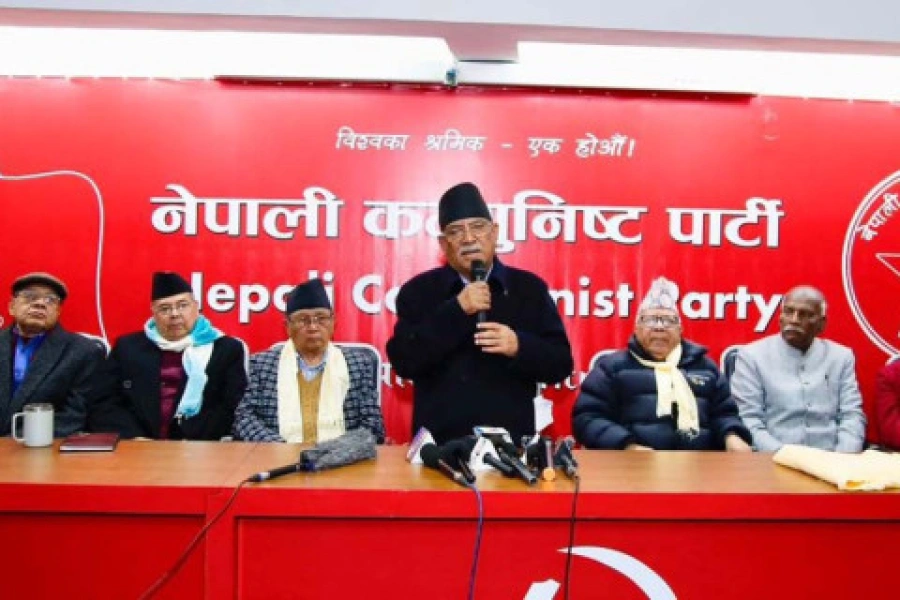
The communists in Nepal have perfected the art of crying foul whenever a deal of any significance is signed with India. This betrays the reliance of almost all the political parties on the southern neighbor to hang on to power.
Communists have reasons and compulsions to maintain this double standard. They need enemies in the form of capitalists, imperialists and colonialists to remain relevant. In case the villains are not available, they have to create one. This is where the ‘hegemonic’ neighbor with a plethora of politico-security interests and concerns in this country, both real and perceived, fits in.
However, as soon as they realize that political support of the overbearing neighbor is vital to acquire (and to remain in) power, they make a U-turn and start currying favors with India. In fact, the space and leverage the Indians have in our internal affairs is the gift of Nepali politicians. It is a different thing that normalizing relationship with India often costs the communists as dearly as spoiling it does; history is witness that radical communists often break the party accusing the party leadership of surrender and vowing to continue the struggle for ‘national independence’ against the ‘expansionists’. This is what happened in the case of CPN-UML, which split over the parliamentary endorsement of the Mahakali pact, and this is what could happen to UCPN (Maoist).
There is no denying that we have more problems with India than we have with any other country. This is natural because we have more interaction and more business with her than we have with any other nation. Besides, we are bound by the ties of geography and culture that have facilitated an unprecedented people to people contact.
If the treaty of 1950 has outlived its utility, as many argue, or if it is harmful to our national interests or our self-respect, or if it is ‘unequal’, as communists claim, the treaty should have been nullified when the communists were/are in power. Or, they could have drafted a new treaty and brought it up for discussions with India, which the latter has been asking for a long time. They have managed to do neither, because creating national consensus for nullification and for a new treaty is not as easy and attention grabbing as is painting slogans like “Down with unequal treaty”.
Every now and then Nepal Police arrests people with ill motives towards India and large quantities of counterfeit Indian currency are confiscated in Nepal. But, as the proposed extradition treaty has been in limbo, the Indians have now resorted to alternate methods of dealing with the menace, and not all of them are pretty. On one hand, both Nepal and northern India suffer from acute power shortage and on the other, our opulent water resources are wasted every day, mainly because any hydro-power deal with India will backfire politically.
Sometimes, poorly-informed Indian leaders or celebrities pass on some stupid remarks about Nepal without any regard to the sensitivities of a small nation. And, without verifying the authenticity of such remarks, which could have been misquoted or even false, as was the case in the Hritik Roshan incident, cadres of the so-called nationalist and leftist parties go on a rampage on the streets of Kathmandu against their own compatriots.
We have disputes at multiple locations along our 1,700-km border with India, Susta and Kalapani being the most contentious among them. We cannot afford to lose a single inch of our territory; but we don’t have enough power and tools to put pressure on India to settle those disputes in our favor. Our natural/conventional dependence on India for a safe passage to international waters has now extended to areas of economy and business as well such as trade, employment, BoP, and supplies of essential items including petroleum products.
And the dependency will only grow in the days ahead as we are entangled in petty political wrangling while India is developing by leaps and bounds. If we could construct big dams to supply energy and control floods in Bihar and UP, our bargaining power vis-à-vis the disputed border areas would increase. Unfortunately, misguided nationalism often plays the spoilsport.
jeevan1952@hotmail.com
Related story
KMC issues a 35-day ultimatum to RB Complex and People's Plaza...