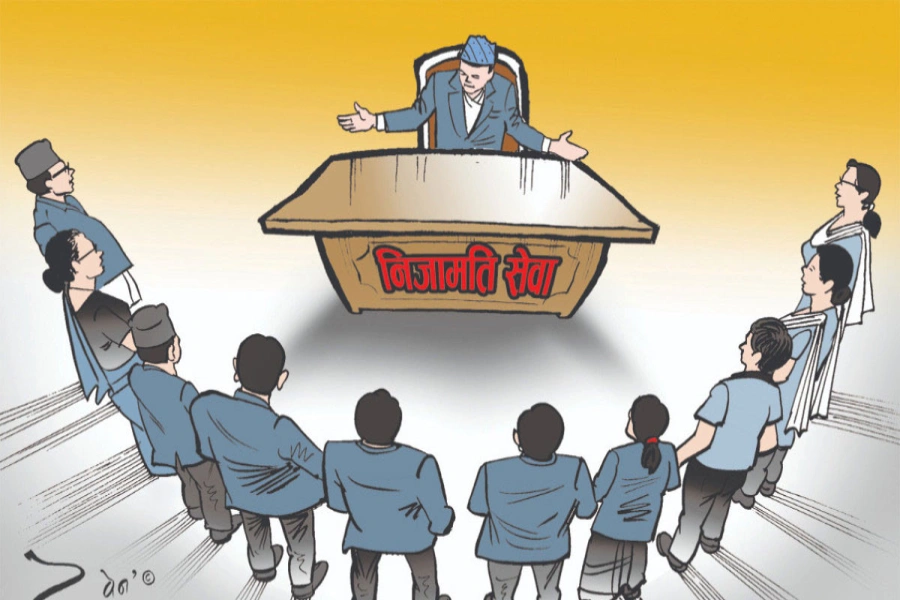
The democratic republican system adopted by Nepal aims to ensure equal opportunities for all. Inclusion—or positive discrimination—lies at the heart of this commitment. To operationalise it, the Constitution mandates the establishment of the Inclusion Commission, and reservation quotas have been introduced in Public Service Commission (PSC) examinations to ensure representative appointments across castes and communities. The Constitution requires that these quotas be reviewed every ten years. Yet, despite 18 years having passed since the provision came into force, no review has been conducted. This failure has not only weakened the effectiveness of the inclusion system but also prevented the intended groups from benefitting. Instead, those who have gained the most are predominantly influential individuals—mainly urban residents with access to power structures. The inclusive recruitment system has been in place since 2007, following an amendment to the Civil Service Act, 1992. More than 26,000 individuals have benefited so far. In principle, reservation benefits should not be granted repeatedly to the same person. Once used for appointment or promotion, the facility should be available to others. When both parents and their children repeatedly benefit, opportunities fail to reach new recipients.
Bangladesh’s experience offers a cautionary tale: descendants of freedom fighters received reservation benefits for generations, leaving many excluded and fueling public unrest. Any reservation scheme must therefore define how long such benefits continue and when they should end. When the same individuals or families repeatedly benefit, resentment grows. The Inclusion Commission has consistently recommended a review of reservation quotas in its annual reports to the President. Although the Ministry of Federal Affairs and General Administration is responsible for the review, political consensus is required for any decision—something no party is eager to pursue due to its unpopularity. Yet, revising the quotas to broaden the reach of inclusion would likely receive strong public support. Resistance emerges only when a small group monopolises the benefits. Due to the absence of timely revisions, several positions could not be filled in recent years. In FY 2024/25, 38 advertised posts received no applications, largely because the reservation quotas were outdated. The Civil Service Act currently recognises six groups—women, Madhesis, Dalits, persons with disabilities, indigenous nationalities and candidates from backward regions—while the Constitution also mandates inclusion for Khas Arya, Tharu, Muslim and other minority groups. A comprehensive review is clearly overdue. The federal civil service bill under consideration proposes limiting reservation benefits to a single use. Without such reform, individuals can claim benefits multiple times throughout their careers. Some persons with disabilities, for instance, have continued to receive benefits even after their disability status changed. The system will remain meaningful only if benefits reach a wider population instead of recurring to the same individuals.
Railways shortens advance reservation period from 120 days to 6...

Abuse of the system has long been acknowledged. The Inclusion Commission has recommended barring children of ministers, lawmakers and senior civil servants from receiving benefits. Privileged individuals accessing such benefits undermines the very purpose of inclusion. There have been cases of individuals changing surnames to qualify for quotas, and of children of higher-caste parents claiming benefits through marital ties. Some have even qualified simply because their surname resembles that of a reserved group. The spirit of the Constitution and the law is to extend opportunities to as many people as possible. Nepal introduced inclusion because many communities had historically been denied access—but this does not justify allowing those who have already benefitted to continue doing so. Those capable of succeeding without state support should step back, yet many still exploit the system. Nepal’s inclusion framework is significant and rooted in the country’s political movements. But if the benefits continue to flow to the already privileged, the aims of those movements remain unfulfilled. Implementing the reforms recommended by the Inclusion Commission is essential, and the government must take this seriously. Quota misuse is visible not only in civil service recruitment but also in political representation. For example, the rule requiring either the chief or deputy chief to be a woman has resulted in women being relegated mainly to deputy chief positions—an imbalance evident across local governments. A legal provision is meaningful only when it reaches those without access. Empowering the powerless is key to building an equitable society. The government must therefore reconsider the reservation system and, if necessary, introduce a new foundation for inclusive governance. Only through the genuine application of equality principles can Nepal’s inclusion policy achieve its intended impact.