

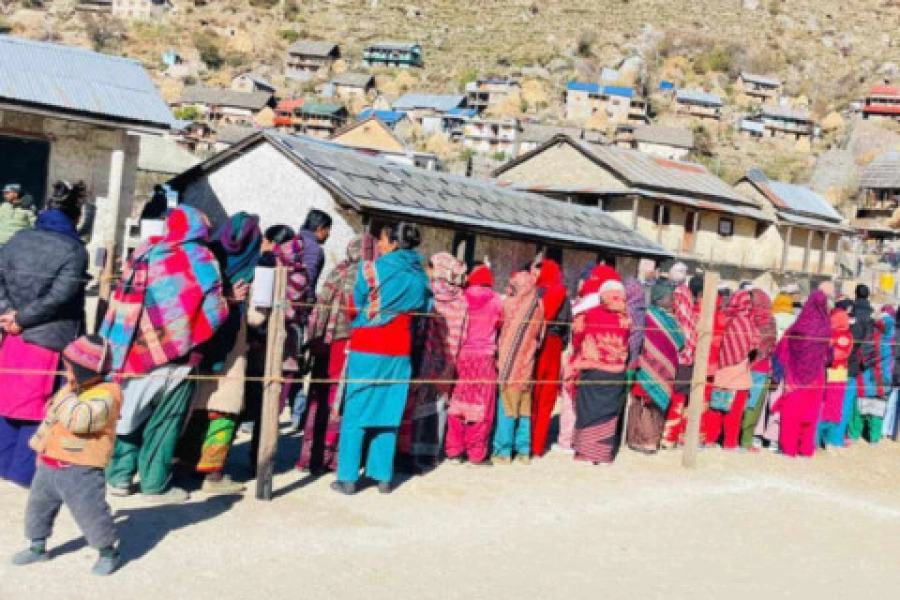
KATHMANDU, March 5: Nepal goes to the polls on Thursday as citizens aim to restore the country to the constitutional path, nearly six months after political unrest and Gen Z movements shook the nation.
Prime Minister Sushila Karki has urged all stakeholders to act responsibly to ensure a successful election. Having assumed office on September 12 following violent unrest on September 8–9, Karki described the House of Representatives (HoR)’s election as the culmination of efforts to return the country to constitutional governance.
A total of 18,903,689 voters—including 9,663,358 men, 9,240,131 women, and 200 others—along with 186,142 temporary voters, are eligible to cast ballots between 7:00 AM. and 5:00 PM across 10,967 polling locations and 23,112 polling centres nationwide. For the First-Past-the-Post (FPTP) system, 65 political parties and independent candidates are fielding 3,406 contestants, comprising 3,017 men, 388 women, and 1 other. In the Proportional Representation (PR) category, 3,135 candidates—1,363 men and 1,772 women—are competing, including 1,143 independents. Citizens will elect one representative from each of the 165 constituencies directly, while 110 PR seats will be allocated based on nationwide party votes.
To ensure smooth and secure polling, 79,727 Nepali Army personnel, 75,797 Nepal Police personnel, 34,567 Armed Police Force personnel, 149,090 election police, 215,000 government employees, and officers from the National Investigation Department have been deployed nationwide.
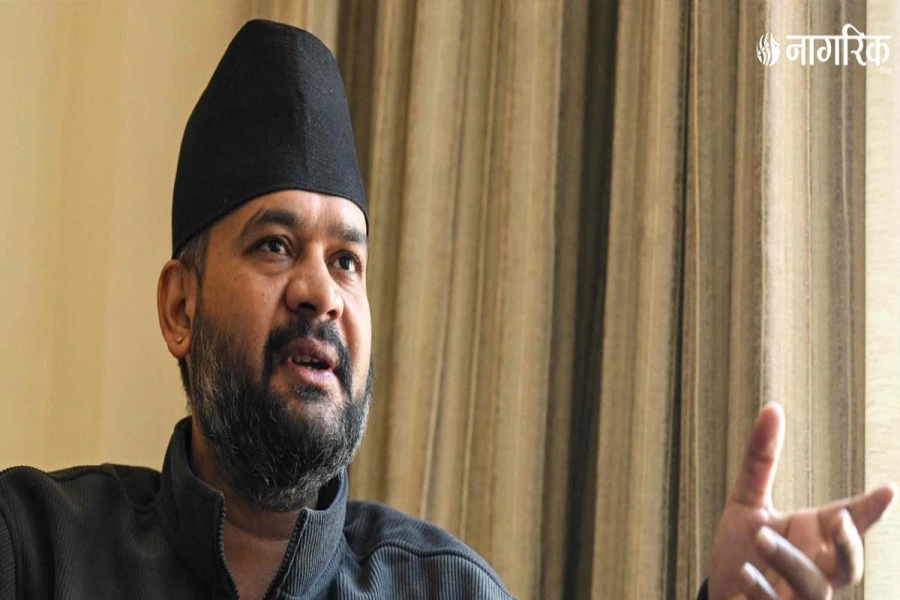
True revolution begins with knowledge: PM Shah
The Election Commission (EC) said it has made special arrangements in all provinces to accommodate voters. In Madhesh Province, the highest number of polling locations—2,160—and 4,471 centres have been set up to serve 3,636,414 voters across eight districts, who will elect 32 representatives directly. In Karnali Province, the fewest polling locations—941—and 1,437 centres have been designated for 1,037,250 voters across 12 constituencies.
Bagmati Province has 1,815 locations and 4,341 centres for 3,682,310 voters, while Koshi Province has 1,907 locations and 4,270 centres for 3,574,310 voters. Gandaki Province has 1,297 locations and 2,396 centres for 1,870,065 voters. Lumbini Province has 1,671 locations and 3,998 centres for 3,386,680 voters, and Sudurpashchim Province has 1,176 locations and 2,199 centres for 1,716,660 voters. Additionally, 143 temporary polling locations have been established nationwide to facilitate voting.
The 275-member House of Representatives elected on Thursday will determine the country’s policies and governance for the next five years. As the highest institution representing the people, Parliament will also elect the executive head—the prime minister.
The interim government, formed after the two-day September uprising, had announced the election 22 months ahead of schedule—a move that initially drew skepticism from political parties. The election is viewed as essential not only for restoring constitutional order but also for safeguarding the constitution promulgated by the Constituent Assembly.
Voting on Thursday is expected to re-establish multiparty governance, parliamentary authority, and address demands raised by the younger generation. Citizens’ choices will influence development, stability, and good governance after years of political mismanagement, internal party disputes, and disillusionment following past elections.
Voters are not seeking a party-less alternative, nor are they calling for capable, accountable, and mature representatives. The election, seen as a civic festival in the country’s democratic tradition, is a test of citizens’ judgment and the resilience of Nepal’s institutions.
Thursday’s election marks a pivotal moment in Nepal’s democratic journey. Citizens’ participation will determine whether the country moves beyond political deadlock, restores constitutional order, and lays the groundwork for sustainable development.
The EC has reassured voters that no elements are intending to disrupt the elections and urged citizens to vote with confidence. Speaking at a press conference on Wednesday, Acting Chief Election Commissioner Ram Prasad Bhandari said that so far, no underground elements aiming to disturb the elections have been identified, and the government has taken full responsibility for security.
He added, “From the outset, there were concerns about security in this election, which is being held under a new government formed after the previous regime. The government’s heightened deployment of security personnel reflects their sensitivity to safety concerns, but this is not a negative sign.”
He also noted that the visible deployment of a large number of security personnel on the streets ahead of the election is being seen by the EC as a positive and reassuring sign.






