As a mother at “Our Home” in Chitwan, she currently looks after 14 street children.[break]
Without parental guidance and care, street children are likely to take to unwanted and even criminal activities. Having realized this, some women of Chitwan took an initiative to set up a children’s home for their care and education. And Our Home, that they set up, has become a model for caring the street children properly. Sigdel’s guidance has successfully changed the behavior of 14 street children she is taking care of. All the children lovingly call her “mom”.
Established in 2006, the organization is neither funded by the government nor by any big national or international donor. It is the brainchild of local women and is being run with voluntary kind and cash donations.
When the women decided to establish the children’s home, they were worried that they could not find someone to work as a mother without a salary. When Sigdel, a former government employee, proposed that she was ready for the job, they were taken by surprise and could not believe it. But Sigdel pleasantly surprised one and all by creating a familial environment at Our Home and making the kids feel at home. They are now comfortable with Our Home and feel they have got a new lease of life.

“It was difficult to believe that street children could be rehabilitated. Many NGOs also run such homes but they failed. But this children’s home proved all our assumptions wrong,” says Bishnu Lohani, a local. “The credit goes to the devotion and dedication of Sigdel,” he adds.
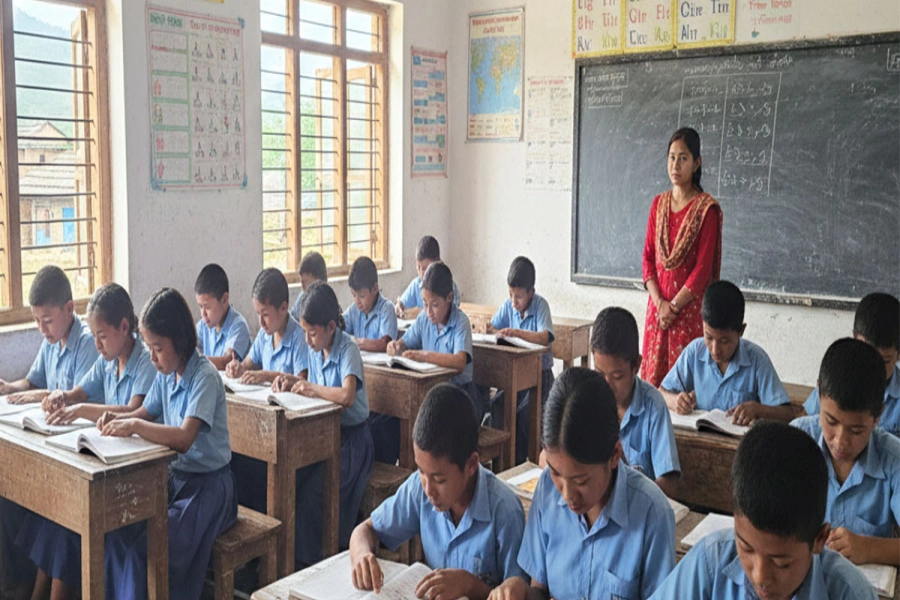
The children are enrolled at the local school and are excelling in different fields. Some have received the best student awards while others have developed interests in painting and caricature. Two kids have become yoga trainers. They remain clean and tidy and behave well. People enjoy talking to them.
But the street children were not so when they joined Our Home. The recalcitrant kids would swear, fight over petty matters, and physically resist from bathing. They also disturbed the neighbors with their behavior. But Sigdel’s love changed their lives.
“I had to care for the children more than a real mother does,” recalls Sigdel who is also a mother of a daughter. She spent more time for the care of children than at her own house. Sometimes, she was even disappointed when she found the children not improving. But her hard work paid off. Finally she succeeded in changing the behavior of the children.
The deprivation of motherly love and care she endured as a child motivated her to bestow her love on the street children. She was married at the age of 14 and gave birth to her first child before getting through School Leaving Certificate (SLC). Then she learnt knitting and type-writing. She briefly worked for the attorney’s office in Nepalgunj, and then for Women Development Office in Kanchanpur.
While working in Kanchanpur, she understood the vulnerable conditions of women and children, and began to be sympathetic to them. She also knew how women were apathetic about the condition of other women. Looking at their plight, she became more comfortable with who she was and what she had.
Meanwhile, she was transferred from Nepalgunj to Chitwan. Her daughter was appearing in SLC exams at that time. When she was again transferred to Palpa, she asked the authorities not to do so for a year as she wanted to give some time for the guidance and education of her only daughter. But her request fell on deaf ears. And she quit the job and ran a small retail shop.
But her experience of working with poor women did not let her stay idle in the shop. When she heard about Our Home, she decided to devote herself to change the lives of the street children for the better.
Now the children get up in the morning, take bath and practice yoga and meditation before going to the school. Besides, Sigdel teaches them good behavior and moral integrity every day.
“The children’s home has become a model of welfare initiative for street children. Sigdel has turned it into a success,” says Mina Kharel, secretary of Our Home.
Sigdel’s friends and relatives have frequently advised her to quit the work and look for some well-paying job. But she replies that she is not working for money, but for her own satisfaction.
“You can make good money if you put in the same efforts in other fields. You have suffered due to your own choice,” her well-wishers tell her. She just receives pocket money for working there. But she says she is happy with whatever she has and feels perfectly satisfied with the work.
“They love me because I share love with them. Money is not something I run after,” she says.
She has already married off her daughter and has also been living separately from her husband. For her, the children’s home is her home and her world and beyond that her happiness.
Related story
‘We’re not alone’ - ‘Sesame Street’ tackles addiction crisis