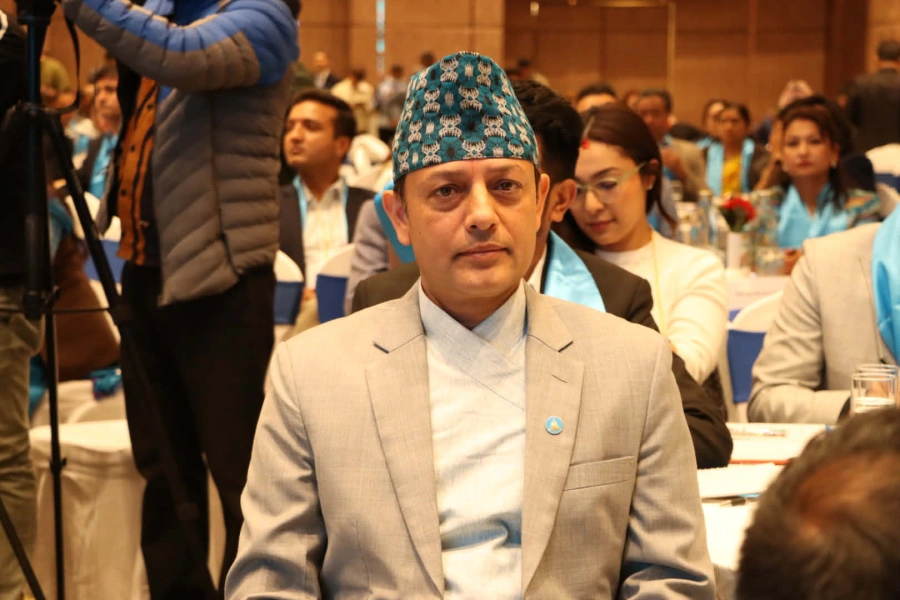
Inaugurating the session, Prakash Mathema of Nepal, asked the concerned parties to show leadership to achieve real and substantial progress on the negotiation of a 2015 treaty and to close the mitigation gap before 2020. [break]
“There is no more time to waste, so we need to stop going round in circles,” he said. Nepal was handed over the leadership of the group of the Least Developed Countries (LDCs) in December 2012.
Mathema added that the sum of mitigation-related actions by all Parties should lead to an aggregate global emission pathway that is scientifically consistent with limiting warming below 1.5°C by the end of the 21st century. “This calls for clear short, medium and long-term commitments which should be subjected to regular reviews, and be based on latest science,” he stressed.
According to Mathema as the effects of climate change are already being experienced and these are increasing in frequency, magnitude and intensity, delay in action against climate change is not an option. “Over the long and tedious journey of the climate change negotiations, the LDC Group has continuously stressed that they will be the most seriously hit by the impacts of climate change. The effects are already being seen - we are all experiencing an increased number of droughts, severe storms, and floods. We cannot delay in taking action against climate change,” he said.
A statement issued by International Institute for Environment and Development based in London, Mathema stressed that adaptation and climate resilience are the top priorities for the LDCs for which international support for technology, capacity building and finance is still inadequate.
“If global emissions are not limited, our countries will be confronted with a situation where adaptation requirements will far exceed capacities even if all possible international support is provided,” the statement quoted Mathema as saying.
Related story
SHIFT for Our Planet: Youths urge authorities to make climate j...