

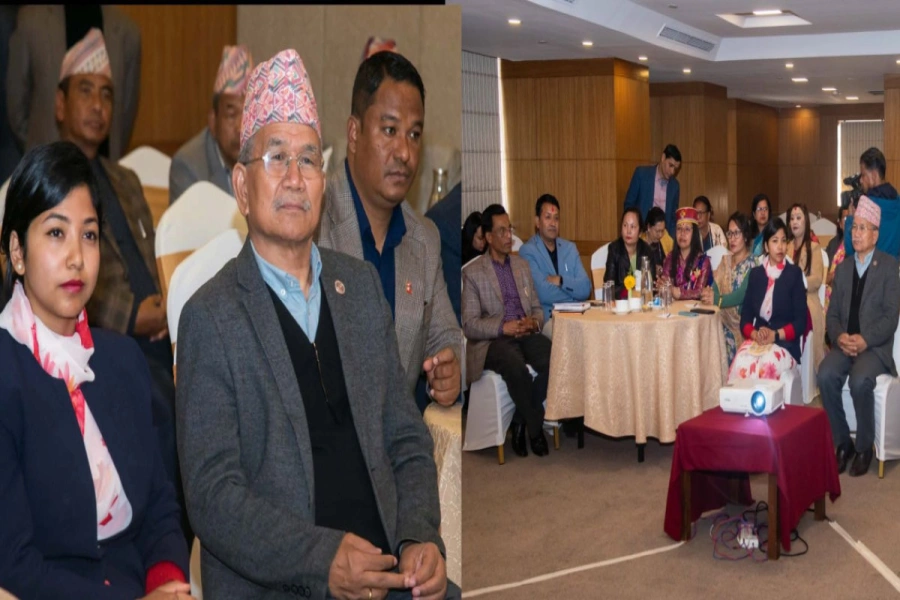
KATHMANDU, Feb 20: In a bid to tackle some of the Valley’s most persistent urban challenges, the Kathmandu Valley Mayors’ Forum (KVMF) has decided to form a study and coordination committee to explore scientific and sustainable waste management across Kathmandu Valley.
At a meeting held on Thursday, the KVMF agreed to review past study reports on sustainable public transportation and work with the federal government to develop a practical, Valley-friendly model. Alongside this, it resolved to establish a dedicated committee to examine waste management technologies and systems, while facilitating coordination and collective action among local governments.
The KVMF's 13th meeting, chaired by Lalitpur Metropolitan City Mayor Chiribabu Maharjan, also endorsed drafting necessary legislation and preparing a master plan to construct cycle lanes stretching from Godavari to Budhanilkantha. Infrastructure development and operational planning will be carried out in coordination with the federal government.
82 per cent work under Lumbini Master Plan completed

Stressing the urgency of integrated urban development, KVMF Chair Maharjan said local governments are ready to collaborate with the federal government to advance the metro rail concept. He added that authorities are equally committed to ensuring uninterrupted and efficient public transportation during the construction and eventual operation of metro infrastructure.
Maharjan further informed that a comprehensive review of previous public transportation studies, along with proposals for a Valley-suitable framework, will be presented at the next meeting.
Kathmandu Metropolitan City (KMC) Acting Mayor Sunita Dangol underscored that any public transport model must align with the Valley’s geography, settlement patterns, cultural heritage and social practices. She called for a thorough reassessment of earlier studies to determine the most feasible and context-appropriate options before implementation.
Dangol also emphasized that waste management, public transportation, drinking water distribution, river conservation, food safety, disaster management and climate change mitigation are interconnected, borderless challenges that demand coordinated solutions. She urged the Forum to serve as an effective platform for collective problem-solving.
Before the formal discussions began, Sarita Rai, Chief of the Environment Management Department at KMC, presented an overview of current waste collection, transportation and disposal practices, highlighting sustainability gaps and future requirements. Particular attention was given to landfill site management and the division of responsibilities among local governments.
At present, waste from 24 local units across six districts—including Kathmandu—is disposed of at a shared landfill site, Bancharedanda in Nuwakot. While municipalities and private operators handle transportation, KMC oversees site management—an arrangement that once again underscores the need for stronger Valley-wide coordination.







-1782782519.webp)


