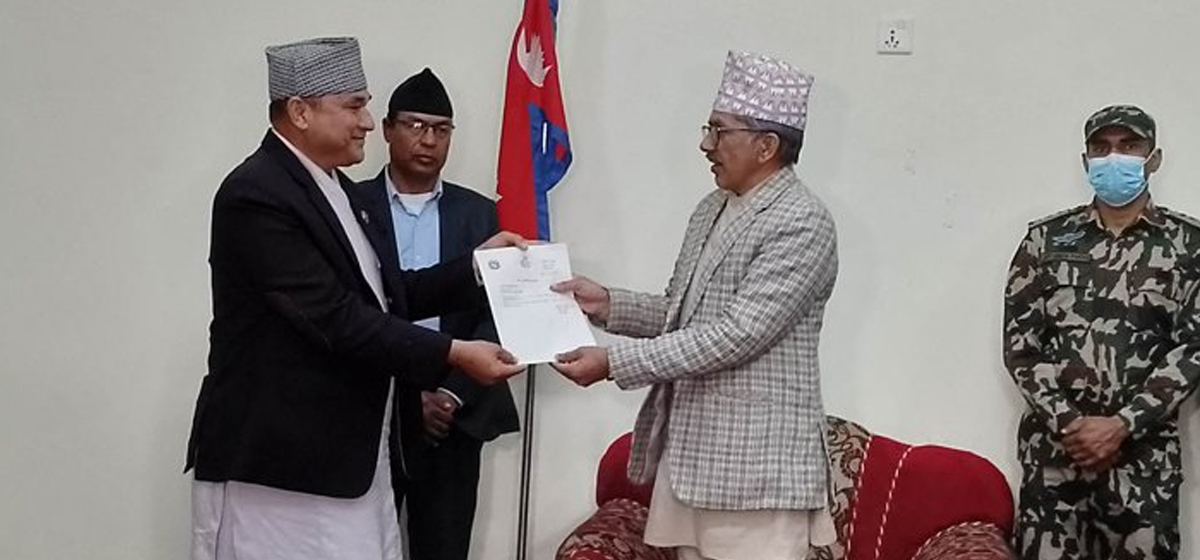
“I am ready to take oath in Nepali many times if Nepali people want so. But I am not prepared to take an oath under any conspiracy and compulsion,” Jha said at a press conference organized at the vice president´s office at Bahadur Bhawan in Kathmandu. But he did not clarify his future step.
Jha was sworn in as the first vice president of the country on July 23, 2008. He had translated the oath and pronounced it in Hindi though President Dr Ram Baran had pronounced it in Nepali, prompting street protests across the country for two weeks. The protests had receded after Jha issued a public appeal expressing his respect to Nepali language. The oath controversy was then taken to the Supreme Court by advocate Bal Krishna Neupane. The Supreme Court declared his oath unconstitutional, null and void last Friday.
Jha drew more controversy after openly criticizing the court verdict.
“It is the fact that I took the oath in Hindi but the written oath undersigned by me was in Nepali language. The court has not nullified my oath in Nepali language,” Jha said.
He further tried to defend his unconstitutional oath by saying that the spirit of the oath does not change no matter what language is used in it.
As he read out a two-page written appeal issued in the name of Nepali people, Jha repeatedly criticized Chief Justice Min Bahadur Rayamajhee and Justice Bala Ram KC, without mentioning their names, for what he said the faulty and biased verdict on the oath controversy.
“I am saddened and worried by the verdict of the Supreme Court,” Jha, a former Justice of the apex court, said while reading out the appeal in Nepali language.
Jha was a controversial figure even when he was a temporary judge of the Supreme Court. He was demoted for his faulty decision on releasing an alleged hashish smuggler. He, however, did not accept the demotion and did not go to the office until he retired.
“I, as a person who served the legal field for a long period, understand the importance of rule of law. I do not have any intention to harm the dignity of the judiciary,” Jha said in the press conference where journalists were not allowed to ask questions.
He termed the SC verdict as regressive and biased. He questioned Chief Justice Rayamajhee´s involvement in his case, as Rayamajhee was one of the members at the Judicial Council that reconstituted a committee to study Jha´s faulty verdict in the drug case in 2006.
Jha also questioned the priority the court gave to his case. “There were many pending five to six-year-old cases in the Supreme Court. Why did the court hurried to finalize the case against me?,” Jha questioned.
Related story
Victims of foreign employment scammers held hostage for months