

For example, in a US Labor Day message last year, Eric Cantor, US House of Representatives majority leader, declared that “Today, we celebrate those who have taken a risk, worked hard, built a business and earned their own success.” Paul Krugman—New York Times columnist and Nobel Laureate—regretted that Cantor “saw Labor Day as an occasion to honor business owners”—not workers, who can be poor! [break]
Discussions on poverty and government obligations to help the poor has intensified since Mitt Romney’s remarks during his campaign for US presidency as a Republican candidate about “makers” and “takers,” the latter comprising everyone receiving government financial support in any form, whom he labeled as takers and hence a burden on society.

In other words, the conservative view of poverty is that this is a self-choice, not inevitable. People can correct their economic situation (get rich) if they tried not to be poor.
We can apply the substance of this debate to a nation’s poverty or richness—why some countries are poor while others are rich. Is it a matter of luck or fate that a country is poor, or is being poor a choice?
This question was addressed more than twenty years ago by Harvard economist David S. Landes in a paper published in the prestigious American Economic Review, titled: Why are we so Rich, and They so Poor?
Landes distinguished two types of economic growth—rate at which the economy expands—intensive growth and sustained growth.
He explained that intensive growth is characterized by temporary surges in economic activities caused by temporary factors. These include: favorable weather, introduction of new crops, discovery of new resources, global recessions and booms, and “a free ride” (foreign aid and trade concessions).
The other type of growth, which he called sustained growth, is based on technological progress and associated gains in productivity. Landes elaborates that sustained growth “requires sooner or later the creation or assimilation of new kinds of knowledge and organizations, which in turn depends on transformations within the society. External enclave [foreign-aid-fueled] development will not do.”
It is useful to make use of this perspective—intensive versus sustained growth—to assess the performance of Nepali economy over the past decade or past half-century.
Annual reviews of the economy produced by the Ministry of Finance primarily deal with temporary causes of upturn and decline of the economy, looking back just three to four years. Predictably, the economy’s ups and downs over such short periods relate primarily to temporary factors or unusual phenomena—floods and draughts—but it says almost nothing about the economy’s secular trends—its growth rate over long periods.
If we average out annual growth registered by the economy over the past 20 years, it comes to just over 3 percent. Of course, growth has accelerated in some years to 5 and 6 percent but this has been followed by sharp deceleration. Average growth has remained unchanged at about 3 percent, which is barely above the subsistence level—for an average family to afford minimum provisions to sustain life.
This particular performance of the economy—secular stagnation in income levels and living standards—tells us much about the nature of growth we are experiencing—intensive growth, not a sustained one.
Why has our growth been sporadic and uneven, not sustained? Primarily because there has been little improvement in productivity—more efficient uses of inputs in terms of labor, capital and natural resources. This also means that whatever growth has taken place has been in proportion to growth in the supply of these resources—increases in number of working population and new investments in infrastructure, factories and business enterprises.
But we haven’t learned how to use available resources more efficiently—making labor, land and capital more productive—which contribute to productivity and sustained growth.
Where does productivity growth come from? The main factor is technology—its adoption as well as diffusion. New equipment and production technique must be used widely, replacing the old ones (tractors, instead of ploughs; trucks and rail transport, instead of bullock carts and human carriers).
A follow-up question would be: How does new technology get introduced and then diffused? The answer to this question explains why sustained growth occurs and why some countries can grow rich while others remain stuck at a subsistence level of living—rate of growth barely enough to feed a growing population.
This brings us to the importance of “human factors” in economic growth, which include social and political institutions or, in short, just institutions. This means that a country’s institutions are key to its economic success—or failure—not the amount of resources it possesses. If a country’s institutions work efficiently and create appropriate incentives for workers and businesses, then entrepreneurship develops, businesses plan for long term investments, and households save and acquire needed skills to earn higher incomes. A more conducive environment is then created for the introduction of new technology and its widespread adoption by businesses and producers.
The challenge of moving from a non-growing economy to a high-flying one is then in getting rid of the old ways of doing things—in agriculture, manufacturing, transport, and construction—and transitioning to a technology-based economy. There is no other route to high growth achieved by Korea and Malaysia, for example; indeed, all successful economies have switched to higher levels of technology use by scaling down the use of old ones.
Such change can happen only if we can encourage adoption of new technology and its wide dispersion.
How can this be possible? This is where the creation of right type of environment for growth comes into play. This is done through institutions and systemic change of policies that provide security and safety of persons as well as of incomes and personal wealth. Use of discretionary powers is diminished and is replaced by rule of law, property rights, and a guarantee of personal freedom to pursue self-interest.
Looking at our own situation, we can say that we, indeed, have got institutions to help us achieve sustained growth but this hasn’t materialized. Why so? The main problem is that none of our institutions work.
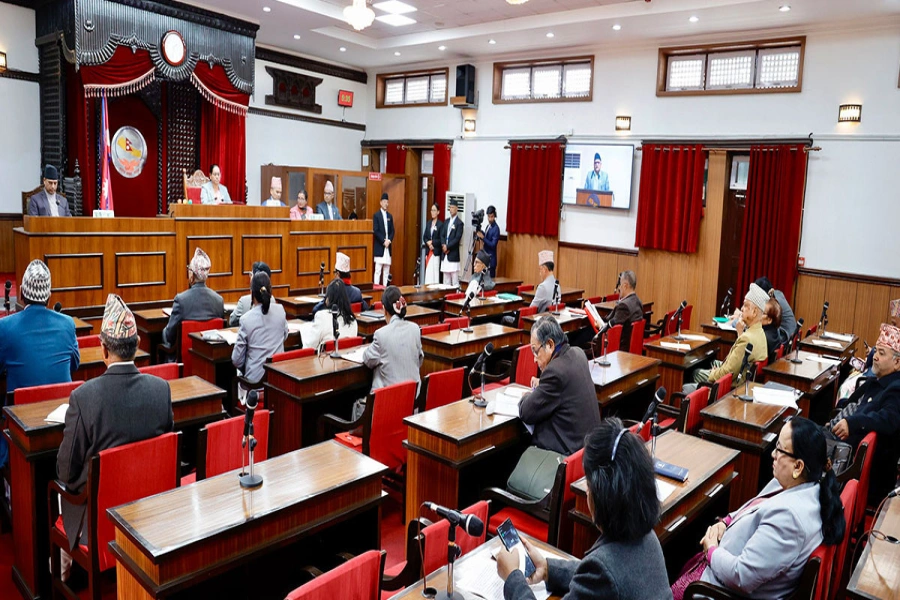
Our politics is in a disarray; justice system doesn’t deliver justice; security personnel do not provide security; government officials do not work; educators do not educate; and health care workers neglect their patients. Our institutions are simply irresponsible—services they provide aren’t worth the money society spends on them.
Also, look at our semi-public institutions responsible for critical social services—electricity, water supply, waste disposal, fuel distribution and road maintenance. Their high cost, poor quality and unreliability of services are inimical to the idea of a profitable business and attracting foreign investments, critical elements in the promotion of sustained growth.
The challenge then is not to establish more institutions and introduce more laws but make the ones we have work.
Differences in the efficiency of public institutions and in the quality of law and order lie at the core of economic differences among nations. And, therefore, two radically different societies can exist on the same planet—Nepal and Singapore. Differences in the economic fortunes of the two nations have nothing to do with genetics and endowments; it is all down to the differences in the quality of their institutions.
Related story
Poverty: A Multidimensional Problem, Nepalese Context











-1200x560-1779450784.webp)


