

Narendra Modi's ascendance as the Prime Minster of India in May 2014 from the Chief Minister of his native Gujarat state was spectacular, in more ways than one. First, he was to head the majority government at the center after a gap of 25 years, the first since Rajiv Gandhi commanded more than two-thirds majority in 1985. Second, of more than a dozen Prime Ministers of independent India, very few had ascended directly to this post from the post of state Chief Minister. Third, it was Modi himself who handled the election campaign. Fourth, he is the youngest leader to become the Prime Minister after Rajiv Gandhi, who took over the country after the assassination of his mother Indira Gandhi.Fifth, he was to replace a personality like Dr Manmohan Singh, who had the record of bringing India on the economic atlas of the world when he was the Finance Minister in the early 1990s. Singh's scholarship, personal integrity, statesmanship and group leadership remained unchallenged. But his party got a drubbing in general elections, largely due to corruption scams. It seems that the shadow of Singh's personality has been influencing the personal behavior and policies of Modi and his government, directly or indirectly.
PM Modi made 'Neighbor First' an important part of his foreign policy, to show that he had departed from the foreign policy regimen of the previous government. To make his swearing-in ceremony as prime minister truly extraordinary he invited all the heads of government of the South Asian countries. The function was special for him and his party, which has acquired power after a gap of 10 years, but this was not a unique occasion for India to celebrate with the presence of South Asian leaders; it was only a change of government. As a matter of fact, the leaders who attended the ceremony did show their magnanimity by their participation, with a hope either to continue good relations with India or improve relations in the future.
With regard to Nepal-India relations, he wanted to show that Nepal was his priority among the neighboring countries and he utilized his pilgrimage to Kathmandu to cement political relations between the two countries. He addressed the Constituent Assembly and requested its members to frame a constitution that is acceptable to all. He did not fail to mention that in the last 27 years no Indian PM had visited Nepal. (PM Atal Behari Vajpayee had visited Nepal in 2002, that too to attend the SAARC summit.) Modi again visited Nepal during the SAARC summit in November 2014. However, he failed to participate in the International Conference on Reconstruction of Nepal held on June 25th. But although he did not attend, he sent his External Affairs Minister, Sushma Swaraj, who pledged the highest amount for reconstruction of Nepal among all the countries attending the conference.
To have good relationships with Bangladesh was not only essential for India but also a strategic priority. There were two problematic issues between Bangladesh and India: First, sharing of river water between two nations, especially the water of River Teesta and second, the transfer of enclaves from one side to another. The Land Boundary Agreement signed between India and Bangladesh is a landmark in the history of their bilateral relations. Modi went to Bangladesh and settled the 40-year-old land boundary dispute through exchange of territories in June. He signed 22 pacts and extended a US $2 billion line of credit to Bangladesh, heralding a new chapter in relations. However, the problem of sharing of Teesta water remained unresolved.
Regarding Pakistan, PM Modi seems to be mending his ways after some hard lessons. He had cancelled the secretary level meeting with Pakistan last July and was reluctant to shake hands with PM Nawaz Sharif at SAARC Summit last November, but, this year, he gladly shook hands with him in Russia and agreed to address the issues of Kashmir, Siachen and Sir Creek through Track 2 diplomacy. Modi might have realized that a nation can opt to have friendship with any nation, but it cannot choose its neighbors, and bitter neighborhood relations were inimical to Indian interests. But nothing substantial has occurred in Indo-Pak relations.
India-China relations are trickier. As a chief Minister, Modi had developed good relation with Chinese leaders and succeeded in getting substantial assistance in building Gujarat. He welcomed Chinese president Xi Jinping to his native place and Xi returned the favor in May but the thorny issue of the settlement of the border remains unaddressed. Modi sought clarification on Line of Actual Control for peace along the border in May which was rejected by China.
Recently, China blocked the Indian proposal at the UN Sanction Committee seeking a clarification from Pakistan over the release of Mumbai attack mastermind and LeT commander Lakhvi. As reported, although Modi took up the issue of Chinese intervention with president Xi during his recent visit to Russia, it proved futile. Modi's effort to personalize diplomacy does not seem to be bearing fruit as relations between two countries are based not on fancy of an individual but on the facts on ground.
India's relations with Bhutan are firmly grounded and Modi's visit to the country has further strengthened the relation. But there is hardly any change in relations between India and Maldives as there is no initiative from India to preserve the basic democratic values in the country, especially when an ex-president has been put in jail without any legal hearing. India's relation with Afghanistan is under shadow with the new president Ashraf Ghani assuming office. Ghani is relying on Pakistan for negotiations with the Taliban. Relations between India and Sri Lanka seem to have changed slightly with the change of guard there. If President Maithripala Sirisena gets two-thirds majority in the coming parliamentary elections, Sri Lanka may redefine its relations with India.
Thus Modi's 'Neighbor First' policy does not seem to be as effective as expected, even though he is trying his best.
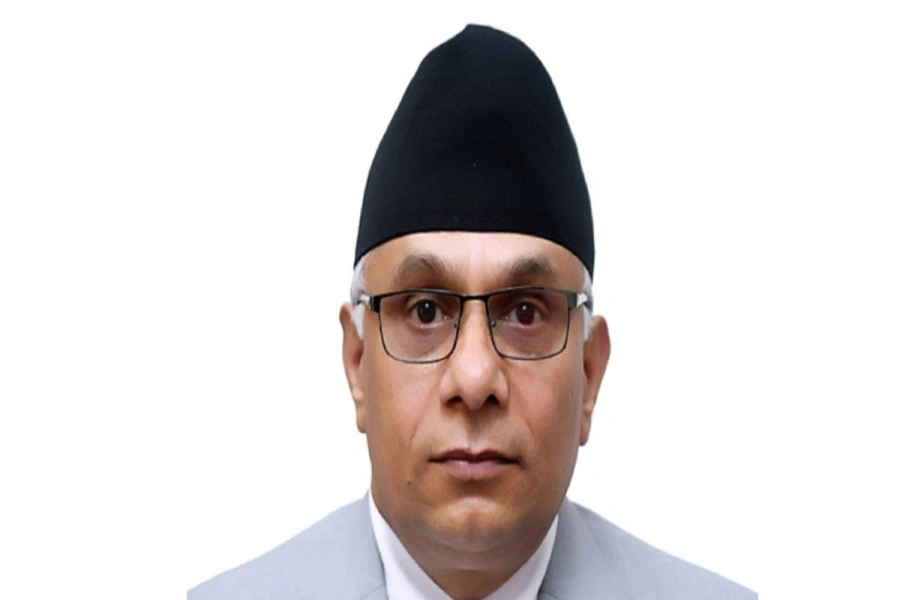
The author is a former Election Commissioner
Related story
Miss People Screaming at My Gigs, Says Ayushmann Khurrana








-1200x560-1774606010.webp)


