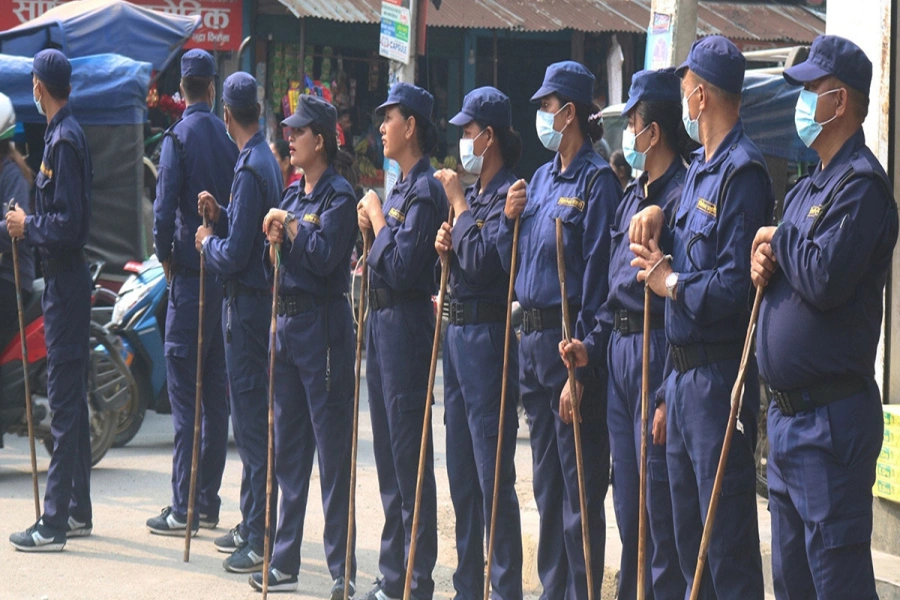
Youth clubs and small NGO’s around Nepal have grown tremendously over the past decade and have helped bring together youngsters from all around the corner in a country where more than a quarter of the population is youth (15-29).[break]
Noting the young people’s indispensible effort to achieve the Millennium Development Goals (MDGs), General Secretary of the United Nations (UN) Ban Ki-Moon called on member states to increase their investments in young people so they can do more, states UN’s information platform website.
To construct a more youth responsive and inclusive UN through meaningful participation and to increase knowledge sharing between the young ones and the UN’s Country Team (UNCT), United Nations Youth Advisory Panel (UNYAP) was formed in 2008.
Come 2012, six fresh members have joined the panel to push issues that the youth are facing in Nepal to the UNCT and they answered questions put forth by Repulica during our Chit Chat session.
Sushila Pandit, 25, has been working with climate change issues since the past five years and for the past three years, she has also been advocating for the youth and currently works with Team of Helping Hand for Healthy Environment (THE-Nepal).
She was also one of the Climate Change Champions hosted by the British Council Nepal. Hememdra Choudhary, 24, has been working with environment related issues for four years and works with Youth Network for Social and Environment Development.
Anshu Khadka, 20, on the other hand, works with Young Engagement in Sustainability in Nepal and she’s been doing it of the past three years.
And Rohit Kumar Marwadi, 19, works with Nepal Children Education Program and also owns a not-for-profit event management company.
Sangeet Kayastha and Kanchan Kharel could not join us for the session.

What are some of the pressing issues of adolescent and youth of Nepal at the moment?
Sushila: One of the main problems at the moment is self development and self motivation of the youth. Unless they have that, they cannot study or deal with the society and move forward.
Anshu: I am working with education and a year back when I went to Karnali, I really thought education is a big problem in Nepal.
Rohit: I agree. Most of the youth are going abroad for education and Nepal’s education system is weak. The government needs to do something to create a better environment for higher education so the money that’s sent abroad stays inside.
Hemendra: Without education, nothing can be done but then, like Sushila said, self development and motivation is equally important. Schools are far and, even though the situation has improved now, the quality of education is poor. This, I think, is a huge problem.
How can we increase youth’s participation in planning, implementing and monitoring the various programs concerning them?
Sushila: If you want the real implementation, you have to involve youth from the planning phase which is not happening at the moment. So organizations working in Nepal, should call out youth to apply and involve them right from the beginning phase, which is planning.
Hemendra: We are the youth who should come up and through empowerment and awareness, we can come up. Since the country is in a transitional phase, we need to be involved. But like Sushila said, we need to be serious, which most of the youth are not at the moment.
Anshu: Youth are used as a token and they don’t have a specific platform to work, they are just being utilized. Many youth just volunteer because they want work experience in the CV so it’s easier to apply abroad for studies. They have to be more serious towards what they want to do.
As a member of the UNYAP, what are your responsibility and how are you fulfilling it?
Sushila: We have a huge responsibility because the UN is preparing a country plan for the next five years and to be a part of UNYAP at this crucial stage means that we get a platform to see what work is happening now and what of kind plans need to be brought in to get the youth involved.
Rohit: Also, as a member, we have to let the UN know about the need of the youth also.
What are some of the changes that have been made upon the recommendation of UNYAP?
Sushila: The main change, upon the recommendation of the UNYAP, is that 16 UN agencies, out of 24, have adopted the youth focal point and they will work with UNYAP directly. Also, the youth score card has been introduced, but only a few agencies have adopted it.
Your take on politics infiltrating into schools and colleges.
Rohit: Students in politics now, talking about student union ore specifically, it’s not complementing politics but its opposing it. The students can call a strike easily, and the participation is their bit to politics.
Sushila: These people involved in politics in government colleges are so strong that they will appear separately for exams and not with the regular students. Why the special treatment? I went to Tri-Chandra sometime back and saw that politics is going the wrong way. There is no real politics. They need to work towards development and not just fight.
Anshu: Also, if you don’t get admission in these colleges; you go to the union people and they get you in but you have to vote for them during the elections. This is sad because education institutions are supposed to be fair to all.
Where do you think the youth of Nepal are going wrong, it they are wrong?
Sushila: The society and people around influence the youth and they might go wrong. It’s easy to mold young’s and that’s what happening. But when I went to a conference in South Africa last year, people think that Nepali youth are very creative and active and they always expect something new out of us, which excited us!
Rohit: I don’t think the youth are going wrong because it is an individual’s choice but most of the youth choose to go abroad and not come back, which is sad.
Related story
Ministry of Youth and Sports in collaboration with UN in Nepal...