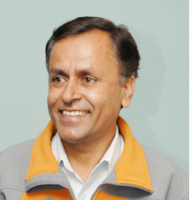
Dr Lekhraj Subedi, 54, former Assistant Professor at TUTH, is to be found these days trekking from village to village in the district to provide free treatment to patients.[break]
Dr Subedi said he returned to his home district believing that delivering service is more important than privilege, prestige and income. “I wish to lead a meaningful life. Before that wish, benefits and privileges are small concerns. That wish drives me to village after village. I derive great satisfaction helping people realize their wish to live on,” he says.
Dr Subedi leads a strikingly simple life. He lives in a clay hut in Tari village of Bijuwar-7. His room looks like that of a bookworm, with books and newspapers scattered all around. His attire is simple. He doesn´t own a conveyance. Yet he is all smiles.
His elder brother is a justice while his two younger brothers are overseer and lecturer and they live elsewhere with their respective families. But Dr Subedi is living with his 85-year-old mother Apa, who has been alone after death of his father Mukunda three years ago, in Tari village and serving patients. “It’s my father’s inspiration. Nothing else,” he reveals.
Dr Subedi did his School Leaving Certificate from the Mukti Secondary School located at Ratamata. After completing his I Sc from Anandakuti Vidhyapeeth, he first graduated as Health Assistant from TUTH, before completing MBBS from the same institution in 1990. Dr Subedi returned to his home district after working as Assistant Professor at TUTH for eight years.

The doctor says he is anguished by the practice among people in this region of visiting doctors only after falling critically ill. He not only provides free treatment, but also gives away medicines for free if the patient turns out to be someone who has problems making ends meet twice a day. On top of that, he sometimes gives money to such patients.
Dr Subedi treats people in their houses, and, if required, at the roadside. His daily routine consists of visiting Jumrikhola and Bagdula to provide services. Those who insist on paying are allowed to pay a fee of Rs 50. His philanthropic ways attract patients even from far-flung villages of Rolpa, Dang, Arghakhanchi, Baglung and Gulmi districts apart from Pyuthan.
“Doctors don´t even speak properly with patients and we fear even asking them anything. But this doctor (Dr Subedi) answers every query and I am told that he even gives money to patients,” says a female patient who came to the doctor´s former residence at Bijayanagar, Ratamata for treatment.
While many organize press conferences and release statements trumpeting trivial of social contributions Dr Subedi finds the act of giving interviews a distraction from his regular routine of serving patients. Many media houses from Kathmandu including the BBC World Service picked his story published on Republica and sister daily Nagarik in October and sought him for interviews. “I was single-mindedly focusing on serving patients. You have to go to district headquarters for interviews,” he argues and reveals that he has still not managed time for BBC.
The generous doctor inspired by Florence Nightingale and Mother Teresa has yet to marry. His mother Apa, like every other mother, wants her son to settle but he doesn’t want to get hitched. “It’s not that a marriage stops philanthropy, but sometimes it can become a handicap,” he says.

His mother fears about his fate after her imminent death. “He doesn’t even love himself and doesn’t need relatives and neighbors either. All he wishes is to serve patients,” his white-haired mother quips.
His benevolent lifestyle means he rarely gets to eat lunch at home. “If I wait for him for meals, I will die of hunger. He has no fixed routine of eating and sleeping and may well fall ill himself due to his working style,” Apa adds.
The son, however, has a different take and feels work is worship. “If I had personal concerns about wealth and luxury, I wouldn´t have come to this remote place in the first place,” the noble doctor, who has also founded Apa-Mukunda Academy Award in the name of his parents, reasoned.
He wants to manage his service better and feels community health centers and not expensive nursing homes cater to the needy. “The living standard of Nepalis would be improved if we can provide free health service by opening community health centers,” he opines.
“Those who have earned a fortune may not feel satisfaction. But I am satisfied with my work even without earning wealth,” he states. “I derive the greatest satisfaction from seeing the glow on face of a patient who has lost all hopes of life and mentally surrendered to death,” he concludes.
(with inputs from Gajendra Bohara)
Related story
A wise academic transition