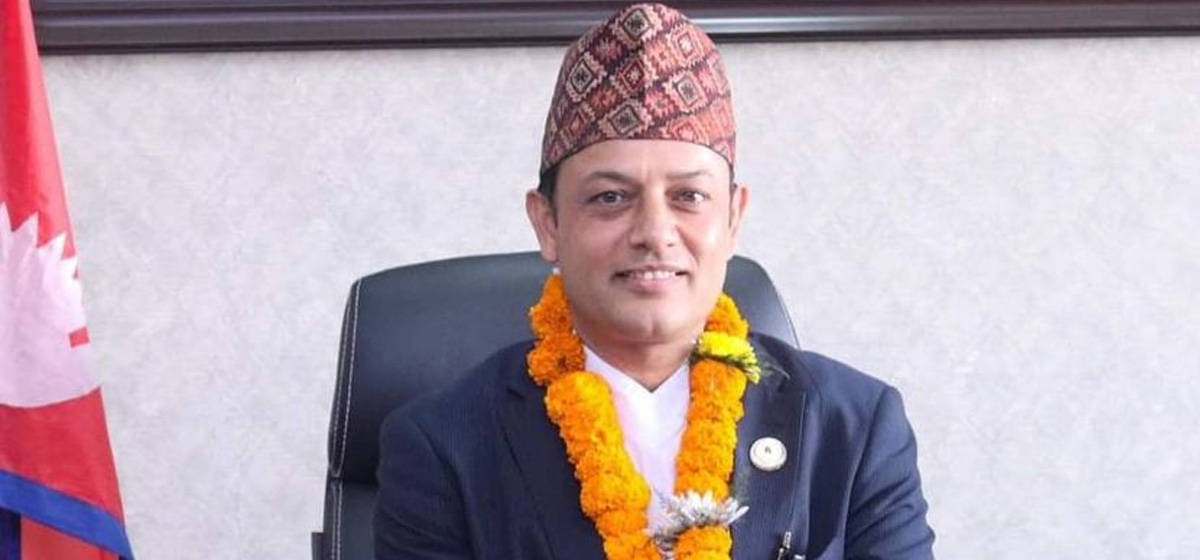
At a joint meeting of NC Central Working Committee (CWC) and Parliamentary Party (PP) members held at Constituent Assembly building on Wednesday, the leaders argued that the 385-member strong parliament would be too big for a country like Nepal. [break]They also argued that it was not scientific to determine the size of federal parliament before settling the number of federal states.
“A majority of leaders opined that there should not be more than 240 members in the federal parliament," said another CWC and PP member Gagan Thapa.
The three major parties and the United Democratic Madhesi Front had reached an informal understanding on having a 385-member strong parliament, including 60 members in the upper house. While 180 members of the lower house will be directly elected, 145 would be elected on the basis of proportional electoral system as per the proposal floated by the parties.
PP and CWC members from Madhesi and indigenous communities demanded that the parties should ensure inclusiveness even in the direct electoral system. "Most women PP and CWC members including others have demanded that there should be a provision to ensure inclusiveness even in the quota allocated for direct electoral system," said Usha Gurung.
The NC leaders have cautioned the party leadership not to accept mixed system of governance, arguing that this would invite unwarranted power struggle between the president and the prime minister. They suggested to the party leadership to convince other parties on improved parliamentary system, according to Nabindra Raj Joshi.
NC Vice-president Ram Chandra Paudel had informed the meeting that there had not been any formal agreement on the system of governance and federalism. "System of governance and federalism are linked to each other. We are still negotiating on the issues," said Paudel.
Majority of NC leaders have maintained that it would be better to adopt directly elected prime ministerial system than to go for the mixed system. "A majority of the members are for directly elected prime ministerial system," said a CWC member, requesting not to be named.
Those in favor of directly elected prime minister, according to him, maintained that parliament would have greater control on the directly elected prime minister as he/she has to be more accountable to parliament. "They also expressed that directly elected presidential system could invite dictatorship," said NC lawmaker Pushpa Bhusal.
On the issue of identity-based federal states, a majority of NC leaders appear to be flexible as long as no preferential political rights are given to certain ethnic or caste groups. Nearly two dozen CWC and PP members had put forth their opinions during the meeting.
Related story
RSP Acting Chair Aryal calls for probe into GenZ movement viole...