

FUTILITY OF POWER POLITICS
What we are witnessing is an almost neurotic obsession for power no matter what the costs. In this scheme, Maoist words seem to have no relation with their actual political behavior. In line with Leninist dictum that “morality is that which serves to destroy the old exploiting society…” (see Collected Works vol. xvii p 321), our Maoists colleagues have no problem if their words do not match their deeds since every breach of promise becomes one more building block in destroying the “old society” and therefore perfectly justifiable and moral.
Let us think of joining hands now before the fifth round of election to solve our problems ourselves so that we, as politicians, do not become a burden to our people and be responsible for transforming our nation into a playing ground of our neighbors.
It is in this perspective that they seem to find the violence and illegal acts of cadres like Kali Bahadur Kham to be perfectly in line with the party’s sense of morality. In this frame of reference, acts of violence and extortion that may be illegal are seen as being necessary to strengthen the party against the feudal and the bourgeois. Thus there is the willingness to protect cadres who may be involved in heinous crime as per the existing law. Unfortunately, it is also a trend that is also catching on with other parties that claim to be in the democratic quadrant. How else can one explain the behavior of so many non-Maoist parties withdrawing cases of corruption and even murder from the courts when they were in power? The only difference is that the Maoists have an ideological anchor to justify their violence and illegality while the other “democrats” do not even have this anchor; if fact they are blatantly going against their often repeated slogans of rule of law and the independence of the judiciary. In essence, what we see emerging in the country is an entirely cynical and contemptuous attitude toward the often parroted notions of a democratic state. For the Maoists, the notion of a democratic state is simply a one-party dictatorship where all the state organs become an extension of the party so as to build a “new Nepal”. For the other parties that claim their allegiance to constitutional equilibrium, party workers become the new elite for whom the law always remains lenient to the extent of withdrawing cases of corruption and murder already filed in the courts. It is the people who have to suffer from the insecurity, uncertainty and economic turmoil inherent in this process. In the meantime, the task of drafting a new constitution has lost momentum and the whole process of change and transformation of our socioeconomic order lurches from one corner to another without any sense of vision and direction.
On Aug 18, 2010, we are going to have the fifth round of election for the post of the prime minister of the nation. In the fifth round, even if Dahal is elected, it is going to be a pyrrhic victory since he will be heading a government that would have to rely on Madhesi coalition partners who have a deep suspicion of Maoist intent and ideology. Apparently, the Maoists seem to think that once they are in power they can rely on the support of a faction of the CPN-UML to join the government even if it means a political split in the UML. In fact, the Maoists are sure to hope for the split when they dangle the opportunity of joining the government to some important leaders of the UML. Whether or not this strategy is going to be successful is up in the air but it is quite clear that all the non-Maoist parties that form the opposition see in Dahal a person who does not care for his commitments and remains famous for “tactical flexibility” which in practice has translated into a crass opportunistic mentality that seems literally unbounded in action.
TOWARD COOPERATION POLITICS
Perhaps it is time for all the political parties to stop for a moment and ask one fundamental question: What is the purpose of our politics? Is it just a race to become the prime minister or a means to give the people of our country a democratic constitution that protects their human dignity as citizens of an independent country where there is equality of opportunity for all Nepalis, all the way from the mighty slopes of the Himalayas to the long expanse of the Terai? If power is a means to a noble end, would it not be rational to examine the present balance of political power and form a government that reflects this reality so that the process of drafting a new constitution can proceed in earnest. In practical terms, what it means is that from now on we must change our focus from power-exercising politics to problem-solving politics so that the center of attention is on new constitution rather than the post of the prime minister.
If we accept the above perspective, it is time for all the so-called “big parties” to agree on a power-sharing formula until the next election under a new constitution. The time period involved in this process would be anywhere from two to three years. Under the new cooperation formula, the premiership of the country will rotate among the leaders of the three parties for a period of nine month each with the Maoist taking leadership after the integration of the their combatants with the national security forces. It would also mean rehabilitation of those who cannot find a place in the security sector. The government under this concept will be an all-party consensus government with only the leadership changing every nine month among the three parties as per mutual understanding.
It is easy to view the above suggestions as being unworkable or impractical. But before we reject it, we should take a hard look at the next best alternative which is a majority government that the parliament has failed to deliver even after four attempts. Even if we are successful in the fifth attempt, which remains doubtful, the bitterness and rancor that it would generate in the process will make it highly unlikely that the new government will be able to provide leadership that will take the country forward. The trust deficit that now exists among the political parties will certainly deepen and we will once again start receiving visitors from our neighboring countries eager to “fix the problem”. Let us think of joining hands now before the fifth round of election to solve our problems ourselves so that we, as politicians, do not become a burden to our people and be responsible for transforming our nation into a playing ground of our neighbors.
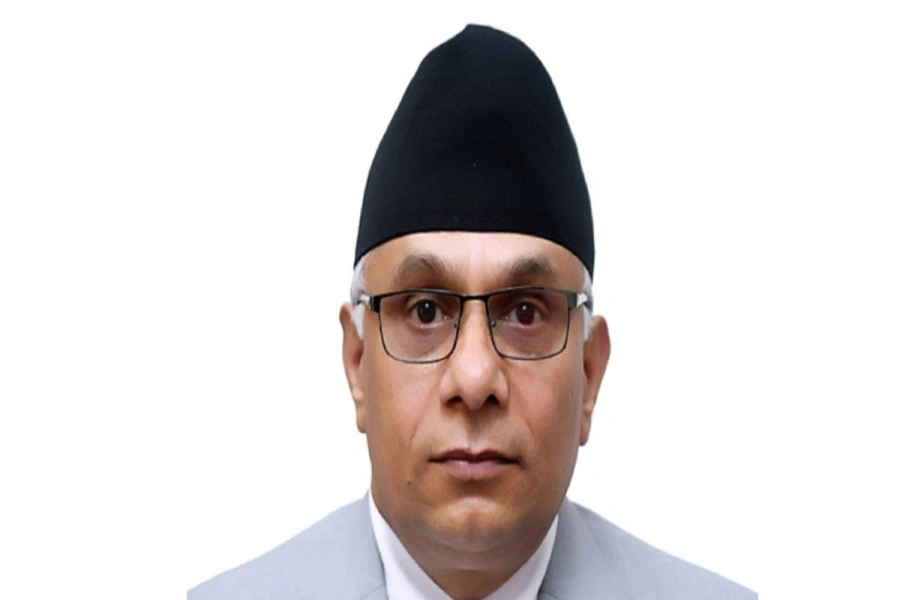
Writer is co-chairman of Rastriya Janasakti Party
Related story
'Spider-Man: No Way Home' Gets Special Hardcover Making-Of Book





-1200x560-1774606010.webp)


