KATHMANDU, March 18: As road accidents continue to occur almost daily across the country, transport entrepreneurs have blamed the government’s failure to implement key reports for the worsening situation. They say a lack of action on past recommendations has contributed significantly to the rise in accidents.
In recent times, road accidents have been occurring almost every day. The growing number of incidents has had serious social, economic, and human consequences. Transport entrepreneurs have expressed increasing concern over the trend. The Federation of Nepalese National Transport Entrepreneurs issued a statement on Tuesday, saying that accidents have risen because the government has failed to implement past reports and has ignored the suggestions and recommendations outlined in them.
They also expressed concern that reports such as the Simaltal bus accident report and the Transport Reform Recommendation Task Force report 2080 BS remain unimplemented.
Road safety law in limbo
Despite repeated commitments, the government has yet to introduce a Road Safety Act aimed at improving road conditions and reducing accidents. Although a draft has been prepared, it has remained stalled for seven years.
In the policy and program for the fiscal year (FY) 2025/26, the government had pledged to formulate the National Transport Policy, Public Transport and Transport Management Act, Public Roads Act, and Road Safety Act.
When will it end?

However, that commitment is almost certain to remain unfulfilled this year, as the previous government has fallen and a new one has yet to be formed.
While presenting last year’s policy and program, President Ram Chandra Paudel had said that awareness programs targeting passengers would be conducted, and drivers would be trained to become more responsible.
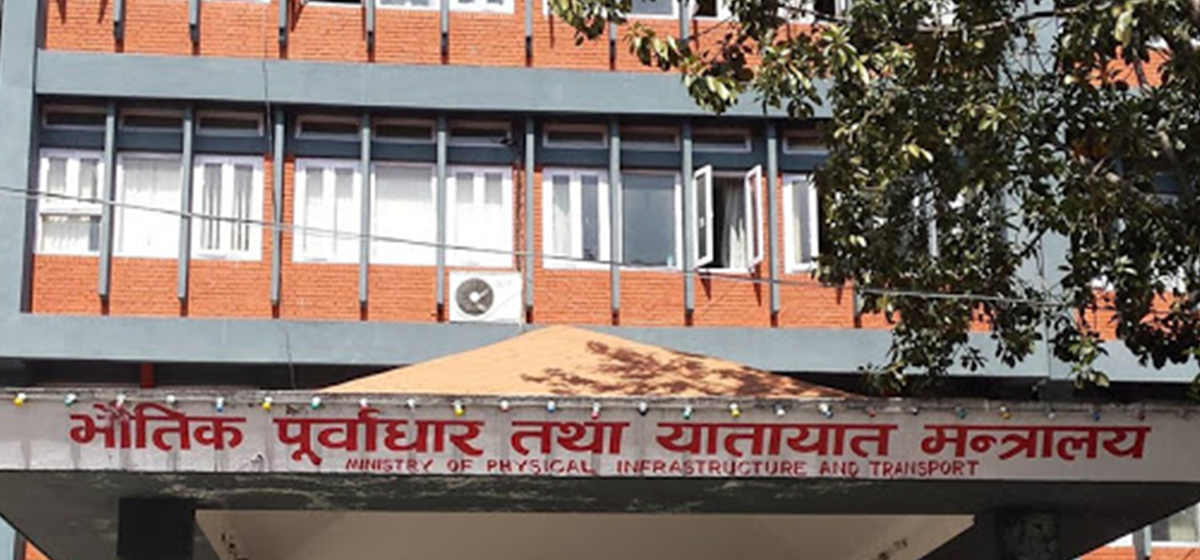
The draft of the Road Safety Act and the National Road Safety Action Plan, prepared by the Ministry of Physical Infrastructure and Transport (MoPIT), has been lying at the ministry for the past seven years. It includes provisions on reducing road accidents and ensuring the swift rescue of the injured.
A senior official at the MoPIT said the Ministry of Finance (MoF) and the Ministry of Law, Justice and Parliamentary Affairs had already approved the draft in mid-June. “The final draft of the Act is ready, and preparations are underway to present it to the Cabinet soon,” the official said.
According to MoPIT officials, the initial draft of the Road Safety Act was prepared in 2075 BS, along with a road safety action plan. Although the Department of Roads has established a Road Safety and Traffic Branch, it has not been effective due to the absence of a legal framework.
Officials said delays in approval from the MoF kept the draft stalled for years. Another reason for the delay is the MoF’s instruction to merge two separate laws into one. The MoPIT had prepared separate drafts for the Road Safety Act and the Public Roads Act, but the MoF called for a unified version.
According to officials, the Road Safety Act focuses on safety measures, while the Public Roads Act deals with road construction.
“Other countries give high priority to road safety laws and action plans, but in our country, such a law has not even been enacted yet,” the official said.
At present, in the absence of a dedicated road safety law, efforts to reduce accidents are being carried out under the Transport Management Act and its regulations. Rules related to honking, speed control, and traffic discipline are being enforced under these provisions. However, a senior official said these measures are insufficient to ensure road safety.
Police directive
With accidents on the rise, police authorities have also expressed concern. Chief of the Kathmandu Valley Police Office (KVPO), Ranipokhari, and Additional Inspector General Ishwar Karki has directed officials to step up efforts to curb road accidents.
Following a monitoring visit to the KVPO, he instructed traffic personnel to remain disciplined, courteous, and service-oriented while ensuring more effective traffic management. He also urged them to take greater responsibility for reducing accidents.
He said traffic management must be made more systematic and efficient in light of increasing vehicle pressure and rising accidents in the Kathmandu Valley. Emphasizing that the role of traffic police is directly linked to public safety, he said every officer must perform their duties with honesty, discipline, and a sense of service.
“Traffic police on the roads carry a significant responsibility. Each officer deployed on the road is directly connected to public safety,” he said.
He also stressed the need for greater proactiveness in improving traffic management and reducing accidents. During the visit, he reviewed various units under the KVPO, service delivery conditions, daily traffic management systems, and the state of physical infrastructure.