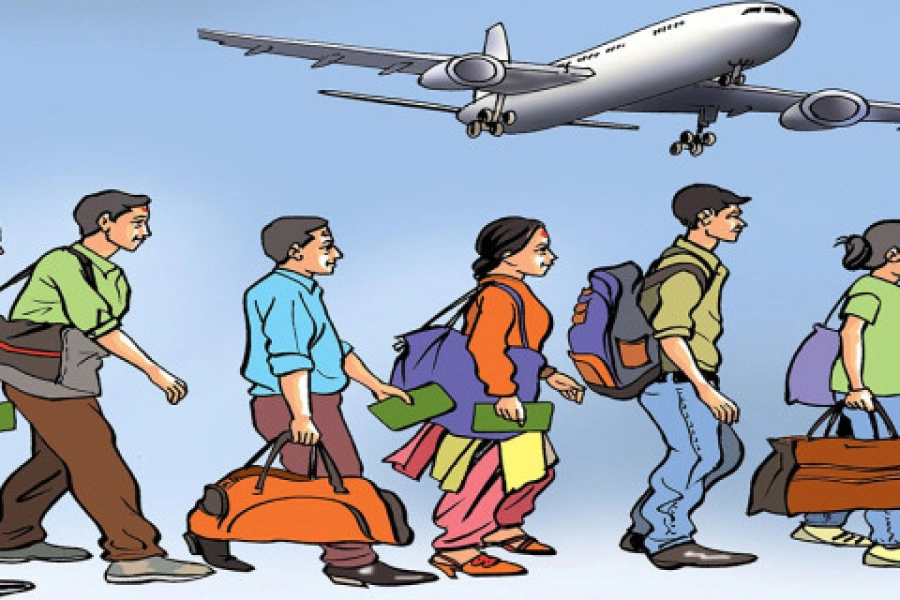
At Christmas, we have fun, enjoy ourselves (as we should do) but miss out on the real essence—Jesus Christ himself, like the ticket-included meals the traveling couple had overlooked. The evangelist Matthew records in his gospel the message an angel gave to Joseph, “She (Mary) will give birth to a son, and you are to give him the name Jesus because he will save his people from their sins”. “Jesus” means “Savior”. Jesus Christ came to earth on Christmas Day to eventually die on the cross and with that sacrifice to save people from their sins.
When the Lord Jesus Christ healed me in response to my desperate prayer, I accepted him as my personal Savior. Baptism on Sept 10, 1972, in the cold Baghmati river at Sundarijal had initiated my walk as a devotee of Jesus. Then, I had my first taste of Christmas.
Christmas shouldn’t encourage licentious behavior. Throughout the world, many road accidents occur after drunken parties in the name of Christmas. Jesus took birth not to make people slaves to alcohol but to free them from all sin.
The church I attended conducted a special service, more like an outdoor picnic. During that misty Dec 25th (no one knows the actual date of Jesus’ birth) morning, the congregation gathered at the Bankali forest just west of the Pashupati complex. At 11am, the Christmas service started. After a few carols, the guest preacher began to expound the Christmas message. God had sent Jesus to die for the sins of humankind. Accepting his sacrifice meant forgiveness of sins, a new status as a child of God, constant fellowship with God through Jesus as the mediator, and a joyful though challenging life as a forgiven sinner, a spiritually “new-born” child. The end of the service led to the Christmas feast, which served as the only “gift” all received. A lot of non-Christians too had come, and heard the real Christmas message.
During those days of King Birendra’s Panchayat regime, Nepal was a Hindu state. Many sermons then mentioned Jesus-devotees in jail for their faith. So, while I celebrated Christmas in the open meadow at Bankali, I couldn’t help thinking of fellow Christians, both men and women, in Nepalgunj and Pokhara prisons.
How times have changed! Before my pastor baptized me in 1972, he asked me, “Are you ready to go to jail for your faith?” I had replied in the affirmative. (Sure enough, my opportunity came in 1984’s Dandeldhura where the police arrested 13 others and me during a one month study program Nepal Bible Ashram conducted, where I served as the principal.) Nowadays, the pastor’s question has no relevance. The present Constituent Assembly (CA) has declared Nepal a secular state. Towards the very end of 2007, the government declared Christmas a national holiday for all. Besides, churches have grown too large to fit in Bankali for the Christmas feast.
In 2008, for the first time Christian workers didn’t have to request leave from their offices to celebrate Dec 25th, which had become a holiday for all Nepalis. Christian students didn’t write exams or go to schools that day as they did during previous years. They could join their parents for the Christmas celebration. The president, Dr Ram Baran Yadav, graced the Christmas gathering at the Academy Hall, Kamaladi. His presence created history, and gave pride to the Christian community.
With no threat of a prison sentence, becoming a Christian now has become as simple as joining a political party. With the ease has also entered anomalies, which have affected Christmas. Thus, we should emphasize what a Nepali Christmas shouldn’t do.
First, Christmas shouldn’t foster excessive consumerism. In the West, shops begin to advertise Christmas shopping right from August. We give gifts to celebrate God’s giving of Jesus for humankind, but we shouldn’t go into debt to purchase them. For many, Christmas has just become an occasion for commerce, and hotels have already proclaimed all-night parties. Jesus once said that he had nowhere to lay his head. He lived in his disciples’ home, and depended on their charity. Excessive spending during Christmas won’t really honor Jesus.
Second, Christmas shouldn’t encourage licentious behavior. Throughout the world, many road accidents occur after drunken parties in the name of Christmas. Jesus took birth not to make people slaves to alcohol but to free them from all sin.
Third, Christmas shouldn’t glorify either the Santa Claus or the Christmas tree. Both distract from the real Christmas message. An Australian Christian friend once told me: “The whole story of Santa Claus is a lie. Legend has it that Santa Claus lives in the North Pole and spends a whole year, with his wife, making toys for children. During December 24th night, he leaves his gifts on the Christmas tree and children happily discover them in the morning. Kids in the West grow up believing this lie. Actually, parents plant gifts for them to pick up. This legend totally hides the fact that Christmas actually began because God gave Jesus as a sacrifice for human sins.” Thus, Nepali Christians and others can happily chuck this deceitful legend of the Santa Claus.
Originating from Western Germany, the Christmas tree, often the evergreen pine, had lights, ornaments and represented eternal, heavenly life. The practice of the Christmas tree entered England in the 19th century when Queen Victoria’s German husband, Prince Albert, made it popular. Gradually, the custom went to North America and other continents. In Nepal, the custom has meant cutting up our pine trees; and we, especially our foreign friends residing here, should stop it.
Fourth, for Nepali Christians, Christmas shouldn’t provide an occasion for governmental demands. Christian communities throughout the country usually rent halls, invite political figures to exchange Christmas greetings. Sadly, the “exchange” has often degenerated into asking political favors. That spoils the joyous atmosphere. For example, during Christmas 2008 in Kathmandu, a Christian leader put forth a 13-point demand before politicians. As usual, speakers of various parties pledged to fulfill the requests because Nepali culture hardly teaches anyone to say “no”. This “begging” on Christmas Day made many thoughtful Christians wince in shame.
Focusing on the fact that Jesus took birth really to save humankind from sin, we should celebrate Dec 25, 2009. I long for the purity of the first Christmas service I attended (1972). Certainly, Christians should invite political leaders to the Christmas program and give them presents that portray God’s supreme gift of Christ for humanity. Let’s make Christmas 2009 real by focusing on Jesus and his sacrifice.
Related story
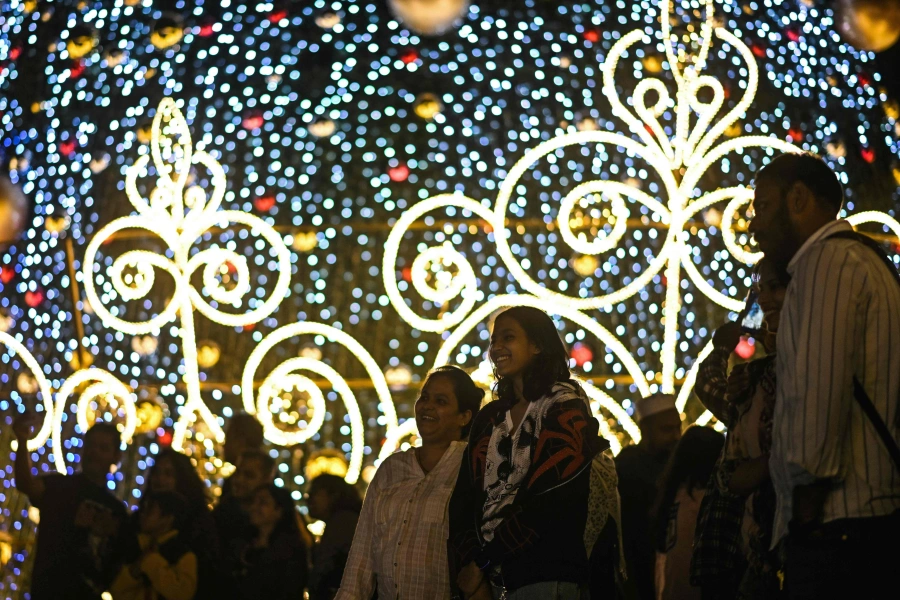
Christmas fever grips Kathmanduities