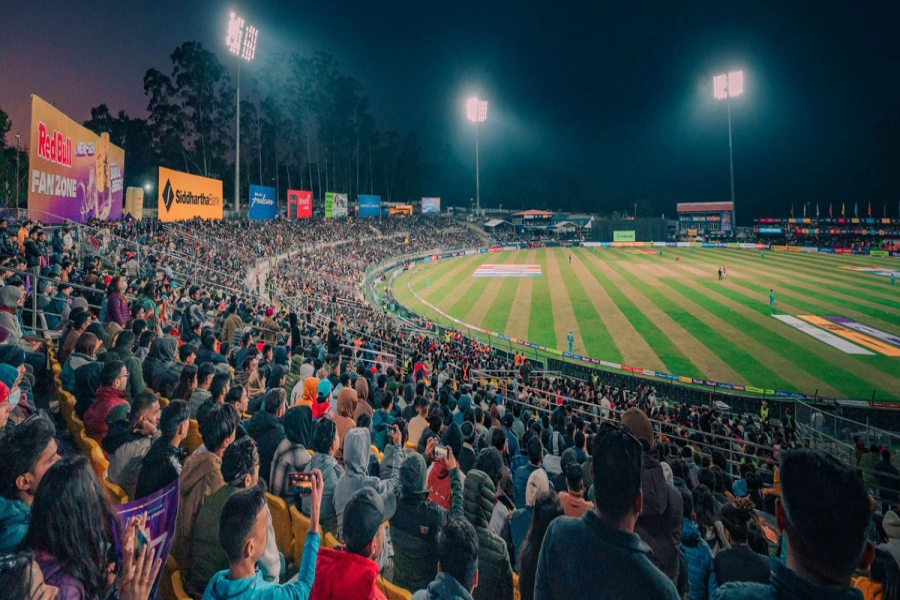
In the last few years, South Asia has experienced a new cultural wave generated by the proliferation of literary festivals. Now every South Asian nation has a literary festival of its own. The Jaipur Literature Festival, the Hay Festival in Kerala, and The Hindu’s Lit for Life, etc, have emerged as India’s major literary festivals.
Bangladesh and the Maldives also have their Hay Festivals; Pakistan has its Karachi Literature Festival, Bhutan has the Mountain Echoes; Sri Lanka has its own Galle Festival.[break]
And now Nepal has the Ncell Nepal Literature Festival, and Kathmandu Literary Jatra/Lit Jatra. This is good for all readers, writers and publishers. And for the country as well: the coverage these festivals received in the international press in the past was perhaps one of very little positive coverage about Nepal in recent times.
At home, we have for long complained and lamented that our literature hasn’t received worldwide attention. It’s not because we don’t write in English, nor because our standard of writing isn’t at par with international writing. For long, our institutions of arts and letters have served no purpose other than to valorize a handful of elite patrons. Whatever individual efforts have been put in by writers to the development and growth of literary culture as well as democracy has been of utmost use, but still scattered and insufficient.
The proliferation of literary festivals from the private sector has shown an early promise of fulfilling those gaps that are seen not in our country only but also in other countries of our vicinity. Most of these festivals are privately funded, and some of them have also received funds from international agencies like the British Council and the American Embassy, and yet some others have received government funds. It’s good that literary festivals are receiving such support, but they also have to consider balancing between the agendas of those donor agencies and the real intents of the festivals.
The Jaipur Literature Festival has already got international limelight and its dates marked on the literary calendars not only because it’s been able to draw Nobel, Booker and Pulitzer winners. Not, too, because India has remained an exotic place for the West but because India has continuously provided a substantial corpus of writing to world literature. Especially after Rushdie’s “Midnight’s Children,” Indian writers like Anita Desai, Arundhati Roy, Vikram Seth, Jhumpa Lahiri, Aravind Adiga, and Tarun Tejpal have burst onto the international writing scene.
The Desi connection
Be it in Bhutan or Sri Lanka or Nepal, the dominance of Indian writers is ubiquitous. One clear reason for this is the sheer number of writers India has, in addition to their accessibility. The warmth with which Nepali readers received Indian writers in last year’s festivals reconfirmed that it is only at the politico-bureaucratic level that there are tussles between the two countries.
Likewise, Indian writers like Ira Trivedi, Indra Bahadur Rai, and Tarun Tejpal showed their affection for Nepal in their own ways.
But on the flipside of it, the Jatra has acknowledged being influenced by Jaipur, and Mountain Echoes is entirely managed by Indian writers, including Mita Kapoor.
So, is the phenomenon anything but an extension of the tentacles of Indian cultural hegemony? Is India the inevitable Big Brother even in the field of literature? Ideally, this shouldn’t be the case, and as of now, we haven’t seen any substantial symptoms of that. So the question itself may be redundant for the time being. But the point is that literary festivals, even within South Asia, should carry their own peculiarities without hegemonic orders, and focus on the development of a strong foundation of literature and literary culture at home first before beginning to extend their tentacles to the outer literary world.
Of glamour and substance
What makes the contemporary literary festivals interesting is because of what we may call the “packaging” of the entire program, tints of glamour that they provide to the whole affairs of literature and culture. A festival is a curious mix of elitism and populism at the same time, in the way the sessions are designed, the venues fixed, and the audience’s response to it.
However, even when the entire business of literature now seems to be a chic affair, the range of topics covered by these festivals show that they are at the same time generating spaces for forming opinions on issues that are of national and regional importance. The program list of this year’s Ncell Nepal Literature Festival, which is made available on the web, boasts of sessions that involve not only the aspects of literature but of art, theatre, sociology, politics, and economics. Such interdisciplinary mix is what makes contemporary literature festivals popular while at the same time a thing to be taken seriously.
The most significant contributions of a literary festival can be to the growth of a culture sensitive to the freedom of expression. Perhaps the festival culture is at just a nascent phase, but a successful completion of a literary festival can provide us with a standard way to analyze how established and mature the democracy of a country is.
In China, which has a great intellectual and civilizational heritage, writers and artists are banned from exploring and exhibiting their creative capabilities.
On the other had, India has a culture of selective freedom. We saw the case of Salman Rushdie who was supposed to attend the recent Jaipur Literature Festival only to be stopped by a nexus of political parties and religious groups. A few months back, a professor was nabbed for e-mailing cartoons of West Bengal CM Mamata Banerjee, and presently, cartoonist Asim Trivedi is charged with sedition for allegedly ridiculing the national flag and the Constitution of India.
And lately at home in Kathmandu, in a similar attack on the freedom of expression, the artist Manish Harijan has received death threats from some Hindu groups.
Speaking further of literature, a festival should be welcoming of writers writing from the mofussil as well as those writing in their native tongues. What’s the point of knowing about a certain Jonathan Franzen from America or Patrick French from Britain if we continue to ignore the fact that a Ramesh Ranjan from Janakpur or a Tejeshwar Gwonga in the inner alleys of Bhaktapur are writing in their native tongues?
So the challenge is to maintain a balance between retaining the local characteristics of our own literary heritage while at the same time crossing disciplinary, cultural and geographical borders at such Lit Jatras.
Kafle is studying literature at Jawaharlal Nehru University.
Related story
Fourth Environment Literary Symposium held in UK