KATHMANDU, March 12: The Rastriya Swatantra Party (RSP) has emerged as the largest party in the general election held following the Gen-Z uprising. Having won 125 seats under the first-past-the-post (FPTP) system, it is set to win at least 57 seats under the proportional representation (PR) system. Although vote counting has been completed, the Election Commission (EC) has yet to officially allocate the PR seats among the parties.
With the completion of vote counting under both the FPTP and PR systems in the election held on March 5, the RSP has come close to securing a two-thirds majority in the 275-member House of Representatives (HoR).
The federal parliament is based on a bicameral structure. According to Article 83 of the Constitution, the federal parliament consists of the HoR and the National Assembly. The party that secures a clear majority in the HoR forms the government. The HoR is responsible for forming the government and enacting laws.
Under the existing arrangement, 165 members of the HoR are elected through direct elections and 110 through the proportional representation system. A simple majority in the HoR is sufficient to form a government and run day-to-day governance. Since the RSP is close to a two-thirds majority, it will face little obstruction in forming the government and carrying out its work. A simple majority requires 138 seats. Including the PR seats, the RSP is expected to have at least 182 members in the HoR.
The government to be formed under the leadership of the RSP may also move ahead with administrative restructuring with the support of other parties represented in Parliament. By arithmetic calculation, the most powerful government is expected to be led by the RSP.
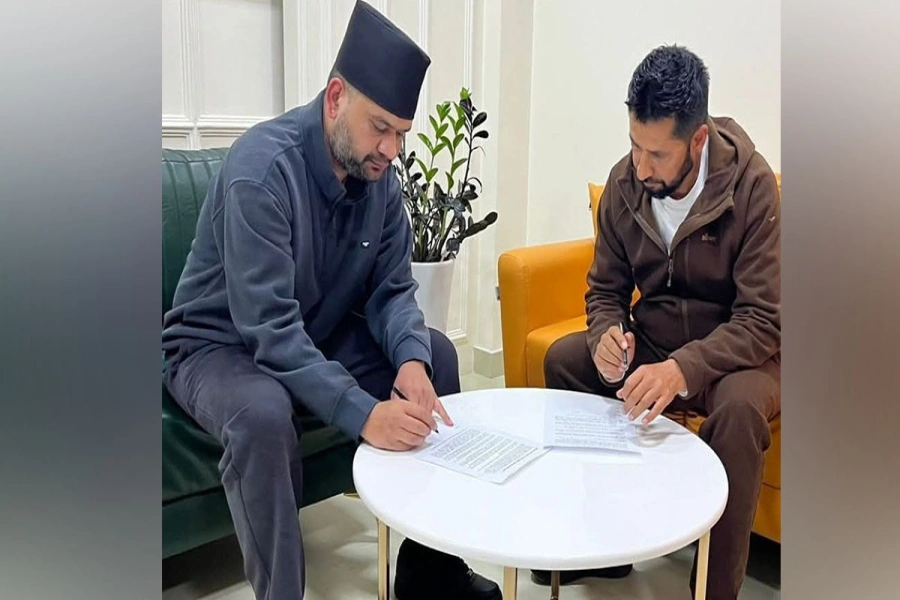
RSP seeks explanation from General Secretary Dhakal

Under the FPTP system, the RSP has won 125 seats, followed by Nepali Congress (NC) with 18, CPN-UML with 9, Nepali Communist Party (NCP) with 8, Shram Sanskriti Party (SSP) with 3, Rastriya Prajatantra Party (RPP) with 1, and one independent candidate.
Under the PR system, the NC is estimated to secure 20 seats, UML 16, NCP 9, SSP 4, and RPP 4.
Votes cast for parties that fail to cross the 3 percent threshold will not be included in the calculation for PR seat allocation. As these parties will not receive PR seats, their votes will effectively be redistributed among the parties that have crossed the threshold.
The NC and UML, which had emerged as the first and second largest parties in the 2022 elections, have suffered the biggest losses in this election. In the previous election, UML had secured 2,845,641 PR votes, but this number has nearly halved this time. In the current election, UML has received 1,455,669 PR votes.
Similarly, the NC, which had secured 2,715,225 PR votes in the 2022 election, has received 1,758,903 votes this time.
Parties that had representation in the previous HoR — including Janamat Party, Janata Samajbadi Party (JSP), Loktantrik Samajwadi Party, Nagarik Unmukti Party, Nepal Majdoor Kisan Party, and Rastriya Janamorcha — will not be represented in the upcoming HoR as none of them won a single seat in the election.
EC spokesperson Narayan Prasad Bhattarai confirmed that vote counting for both the FPTP and PR systems has been completed. He said the remaining election-related tasks will also be completed on schedule in accordance with the EC’s timeline.
51 parties fail to cross threshold
A total of 57 parties contested the PR election this time, but 51 parties, including several Madhesh-centric parties, failed to secure the minimum vote threshold.
Under the PR system, a party must secure at least three percent of the total valid votes to qualify for seats. As they failed to cross the threshold, these 51 parties will not receive PR seats.
A total of 10,739,115 votes were counted as valid under the PR system. Among them, RSP secured 5,181,330 votes, NC 1,758,903, UML 1,455,669, NCP 811,393, SSP 385,852, and RPP 330,649 votes. Only these six parties crossed the threshold.
Among the parties that failed to cross the threshold is the JSP Nepal led by Upendra Yadav, which received 181,850 votes. Rastriya Pariwartan Party secured 172,490 votes, Janamat Party led by CK Raut received 79,403 votes, while the alliance using the single election symbol “Jaato” (including Rastriya Mukti Party Nepal, JSP, and Nagarik Unmukti Party Nepal) secured 62,069 votes, according to data published by the EC.
Similarly, Nepal Majdoor Kisan Party received 42,294 votes, Rastra Nirman Dal Nepal 39,557, Rastriya Janamorcha 29,453, the alliance using the election symbol “Bus” (Nepal Sanghiya Samajbadi Party, Bahujan Ekata Party Nepal, and Nepal Janajagriti Party) 29,396 votes, Nepal Janata Sanrakshan Party 28,408, Progressive Democratic Party 24,673, Nepal Communist Party (Maoist) 23,858, Mongol National Organization 20,829, and the alliance using the symbol “Mobile” (Aam Janata Party and Janadesh Party Nepal) received 19,209 votes. Other parties also failed to cross the threshold.