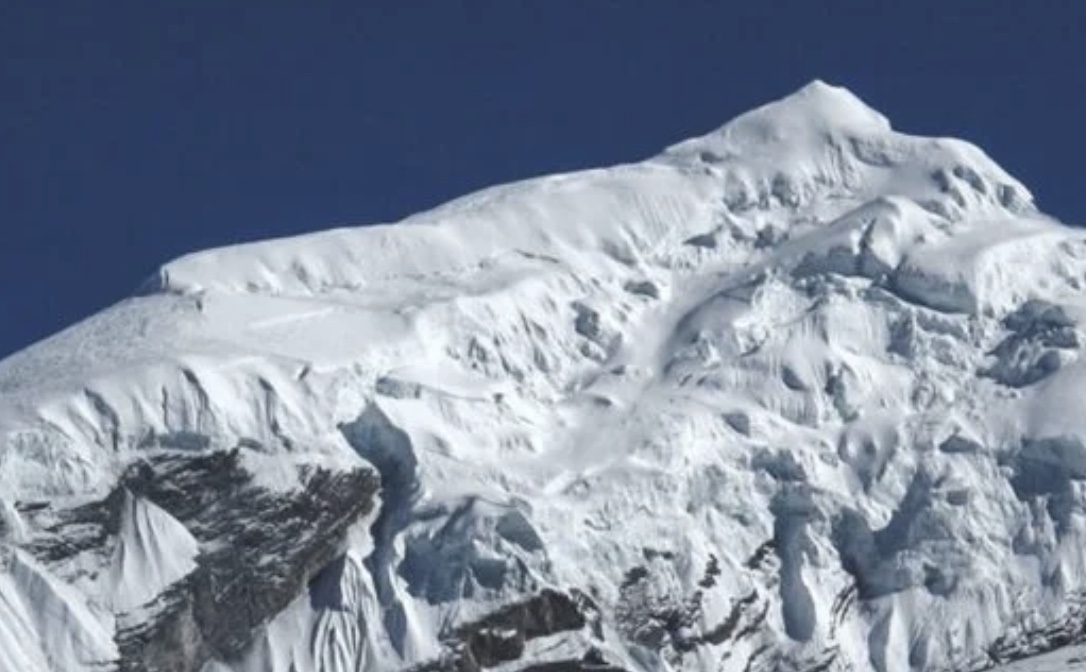
Despite having made little or no contribution to climate change, Nepal is highly vulnerable to its ravages and is least equipped to cope with them. A climate change phenomenon with dire long-term implications for the livelihoods of not just Nepalis but some 1.3 billion people in Bangladesh, Bhutan, China, India, Myanmar and Pakistan is the warming of the Himalayas and their 16,000 glaciers that feed 10 of the largest rivers in Asia.
Although the issue was raised in Prime Minister Madhav Kumar Nepal’s address to the conference and reportedly in an intervention by a minister, it failed to draw the world attention it merited due to lack of persistence, forcefulness and effectiveness in driving home its gravity. One cannot help but contrast this with the way Tuvalu, a small island state in the Pacific, took a firm stand right till the end even in the face of pressure from rich countries and emerging economies alike.
Nepal, where India is arguably the most powerful external actor, is also apparently the best venue for studying climate change in the Himalayas. India cannot brook any other country nosing around in what it treats as its backyard.
A typical, lame explanation from the Nepali officialdom would be that the plenary is not the only forum to push one’s agenda. So, are we to believe that the 100-plus jumbo government delegation—even bigger than that of China and India—strongly highlighted the threat to the Himalayas and glaciers from global warming at other negotiation meetings? Just proposing to join forces with mountainous countries is not enough; it should be backed by effective lobbying in various meetings. It may not be reasonable to expect cabinet members to be experts on matters related to their portfolios. But it would have certainly helped boost Nepal’s world image if experts with a demonstrated ability to present their case effectively before an international audience had been roped in as members of the jumbo delegation.
INDIAN DENIAL MODE
Not helping matters is India’s denial of global warming affecting the Himalayas. An Indian government-backed report denying glacial melting at an alarming rate was recently released, though the more authoritative Fourth Assessment Report of the Intergovernmental Panel on Climate Change (IPCC) says warming in the Himalayas has been much faster than the global average. Himalaya warming skeptics argue that the IPCC report’s estimates are based on studies that are not peer-reviewed. But the Indian government-backed report is also not peer-reviewed, either. The evidence on the ground is pretty clear, though. Eyewitness accounts, including those of locals and mountain climbers, attest to the changes in the Himalayan landscape and climate. An International Center for Integrated Mountain Development (ICIMOD) report, while admitting to the need for more research to address the uncertainties about the rate and magnitude of climate change and potential impacts, states that “there is no question that climate change is gradually and powerfully changing the ecological and socioeconomic landscape in the Himalayan region”.
Surely, uncertainty cannot be used as a justification for denial. Otherwise, climate change itself may well be deniable. After all, even the most die-hard campaigner for climate action is unlikely to swear that climate change predictions will be borne out. Climate action is in effect an insurance policy to avoid the worst possible impacts of climate change.
It is a pity that Nepal has not been able to effectively counter the Indian denial. This is not an issue of “false pride”, a hackneyed allegation used to dismiss any call for taking on our southern neighbor on matters concerning national interests. This is an issue of livelihoods and survival, especially those of the poor and vulnerable living in the Himalayan river basins. The implications are also severe for Nepal’s economic development aspirations. The much-touted hydropower potential, for example, may not even remain a potential as the runoff in ice- and snow-fed rivers is reduced due to the warming of the roof of the world.
At first glance, the Indian denial is inexplicable. Climate change—whether it is happening in the Himalayas or elsewhere—is a global public good or, more accurately, bad. Combating it requires global action. Because of their historical responsibility for global warming, it is incumbent on industrialized rich countries to make the deepest emissions cuts. This is the position of the developing world, which India aspires to lead. India does not deny climate change. It does not deny that sea-levels are rising. But why does it treat the issue of the warming of the Himalayas as an exception even when its own people are also in the line of fire and its acceptance of the phenomenon is not going to automatically embolden calls for it, as the world’s fourth-largest polluter, to cut its emissions?
GEOPOLITICS REIGNS SUPREME
The answer to the riddle wrapped in a mystery inside an enigma, to borrow a Churchillian phrase, can be found in the realm of geopolitics. Although the Indian establishment would be loath to admit it publicly for obvious reasons, the fact is that strategic considerations reign supreme over considerations of the socioeconomic consequences of the warming of the Himalayas. Denial is an attempt to deflect world, especially Western, attention from the Himalayas, which independent India’s first prime minister, Pundit Jawaharlal Nehru, viewed as its natural northern border. The world’s largest electoral democracy is averse to the prospect of increased activities of I/NGOs and global organizations in the Himalayan belt on what it perceives as the pretext of studying, and helping people adapt to, climate change. To put it bluntly, it does not trust the motives of ostensible do-gooders who want to run projects in such a strategic location. In this context, the issue takes on a national security dimension.
Then there is the prospect of having to share or cede what it considers its sphere of influence. India wants Bhutan, its de jure protectorate, to be shielded from international glare as far as possible. Western inroads into Bhutan riding on a crest of Himalayan climate enthusiasts threaten to undo decades of investment in a pliant regime that is at its beck and call. Nepal, where India is arguably the most powerful external actor, is also apparently the best venue for studying climate change in the Himalayas. India cannot brook any other country nosing around in what it treats as its backyard. Heightened interest in the warming of the Himalayas implies a step-up in extraneous activities in those sensitive parts.
DOUBLE-EDGED
For Nepal, however, such possible rise in foreign activities, benign or otherwise, will be nothing new, because external actors have long been making merry here. Our bottom line should be simple: We need international support for coping with the effects of climate change, including glacial melting; and we do not have to lose sleep over the geo-strategic intents inherent in such aid. If the Himalayan republic is destined to be riven by external interference, the more the merrier: The multiplicity of foreign interests jostling for supremacy in this strategically-located country may perhaps give it some leverage to safeguard what remains of its sovereignty.
As for India, its denial only paints an unflattering picture of its democracy. They who shall suffer most in India from the warming of the Himalayas are the poor, the marginalized, the voiceless, the oppressed—in short, those who form the constituency of the raging Maoist movement recently described by the Indian prime minister as the greatest challenge facing India, greater than any external challenge. And yet it is strategic considerations that remain paramount!
kharelparas@yahoo.com
Related story
Mountain Sports Conclave successfully concludes; Nepal commits...


-1200x560-1782120651.webp)