TOKYO, Jan 27: Official campaigning began in Japan on Tuesday ahead of a snap election on February 8.
Here are five key issues in a high-stakes vote where Prime Minister Sanae Takaichi has laid her political future on the line.
- Race to the polls -
Candidates' posters are up, vans topped with loudspeakers are cruising the streets, and Takaichi held her first rally Tuesday in central Tokyo, where dozens of people gathered to listen to her speak.
The lower house of parliament was officially dissolved on Friday, 16 days before the vote -- the shortest window between the two in the postwar era.
Yet the brevity of this pre-election period "will likely not have much of an effect", said Michael Cucek, assistant professor of Asian Studies at Temple University's Japan Campus.
"There is no need for time to introduce or explain anything: the parties are offering strikingly similar policy programmes," he told AFP, adding that the weather would likely have more impact on voter turnout, with severe snowstorms hitting the north.
- Takaichi's slipping popularity -
Appointed in October as Japan's first woman prime minister, hardline nationalist Takaichi is banking on strong poll numbers to boost her unpopular Liberal Democratic Party (LDP), which holds only a slim majority in the powerful lower house.
Will Takaichi's win calm strained Japan-China ties?
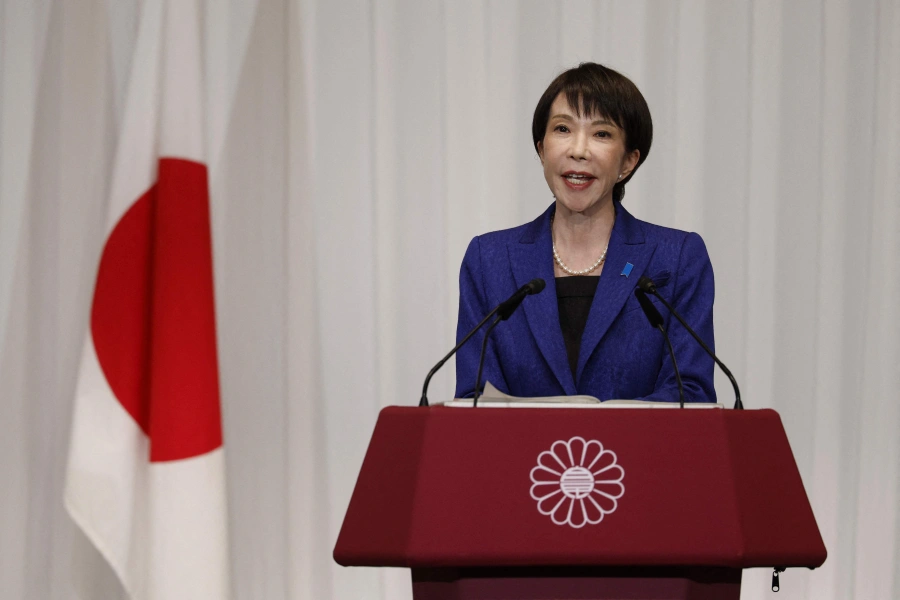
Takaichi has staked her political future on the vote, saying she will resign immediately if her coalition fails to win a majority.
Her government's once sky-high popularity, while still solid, has started to slip: its approval rating fell from 75 percent in December to 67 percent, according to a survey by the Nikkei newspaper.
Voters are raising questions over a recent tax-cut pledge to counter inflation and how it would be financed, while many are also frustrated by the snap election, which has slowed parliamentary debate on the 2026-2027 budget.
Ryutaro Kono, chief economist at BNP Paribas said that "the surveys... suggest that the prime minister's popularity does not necessarily translate into a significant increase in votes for the Liberal Democratic Party."
"Delaying the passage of the budget to proceed with the general election likely caused a significant number of supporters to leave (Takaichi)."
- Rivals unite -
Facing the LDP -- a powerful party that has governed Japan almost continuously since 1955 -- and its coalition partner, the Japan Innovation Party (JIP), opposition forces have vowed to fight.
The Constitutional Democratic Party (CDP) and the small Buddhist Komeito party -- a former LDP coalition partner -- are joining forces under a "Centrist Reform Alliance".
Analysts believe the election could be tight depending on the success of the new alliance, but the opposition's chances of victory remain slim.
"There are no significant policy differences among the parties. This election is shaping up as a referendum on Takaichi," Hideo Kumano, an economist at the Dai-ichi Life Research Institute, told AFP.
- Inflation looms large -
Japan has grappled with a surge in living costs in recent years, and public anger over inflation played a major role in the downfall of Shigeru Ishiba, Takaichi's predecessor.
Seeking to ease the pain, Takaichi unveiled in November a stimulus package worth $135 billion, and if elected, has pledged to waive the consumption tax on food for two years, joining opposition promises to cut various taxes.
This risks further inflating the country's already colossal debt, which rattled bond markets and revived memories of the short-lived British leader Liz Truss, who resigned after alarming investors.
According to the Nikkei poll published Monday, 56 percent of Japanese believe the promised tax exemption would not be effective against inflation.
Takaichi defended the measure on Monday, saying she was paying "considerable attention to fiscal sustainability".
- Foreigners, diplomacy -
Another voter concern is the role of foreigners in Japan, although immigration levels in Japan remain low compared with other rich economies.
Sanseito, a populist anti-immigration party, made a notable breakthrough in mid-2025 upper house elections.
Sanae Takaichi is promising a clampdown.
On Friday, a cabinet meeting proposed tougher action against foreigners staying illegally and stricter controls on property buyers, although it pledged support for those who have the right to stay.
International issues may also loom over the campaign.
Takaichi, who rolled out the red carpet for US President Donald Trump, played drums with South Korean President Lee Jae Myung, and took selfies with Italian Prime Minister Giorgia Meloni, has thrown herself onto the diplomatic stage.
But relations with Beijing have worsened since she suggested in November that Tokyo could intervene militarily if China attacked Taiwan.
In retaliation, Beijing announced tighter export controls to Japan, and the economic cost of this diplomatic crisis is worrying Japanese voters.