He’s a real Nowhere Man,
Sitting in his Nowhere Land,
Making all his Nowhere Plans
For nobody. [break]
Doesn’t have a point of view
Knows not where he’s going to
Isn’t he a bit like you and me?
Nowhere Man……………..
– John Lennon
It was many years ago when I listened to this song by The Beatles. To this day, it hasn’t failed to impress me. So it’s still one of my favorite songs.
The opening lines of this song talk about a person who’s a nobody and who doesn’t belong anywhere and is engrossed in making his nowhere plans. These are such simple lines but if you read between the lines, it has much deeper meaning.
The lyrics may look quite absurd for a layman but it portrays the feelings of a person who’s contemplating about his life. He seems lost, yet he’s trying to move on by making plans.
The lines just show a phase of life when everyone’s trying to find the right track. Those who are going through such similar situations can relate to this song.
The song also shows how people are living where they are but are unable to feel at home or are unable to feel or grasp the reality. They feel that life is somewhere else and are drenched in thoughts and unable to come to terms with the situation.
Since the lines have so much hidden and deeper meanings, I really like this song. Besides the lyrics, the song also has a beautiful tune. The song also reminds me of the music of Darjeeling as it’s quite similar to the music scene when I was there.
This song by John Lennon is about himself. After being unable to write down anything even after spending hours for the album “Rubber Soul,” Nowhere Man was created out of nowhere. But this is the beauty of art. Something that comes naturally is worth admiring.
This is why the Beatles are my all-time favorite musicians, and each time I listen to them, I get quite enthralled.

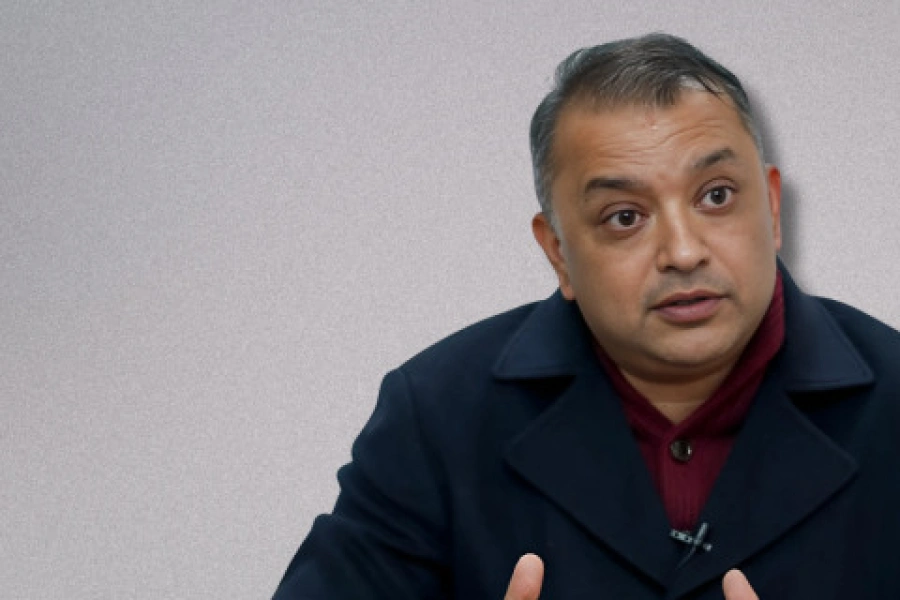
About Gurung
His first recorded song “Nau Lakh Tara” about the existential angst of the Nepali diasporas in India, with especial reference to Darjeeling, is a masterpiece in Nepali music. Gurung is credited for being a first initiator of modern Nepali music.
Not surprisingly, he was appointed to compose Nepal’s new national anthem befitting the nation as a federal democratic republic. Presently, he is the Chancellor of the Academy of Music and Dramatics.
“Music is life for me and I can’t even imagine my life without it,” says Gurung who got into it from an early age. “Like all young students, I used to read a lot of comics. But my senior musicians guided me to listen to meaningful music and read literature so I could take up music formally,” he shares.
It was such dedication and passion that led Gurung to be acknowledged as the father of modern Nepali music.
As music composer, lyricist and singer, he has more than 1,000 songs to his credit. He has been honored with numerous national awards and citations like the Gorkha Dakshina Bahu (1971), Gold Medal, Radio Nepal (1970), Chhinnalata Puraskar (1983) and Hits FM Lifetime Achievement Award (2001), Jagadamba Puraskar, The Golden Flute (Sikkim) and other honors in Darjeeling, to name a few.
Nepal Army (NA) had also felicitated Gurung with rank of honorary Colonel last year for composing the music for NA’s anthem ‘Rato Ra Chandra Chandra Surya.’
A self-taught and -trained musician, Gurung mastered the art of both Indian classical and western music and introduced western musical styles in Nepali music. In the late 1950s, Gurung started his Art Academy of Music in Darjeeling where its future famous musicians learnt the craft under him.
He was invited by the late King Mahendra to live and work in Kathmandu and headed the music department at the then Royal Nepal Academy (Pragya Pratishthan)
He is quite selective when it comes to listening to music, and likes the gazals of Faiz Ahmad Faiz, among others. He also admires the poems of Mahakavi Laxmi Prasad Devkota and the songs of Ratna Shumsher Thapa, to name a few.
“Everyone has a certain purpose in life and I feel like I was born to spread the message through music,” says Gurung.
 As told to Nistha Rayamajhi
Mero yo geetma jun murchana chha*
By Narayan Gopal
I like the style of this song, and the voice of the singer is undoubtedly commendable. Referred to as “Swar Samrat,” Narayan Gopal is one of the most prominent singers in Nepali music.
All of his songs are praiseworthy. He has also sung songs I’ve written and every time he used to sing, he used to mesmerize us all.
Pokhiera ghaamko jhulkaa
By Narayan Gopal
This is such a romantic song and the lyrics are quite touching as well. Songs like this had deeper meanings and were more creative, unlike most of the songs heard these days which are mostly about entertainment only.
Songs back then were entertaining and at the same time could evoke emotions as well. This is the reason why this is one of my favorite songs.
Mero aankhaalai raakne fulbaari chhaina

By Narayan Gopal
This is another favorite song of mine by Narayan Gopal. I really like the lyrics and the style of this song. Narayan and I are in the same genre of music and we had similar tastes in music. There are so many songs and it’s hard to pick one. But this is one of my favorites. The song is really touching and has profound meanings.
Where do the Children play?
 By Cat Stevens
I like the lyrics of this song. People have reached great heights in terms of materialistic achievements in human civilization but they are still weak when it comes to the civilization of their heart.
There are huge building and roads but there’s no place for children to play. The song reflects on the awareness of the upheaval of the late 1960s which touches various issues like poverty, environmental disaster and the future of human beings. The song is that of a man who is watching all of this and asking himself that we’re changing everyday but where do the children play?
* All the three songs were written by Haribhakta Katuwal and recorded by Narayan Gopal. Music composed and arranged by Amber Gurung.
Related story
‘Soundgarden: Live from the Artists Den’ album out this summer