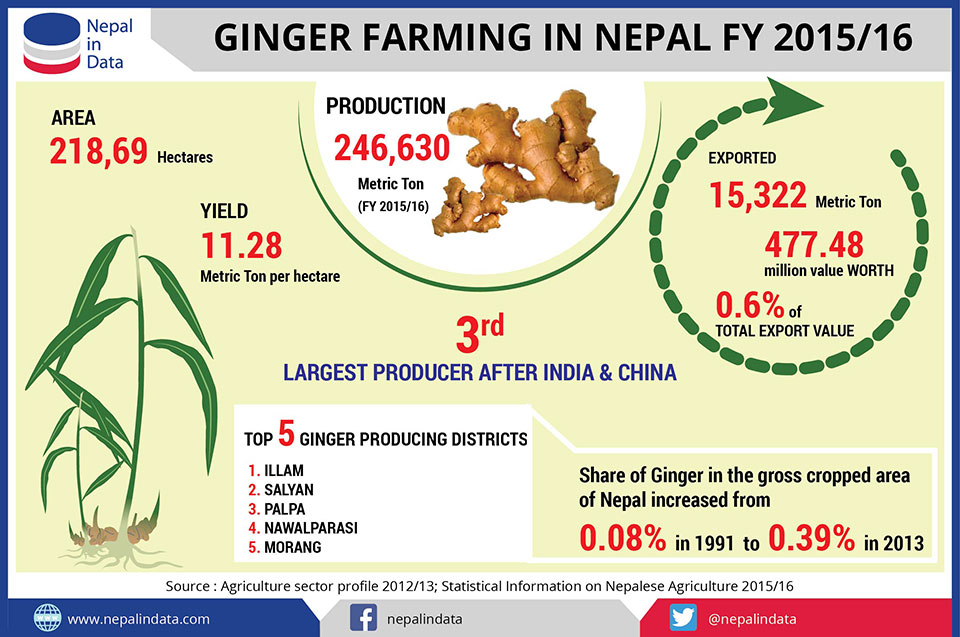
Nepal is the fourth largest producer of ginger in the world and the produce features as one of the 19 ´success story products´ in Enhanced Integrated Framework (EIF), an initiative of World Trade Organization (WTO) for least developed countries. [break]
EIF reckons that the country can further harness the produce, thereby adding weight in its export basket and expanding trade in a sustainable manner.
Ministry of Commerce and Supplies (MoCS), which has been implementing EIF, has proposed to invest US$ 1.17 million that it anticipates to receive under ´aid for trade´ for the development of the product in Jhapa -- one of the largest ginger producing districts in the country.
“Under this endeavor, we will support farmers by providing them facility of processing and marketing,” said Jibraj Koirala, under secretary at the MoCS. “We will also build a storage house for ginger in the district,” he added.
Koirala told Republica that the Ministry was getting the said amount under the tier second of EIF, which operates in two phases. While EIF´s tier one focuses on capacity building, tier two centers around trade facilitating infrastructure development.
Elaborating on it, Dhiraj Karki, project and policy analyst for Nepal Enhanced Capacities for Trade and Development said the investment plan has been worked out mainly because ginger, despite being one highly potential tradable item, has not been harnessed extensively to generate sufficient revenue.
“If we process our productions and improve the value chain, we can export the blended ginger products, reaping handsome returns,” he stated.
Records show, Nepal in 2010/11 exported Rs 281.94 million worth of ginger, which is 38.2 percent less compared to export figure of 2009/10. Nepali ginger is exported mainly to India, Japan, America, United, Kingdom and Germany.
Related story
Traders smuggling Chinese ginger into India