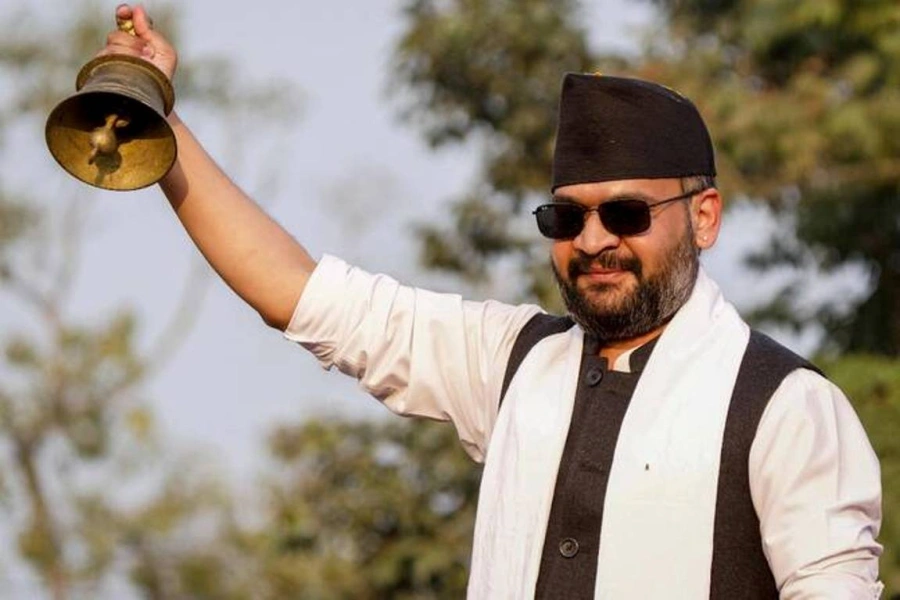
The country is all set to get a new prime minister, and it is none other than Balendra Shah, popularly known as Balen. Not long ago, he was a non-political individual, an engineer by profession and a rapper by hobby. Later, he became a popular mayor of Kathmandu among youngsters. Now, he is on his way to lead the whole country. Though his arrival at national politics feels sudden, he gained a lot from prevailing anger, fatigue of old leaders, and a kind of public impatience that had been building for years. The outcome of the March 5 snap poll has reflected voters’ rejection of the existing political culture, and Balen has become a symbol of that rejection.
Despite his huge popularity among Nepalis and foreigners, the real test for the incoming PM will begin the moment he takes office in a week or so. It is generally believed that with a staggering mandate, he can exercise his executive powers without any hurdle. Yet, when his PM’s duty becomes a routine act, several challenges will stare at him, and he will do well if he remembers that the public who rejected old parties and lifted him up and his party will expect quick, visible results. For people, corruption control and punishment of corrupt ones are the key issues that the new government under Balen should address at the earliest. Employing youths, delivering public services, good governance, and maintaining neutrality and balance in foreign relations are other matters that will also test him and his government.
Sure enough, Balen, relatively new to national-level politics, will have a tightrope to walk. His every decision will be read carefully, and every selection of ministers and appointment to public institutions, constitutional bodies, government departments and foreign missions will be watched and scrutinized closely for his intention. He must select a team of knowledgeable and experienced individuals suited for these positions, which was not the case in the past. Meanwhile, he must not go after corruption and corrupt people selectively. He should also be wary not to court controversy by allowing individuals with tainted images to come close to him under different pretexts. If he does, he will lose credibility, like several leaders of traditional parties.
Curing corona

Beyond party politics, there is the question of how Balen and his team will handle the state affairs. He is now stepping into a system shaped by three decades of inaction, rampant corruption, compromises, external influences, and weakening of entire government institutions. The old parties have lost credibility because their promises mismatched with what they delivered or did not deliver. Balen will have to fix that gap too.
Meanwhile, another litmus test for Balen will be the country’s foreign policy. Nepal’s dealings with India, China, and the United States have lacked consistency over the past decades. Several agreements are signed with these nations but are left gathering dust. Every new government came up with their own priorities. Leaders before him were accused of seeking approval and backing from foreign powers to remain in power as well as consolidate their position. If Balen does repeat the same mistakes, he will surely lose credibility like all his predecessors. Besides these, he has another issue to sort out at the earliest: Balen and his team are accused of receiving backing from foreign forces, which lifted them to a powerful position. If he dispels this belief among rival leaders and supporters as quickly as possible, he will draw a lot of applause, just as he did after winning both mayoral and parliamentary elections.
Similarly, there is another challenge for the incoming PM. Federalism has created multiple centers of power. Provinces are also said to be burdensome for the nation’s economy. They consume massive budgets but deliver less. However, Balen will have a tough time if he goes for curtailing the rights and size of people’s representatives in provinces or for scrapping provinces entirely as declared in the RSP election manifesto. He will face resistance from other political parties and also from forces that have benefited from federal arrangements.
Observers say that inside the RSP, things are even less comfortable for him than they appear from the outside. The party may have achieved a big poll outcome, but unity within the party is another matter. Several analysts say that many of RSP's founding members are at ease with the idea of Balen taking the top leadership role and the PM's office. Their party chair, Rabi Lamichhane, has faced legal battles, while Balen, a relative outsider to the party structure, is going to take up the highest office. This imbalance, for many, carries quiet resentment among the RSP bigwigs.
Rabi’s decision to back Balen was indeed a bold move (though many say that they were brought together by some foreign forces). But it has also created a dual center of power. If Rabi’s legal troubles deepen, pressure will grow inside the party. Some in the party, and outside, will want Balen to defend the party chair. But protecting Rabi while he faces legal cases will risk undermining the anti-corruption drive and the issue of maintaining high morality. It is also true that if he distances himself from Rabi, it will risk undermining unity in the party. Balen will have to manage this situation without appearing weak or discriminatory, which is easier said than done.
Despite all challenges and risks, the current situation appears favorable for the former mayor to lead his single-party government. A large section of voters and citizens are happy regarding the changed political environment that this election has brought in the nation. This changed mood will without doubt work in his favor. Also, Balen does not carry any baggage as did past governments, which will give him room to act, at least initially. If he sets clear standards early, especially on corruption and governance, he can achieve what is expected from him, much to the delight of his voters and supporters at large.
By offering their staggering mandate to him, people clearly rejected how things were carried out since the political reset of 2006. What Balen needs to remember is the same voters who pushed him forward can turn just as quickly if they feel betrayed. He therefore needs to work overtime to address voters’ aspirations by delivering on promises quickly, which can be achieved through maintaining a high degree of discipline and coherence within the party and government. Some four years ago, he had wanted to fix a city as its mayor; now he has to deal with a country that is far messier than the metropolis of Kathmandu.