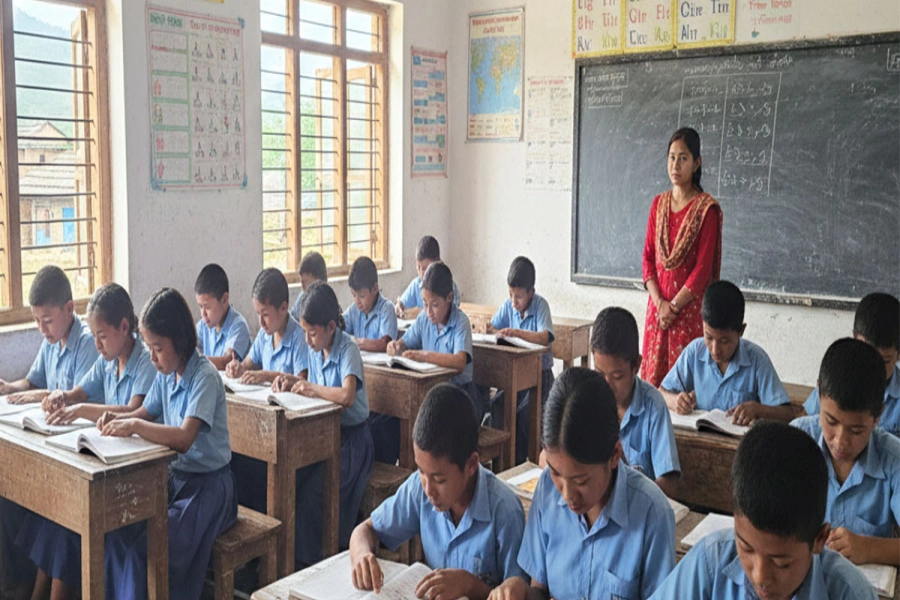
Tapping their white canes on the soft ground, a group of girls made their way through the blue chairs lined up in neat rows.[break] In no time, the NAB backyard was filled with a mixed crowd of people of different ages. There were mainly two groups of people -- those who could see and those who couldn’t. But both groups could equally feel the excitement in the air.
“Who is sitting beside me?” asked Suresh Rajbhandari, a school teacher from Kapilvastu. After a formal introduction he said, “I remember, because there were no law books in Braille when I was studying law, I had to depend on the lectures or have my friends read out to me and record it in cassettes.”
But things were about to change radically, for good. Rajbhandari and many others had gathered at NAB for the launch of Dristiwachak, a Nepali Screen Reader software.
“This is indeed a historic moment in the technological development for us blind and partially sighted (BPS) people in Nepal, isn’t it?” an animated Shova Neupane, the program officer at NAB and the host for the day said on the microphone.
And the audience unanimously cheered, “Yes!”

***
“The software will help increase the information accessibility for BPS people, from e-books to internet and also chat,” Neupane told the Week, “It will not only help improve literacy among the blind but also their education level and with it add value to their life.”
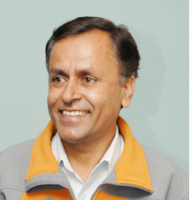
Designed by Him Gautam, currently working as the senior divisional engineer at Department of Water Supply and Sewerage, the software is intended to help visually impaired people like himself, to listen and understand the text on the computer screen; and all that in our own mother tongue-Nepali.
Namaskar, Nepali Dristiwachack ma tapain lai swagat chha (Namaskar, I welcome you to the Nepali Screen Reader): Gautam’s voice greets the computer user as the software is activated.
“A, aa, ee, u” -- human voices, sounding like that of a child or woman’s, recite along every Devanagari (commonly used script in Nepal and India) letter and symbol as Gautam types. However, when it reads out a sentence, it speaks in an alien sounding machine voice “Mey-ro de-sha ko naam Ne-pa-la ho.”
All along, the audience responds with liveliness and enthusiasm, flooding him with barrage of questions and queries. Even after the end of the program, Gautam was busy answering questions. His enthusiasm matched theirs as he frantically struggled to communicate over a microphone that kept going on and off. You could see it in his face how badly he wanted to make sure that they fully understood how the software worked and how they could benefit from it.
“This is the most emotional day of my life,” a tearful Gautam said.
***
The third night of Dashain in 2058, Gautam had gone to bed like he normally would and had woken up next morning to find that his life had changed forever. He was loosing his eye-sight. Since that day on, he could not have a clear view of things.
He, however, never lost the ability of having a clear viewpoint. The disability was not going to defeat him.
Gautam had never learned computer programming in his life, except for basic office packages. But when his partial blindness started hampering his studies, his hunger for knowledge and his life, he set out to develop a software that could overcome this barrier.
There already was a software called Jaws that read out everything in English but none that would read Nepali texts. He then taught himself about developing fonts and speech software program, and collected almost 70 Nepali fonts. He spent a long time studying them, making his own font and converting the other fonts into his own. But once he realized that Nepali Unicode was the common font used in most texts available in the net, he erased his font and decided to work with Unicode for his software.
With a single-minded determination, he toiled day and night for six long years, often locked up in his room. “I set myself on to make this software all alone, without any help from anyone. Either I was going to complete it myself or accept my defeat and tell no one about it. Even my family had no clue what I was doing.”
But once he completed the project, he realized this was not only his need but of many like him. He then approached NAB and had some BPS people test it. After their suggestions and feedback, he finally developed the package.
“This is not an independent software, as you need to have Jaws installed in your computer to make it work.”
Because people don’t use computer in Nepali language, you need Jaws to read out texts in English. But Jaws doesn’t read Nepali Unicode and that’s when Dristiwachak comes in. “If computers operated fully in Nepali language, then we would not have needed Jaws. But we use Nepali only when we’re using applications like Word or PowerPoint, so the two software work complimentary to each other.”
Gautam is still working on the software to make it more sensitive on passive reading. “A blind person can not distinguish between the number ‘4’ and the word ‘four’ or read symbols like semicolons. For that kind of passive reading, I’ve mixed voices in different pitch that can tell them the difference.”
According to him, passive reading is taken for granted by most people, but it is an important part for basic learning. He admits, though, that he too realized it only after he started loosing his sight. “When I lost my eyesight, I gained new perspectives and new viewpoint.”
“Everyone in this world is disabled. For instance, you need a pen to write, without which you’ll feel disabled too. There are always things that one can do and things that one can’t. BPS people may not be able to do some things, but they can excel at others, if given opportunity and access for learning.”
And Dristiwachak is Gautam’s effort to help provide the opportunity and accessibility as he strongly believes no disability should deprive one from learning.
***
A flash review report of the National Blindness Survey of World Health Organization conducted by B.P. Koirala Lions Eye Care Foundation in 2008 states that there are 30,240 school going BPS children. But only about 6000 are getting educational opportunity. About 750 BPS students have passed SLC, 200 have passed graduate diploma, 50 have passed their master’s degree and only one has finished PhD.
“Though the education for blind started in 1964, BPS students are still facing problems like lack of text books and reading materials in accessible form and blind friendly teaching and learning environment,” says Nar Bahadur Limbu, President of NAB. “This software will overcome that barrier as it opens up the possibility of online education in Nepali language for BPS people enabling them to pursue higher education.”
The software is now available at NAB, where they have been promoting and distributing it with the support from Australian Embassy’s Direct Aid Program (DAP). “We install or prepare a copy of the software free of cost. We also install Jaws and Nepali Unicode, necessary for Dristiwachak to work, if the interested person doesn’t have them already. It will also be set up for free download in our website nabnepal.org soon.”
Sugam Bhattarai, one of the students in the first computer training batch at NAB, who has been using and testing Dristiwachak since past six months, said, “I have been using it to read Nepali novels and texts that are available in the net and also for chats. I was finally able to read Muna Madan. It is definitely a success for me.”
For Gautam, however, the software won’t spell success until it becomes an actual help in changing BPS people’s lives and giving them access to knowledge and barrier free communication.
Related story
Sri Lankan envoy underscores common viewpoint for tourism promo...