

- ArTree launches ‘Camp.Hub’ at Thulo Byasi
KATHMANDU, Sept 17: ArTree Nepal’s ‘Camp.Hub,’ a three-day exhibition under their bigger project, ‘12 Baishak,’ kick starts at Thulo Byasi, Bhaktapur on Friday, September 18.
“Besides paintings, the exhibition will also showcase the research that was undertaken about Thulo Byasi and other activities conducted by ArTree and other collaborators with the community,” says Nischal Oli, director of communications at 12 Baishak.
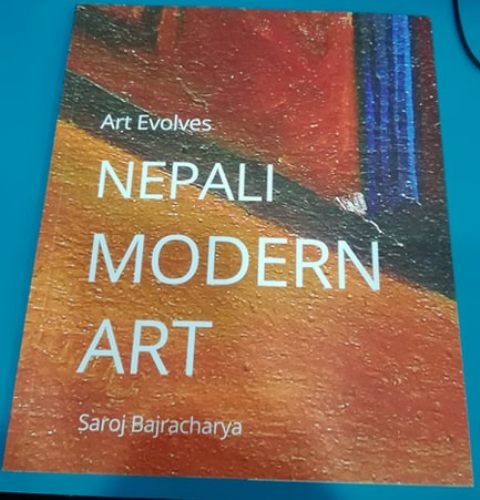
‘Art Evolves: Nepali Modern Art’: Review
The exhibition won’t be held in one specific venue though. Visitors can go to Thulo Byasi any time between 10 AM and 7 PM where coordinators at the entrance gate will provide them with map to guide them to the events.
12 Baisakh is an initiative conceived in response to the recent earthquakes. ArTree has been involved in Thulo Byasi since April 28, three days from the national disaster. Since then, 12 Baisakh evolved over two phases. While Phase I focused on immediate relief, documentation, research and community support, Phase II sees the development of long-term artistic engagements, including a showcase of communal experiences through site specific works and research. ‘Camp.Hub’ comes under this phase.
Cofounder of ArTree and artistic director of 12 Baisakh, Sheelasha Rajbhandari shares, “We first went to Thulo Byasi to meet a friend and we were confronted with the devastation that was before us. We started researching for details and soon we felt an attachment to the area. Camp.Hub was thus born.”
At Thulo Byasi, the earthquakes have displaced the entire community which in turn has unsettled the relationship cultivated by individuals to their surroundings. Keeping this in mind, ArTree’s Camp.Hub hopes to reflect on the sense of belonging, while presenting the experiences of quake-affected people. The press release states, Camp.Hub artists and collaborators seek to re-imagine the communal spaces as an outlet for creative expression. Through site-specific artworks and complementary research it hopes to present the story of Thulo Byasi and its inhabitants in an unprecedented narrative.
“Commonly known as community based art project, such an undertaking isn’t much practiced in Nepal. This is our endeavor to confront a challenge for artists—the lack of accessibility. It’s our effort to show that artists and communities can work together to rebuild,” explains Oli.



-1200x560-1779450784.webp)











