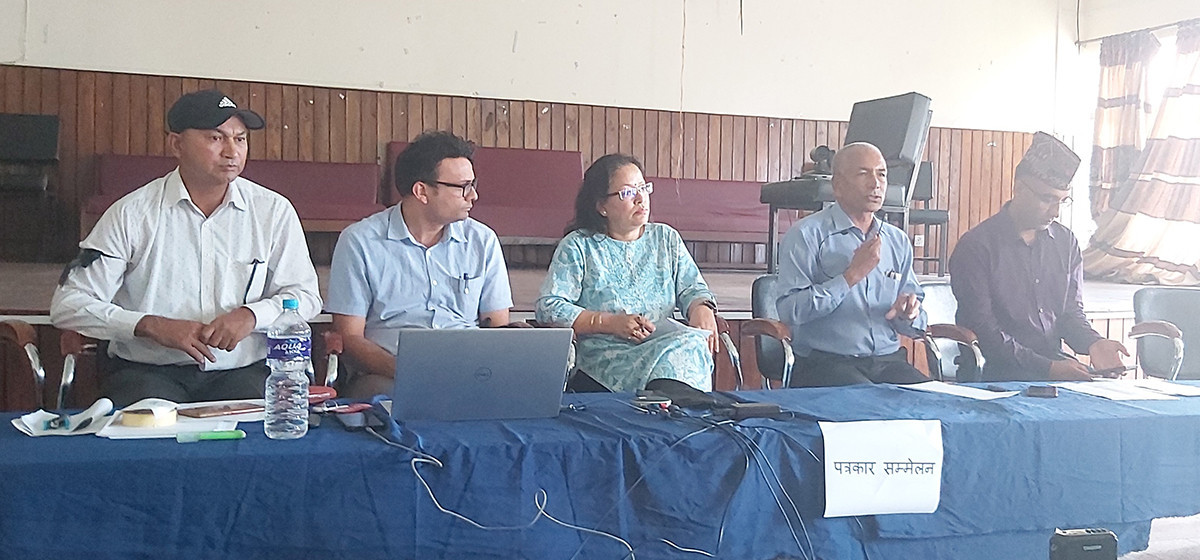
Some CA members including Radheshyam Adhikari of the Nepali Congress (NC) said there is no relevance of CIAA in its present form while other members including those from the CPN-UML argued that the anti-graft body should be kept as an autonomous institution like at present, said a member present in a meeting on Friday. [break]
Adhikari, according to the member, said the CIAA couldn´t prove its relevance as the reports of Transparency International have shown that corruption is in increasing trend in the country since the CIAA was made an autonomous statutory body.
Hare Raj Limbu of UCPN (Maoist) proposed that the CIAA be kept directly under the executive president of the country. "The CIAA is failing to work effectively. There is no point to give continuity to it in its present form and jurisdiction," he said.
The CA thematic Committee on Determining the Form of Constitutional Bodies in its preliminary draft report suggested incorporating a provision in the new constitution that would make mandatory to the CIAA to file a case against any graft suspect only on the recommendation of the Attorney General. Some members backed the idea while several others opposed it.
At present, the CIAA is independent to carry out investigation and file cases on corruption charges against any individual or institution on its own without consulting the government or the attorney general.
But Adhikari and Limbu proposed that the body be put under the executive head [be it president or prime minister] of the country just like Central Bureau of Investigation (CBI) of India and Federal Bureau of Investigation in the United States.
But UML members argued that such a provision would only weaken the CIAA. They proposed to give continuity to the CIAA as an autonomous body just like its present status.
The CC is entrusted with preparing an integrated draft report by incorporating all the 11 preliminary reports prepared by the 11 thematic committees in the CA.
Related story
Toward autonomy


-1200x560-1781083488.webp)