Such recourse to religious explanation was actually the tactic of the regime to be popular, to prolong their stay and to escape from the state accountability. It would absolve them from the crime of not protecting the lives and property of people in the face of disasters, and rescue and rehabilitate them in their aftermath. Due to rampant illiteracy and lack of awareness, disaster victims in the history of Nepal (and it applies elsewhere) never held the rulers accountable for their faults.
The apparent reason for letting people languish in perils is taking advantage of them. First, those who survive disasters would not be in a position to oppose any unjust act of any governments or rulers. Second, by extending a lip service during hardships in the name of welfare would create a sense of allegiance to the rulers. The rulers inculcated the people with the notion that suffering was inevitable.
As a result, even today despite the efforts of the national and international non-governmental organizations, the people have not been able to understand that to save the lives of people from disasters and to support them to recover from the misfortunes is one of the prime duties of the state and non-fulfillment of this right is a gross violation of basic human rights, an inhuman act, and a socio-political exploitation of the vulnerable.
The rulers have been playing with words. An apparent example is the name of the Act related to disasters. The Act in English reads as Natural Calamity Relief Act, 1982, but its original Nepali name is Divine Calamity Relief Act, 1982. Even today, Nepali is the only national language. And the Nepali version of the Act prevails over the English in case of disambiguating any meaning of a word therein.
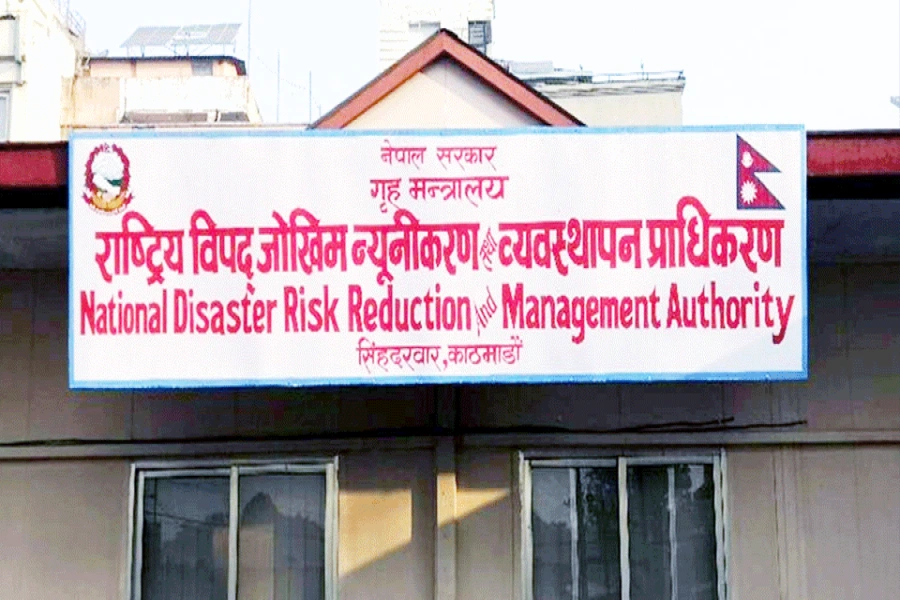
A closer look at the names of the government agencies of Nepal that are supposed to promote, protect and fulfill the rights of people during and after disasters reveals the ambiguity. Ministry of Women, Children and Social Welfare, Social Welfare Council, Central Child Welfare Board are quite a few to name. The names and the underlying meanings of such government bodies defeat the spirit of ensuring basic human rights of people.
This clearly shows the need for a paradigm shift in disaster perspectives. Without finding the root causes of disasters, we cannot devise methods for preparedness, relief and rehabilitation of disaster survivors. For this purpose, we need to analyze the existing laws related to disasters of respective countries, coordination among the government and non-governmental agencies, and the role of international communities.
Welfare, may arbitrarily, work in advanced societies where the state is responsible enough to grant the rights of their citizens, but not in the context of developing countries like Nepal. I wonder, why the champions of human rights in Nepal (and I presume the situation of other SSARC countries is not much different from Nepal) have never filed a lawsuit against the government when a large number of people lose their lives and property in disasters.
The rights activists make a hue and cry when a person suffers or dies from physical torture in the hand of security forces. I do not mean that it is permissible. But why did they not raise voice when hundreds of people from Nepal and India lost their lives in the Koshi flood in 2008? The Sapta Koshi which is notorious for being the ‘Trouble of Bihar (in India)’ has also become the ‘Trouble of Nepal.’ But have we ever heard human rights activists raise voice collectively to minimize the threats of imminent disaster?
Disasters weaken the capacity of people to cope with the adverse situation as they lose the basic necessities of livelihoods. A distressed person would not be in a position to think beyond his immediate needs. Such a situation renders people helpless. People in distress cannot be organized to claim for their rights. That is why the state machinery does not respond with utmost priority to the people affected by disasters. The case of the epidemic of gastroenteritis that claimed the lives of many people in Bajura district last year could be a glaring example of the violation of right to life. The victims of Koshi flood still have not been rehabilitated even after two years.
The state, by nature, is reluctant in giving rights to its citizens during normalcy. The main reason behind it is accountability. It is true that nations in South Asia are not and do not seem accountable to their people. But what the government machinery and the political leaders tend to think is that once any right is granted to the people the right and duty of safeguarding it rests with the state. And fulfilling such rights requires political will power; visionary policies, resources and laws and their efficacious implementation..
This clearly shows the need for a paradigm shift in disaster perspectives. Without finding the root causes of disasters, we cannot devise methods for preparedness, relief and rehabilitation of disaster survivors. For this purpose, we need to analyze the existing laws related to disasters of respective countries, coordination among the government and non-governmental agencies, and the role of international communities.
The Natural Calamity Relief Act, 1982 of Nepal states: “In this Act, unless the subject and the context otherwise requires, (a) "Natural Calamity" means earthquake, fire, storm, flood, landslide, heavy rain, drought, famine, epidemic, and other similar natural disasters. This expression also includes the industrial accident or accident caused by explosions or poisoning and any other kinds of disaster.”
What lacks in the definition is the mention of human-induced disasters like riot, conflict, and war, among others. In this part of the world, many countries are either in, on or around conflict which has been injuring, maiming and claiming the lives of people besides damaging property. This Act does not cover these areas. When riots occur it usually targets the business enterprises and they incur a huge loss. But they are never compensated; therefore expecting the conflict victims of the insurgency period to be compensated is a far cry..
The most fundamental aspect of disaster is that during disaster, people lose their life, property and dignity. Neither this Act nor other related legal provisions touch on these premises. Therefore, the government officials, activists of non-governmental organizations and the rescue and rehabilitation agencies should accord top priority to the dignity of people affected by disasters right from the formulation of policies and laws to their implementation during rescue, relief and rehabilitation processes.
A wrong notion of the impact of disasters is prevalent: Disasters do not discriminate the poor from the rich. That is right. A flood and a landslide do not kill, maim, or injure people on the basis of their wealth. But the rich people are less vulnerable to most of the disasters compared to the poor. Take for instance the recent floods in Pakistan in which almost all the victims were from the poor and marginalized communities.
The rich can protect themselves from many disasters even in case of earthquake and tsunami to some extent. Those who can afford to construct buildings that are earthquake-and fire-resistant and in places that are unlikely to be washed away by floods, tsunami or landslides. But in this part of the world, the number of people who can afford rendering their lives and homes or work places safer is quite negligible.
Thanks to their social capital, the rich hit equally by a disaster can recover from it sooner and better than the poor. But in the countries where support to disaster victims is not considered welfare, whose governments lack enthusiasm, strong contingency fund, trained human resources and political will to serve the disaster victims, the poor hit by disasters are sure to suffer more than the rich.
Therefore, let us redefine disaster, its impacts on lives and property, the far-reaching consequences it brings about in the nation and the way the state should deal with disaster victims in order to establish the people’s right to life, rescue and dignity as fundamental human rights in the face of increasing types and frequency of cataclysms.
Above essay is an excerpt from the paper submitted to SAARC Regional Training and Workshop on ‘Children and Disasters’ held in Hyderabad, India from 7-11 Feb. 2011
ramsharan.sedhai@gmail.com
Related story
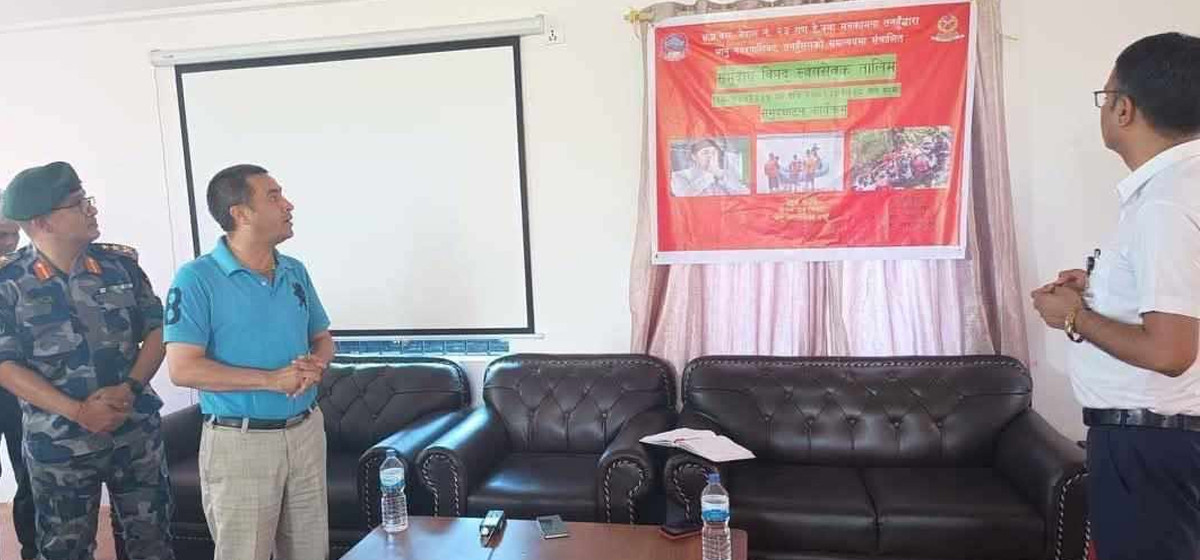
APF to form over 170,000 disaster informant groups across Nepal





-1784277548.webp)